


By TheDailyNewsHub
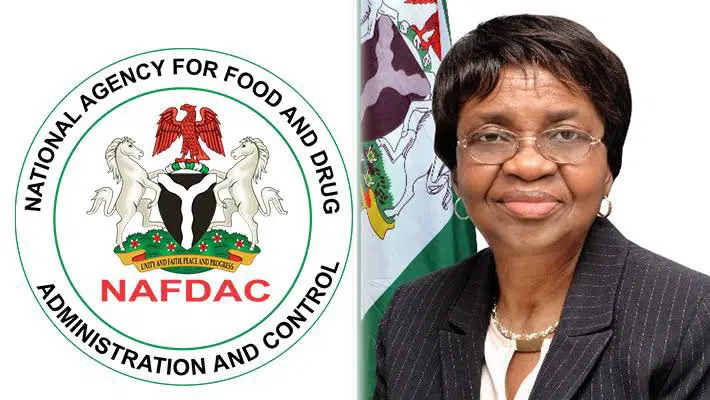
The Director-General of the National Agency for Food and Drug Administration and Control (NAFDAC), Prof. Moji Adeyeye, has rejected calls for her resignation, insisting that she returned to Nigeria after more than three decades in the United States to contribute to national development and rebuild the agency’s reputation.
Adeyeye spoke during an engagement with journalists on Monday, where she responded to questions about continued calls for her removal despite what she described as significant achievements recorded under her leadership.
‘I Came Here for Service’
Adeyeye said she spent 34 years in the United States, including about three decades as a professor, before retiring and returning to Nigeria to head NAFDAC.
She said her decision to return was motivated by a desire to serve the country rather than personal financial gain.
“I lived in the US for 34 years. I was a professor for 30 years in an all-white school. I retired happily. I came here to serve, but some Nigerians have an aversion to service,” she said.
The NAFDAC boss criticised what she described as a culture of asking what personal benefit could be gained from public service.
“We have rendered Nigeria useless because of ‘what can I get?’ We have rendered Nigeria useless because of ‘what is in it for my pocket?’” she added.
‘I Was Ashamed of My Country’
Adeyeye also challenged allegations that she had demanded money from contractors working with the agency.
“Any contractor that I have demanded money from should come here and tell me! I came here for service,” she said.
She added that she had returned to Nigeria because she was concerned about the country’s image.
“I retired happily. I was ashamed of my country! I came to remove some of the shame. And the world is seeing it! The world is seeing it!” she said.
NAFDAC’s Challenges When She Took Over
Adeyeye recalled the challenges she said NAFDAC faced when she assumed office.
According to her, the agency had inherited approximately ₦3.2 billion in outstanding liabilities, while between 70 and 80 per cent of its laboratory equipment was not functioning.
She also said NAFDAC’s information and communications technology infrastructure was inadequate and that, as of 2017, its directors did not have laptops purchased by the agency.
Adeyeye said addressing the agency’s financial obligations was one of her early priorities, noting that approximately ₦3.1 billion had been paid by November 2018.
‘Countries Now Respect Us’
The NAFDAC director-general also highlighted what she described as improvements in the agency’s regulatory capacity.
She said NAFDAC progressed from a maturity level-one status to level three by March 2022, making it the third agency in Africa to attain that level.
She further noted that NAFDAC became an affiliate member of the International Medical Device Regulators Forum in 2023 and joined the International Council for Harmonisation in 2025.
“Countries now respect us. Regulatory agencies respect us,” Adeyeye said.
She recalled that her early years at the agency involved efforts to rebuild its public image.
“My first two years, I was going round doing image making, rebuilding our bad image. They were calling NAFDAC ‘good for nothing agency’,” she said.
According to Adeyeye, the agency had a maturity level below level one when she assumed office.
‘When Are You Going to Resign?’
Responding directly to questions about whether she should leave office, Adeyeye appeared to reject the suggestion that her tenure should end on the basis of the criticisms against her.
“So that question; ‘when are you going to resign’ — I hope you got the answer?” she said.
The comments come as NAFDAC continues to face scrutiny over the safety and regulation of medicines, food, beverages and cosmetics in Nigeria.
The agency has also faced criticism from some manufacturers and civil society groups over its enforcement of restrictions on sachet alcohol and small polyethylene terephthalate (PET) bottles below 200ml.
Critics have raised concerns about the potential impact of the policy on jobs and investment, while NAFDAC has maintained that its regulatory measures are aimed at protecting public health.
The agency has also cited its enforcement record, including the destruction of counterfeit and substandard products valued at more than ₦1.5 trillion over a three-year period.
Adeyeye’s latest remarks are therefore likely to fuel further debate over NAFDAC’s performance, regulatory approach and the continued calls for changes at the agency’s leadership.