


By TheDailyNewsHub
Nigeria is using its participation at the 18th BRICS Leaders’ Summit in New Delhi to push for stronger South-South cooperation and greater engagement on reforms to global governance institutions.
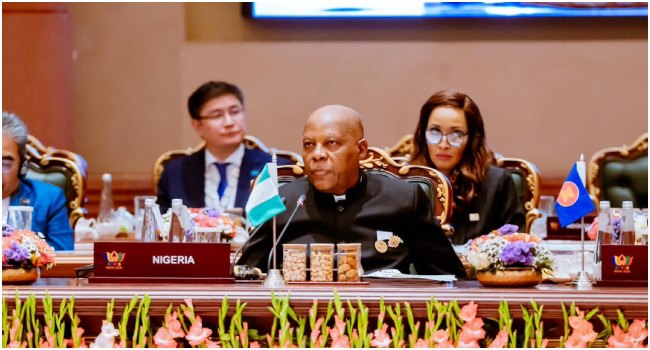
Vice President Kashim Shettima is representing President Bola Ahmed Tinubu at the two-day summit, which began in New Delhi on September 12 under India’s 2026 BRICS chairmanship.
Nigeria’s participation comes as a BRICS partner country, a status it has held since January 2025. The partnership gives Nigeria an additional platform to engage major emerging economies on trade, investment, development finance and international economic cooperation.
According to the Federal Government, the summit provides an opportunity for Nigeria to strengthen partnerships in trade and investment, energy, agriculture, solid minerals, technology and innovation while advancing cooperation among countries of the Global South.
Shettima is participating in high-level discussions covering global economic growth, multilateral cooperation and shared development priorities. He is also scheduled to hold bilateral engagements with leaders and senior officials from participating countries as Nigeria seeks deeper economic and diplomatic cooperation.
The issue of reforming global institutions is also central to the wider BRICS agenda. The summit’s programme includes discussions on “Inclusive Global Governance and Strengthening Multilateralism,” reflecting the bloc’s longstanding call for changes to the international system to give developing countries a stronger voice.
Nigeria’s position on the subject predates the current summit. At the 15th BRICS Summit in South Africa in 2023, Shettima argued that the international governance structure was established before many African and Global South countries gained independence and therefore needed reform to reflect the realities of the contemporary world.
He called for a more representative and inclusive international system and said Nigeria supported partnerships based on shared prosperity, sustainable development and rules that do not marginalise countries because of geography or other affiliations.
The Nigerian government’s current position similarly emphasises reform of global governance institutions alongside greater economic cooperation. The Presidency said the BRICS platform offers Nigeria an opportunity to engage some of the world’s largest emerging economies on development finance and institutional reform.
The call for institutional reform comes as BRICS itself has expanded significantly. The grouping now has 11 full members — Brazil, China, Egypt, Ethiopia, India, Indonesia, Iran, Russia, Saudi Arabia, South Africa and the United Arab Emirates — while Nigeria is among its partner countries.
India’s 2026 BRICS presidency is being conducted under the theme “Building for Resilience, Innovation, Cooperation and Sustainability.” The summit’s agenda covers political and security cooperation, economic and financial partnerships, sustainable development and other areas of cooperation.
Beyond institutional reform, Nigeria is seeking practical economic gains from its engagement with BRICS countries, particularly in agriculture, energy, solid minerals, technology, innovation and other non-oil sectors.
The government has also said the engagement is part of President Tinubu’s broader effort to strengthen Nigeria’s international economic partnerships, attract investment and expand markets for Nigerian products.
For Nigeria, the BRICS partnership therefore represents both a diplomatic platform and an avenue for pursuing economic opportunities while advocating for a more representative multilateral system.