


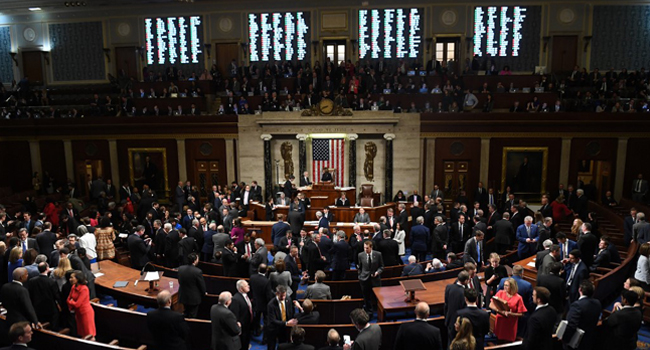
The United States Congress has approved a sweeping sanctions package aimed at increasing economic pressure on Russia over its continuing war in Ukraine, sending the legislation to President Donald Trump for final approval.
The House of Representatives passed the Lindsey O. Graham Sanctioning Russia and Iran Act of 2026 by 262 votes to 159 on Wednesday, September 16, after the Senate had approved the measure by 86–11 in August.
The legislation would impose sanctions on Russian officials, financial institutions, energy-sector entities and other individuals and organisations accused of supporting Russia’s war effort or helping Moscow evade existing restrictions.
It also targets Russia’s so-called shadow fleet, a network of vessels accused of helping transport Russian oil and circumvent international sanctions.
One of the most significant provisions gives the US president authority to impose tariffs of up to 100 per cent on major purchasers of Russian oil and gas, as well as countries that assist Russia in avoiding sanctions.
The measure could therefore have consequences for countries such as China and India, which remain major buyers of Russian energy. However, the legislation contains certain exemptions and conditions governing how the tariff powers can be applied.
The bill received bipartisan support in Congress, although lawmakers were divided over the extent of presidential authority it would provide. Fifty-eight Democrats voted in favour of the legislation in the House, while seven Republicans voted against it.
Opponents of the measure have raised concerns that the broad tariff powers could affect US allies and potentially increase costs for American consumers. Supporters argue that the legislation would give the administration stronger economic tools to pressure Russia and countries that continue to support or facilitate its activities.
Despite its focus on Russia, the legislation also contains provisions relating to Iran. It extends the Iran Sanctions Act for another five years, maintaining restrictions affecting Iran’s energy and weapons sectors.
The legislation is named after the late Republican Senator Lindsey Graham of South Carolina, who played a leading role in developing the sanctions proposal before his death in July 2026. Graham worked with Democratic Senator Richard Blumenthal and other lawmakers to build bipartisan support for the measure.
The Kremlin has criticised the congressional action. Russian presidential spokesman Dmitry Peskov said Moscow was monitoring the legislation and warned that additional US sanctions could complicate efforts to reach a settlement to the war in Ukraine.
Ukraine, meanwhile, has welcomed the congressional action, with President Volodymyr Zelenskyy having previously urged US lawmakers to advance the sanctions package.
The bill has now cleared both chambers of Congress but has not yet become law. It is awaiting President Trump’s signature.
If enacted, the legislation would provide the Trump administration with additional sanctions and tariff mechanisms targeting Russia’s energy revenues and countries accused of helping Moscow circumvent existing restrictions. The eventual impact will depend largely on how the administration chooses to use the powers provided under the legislation.