


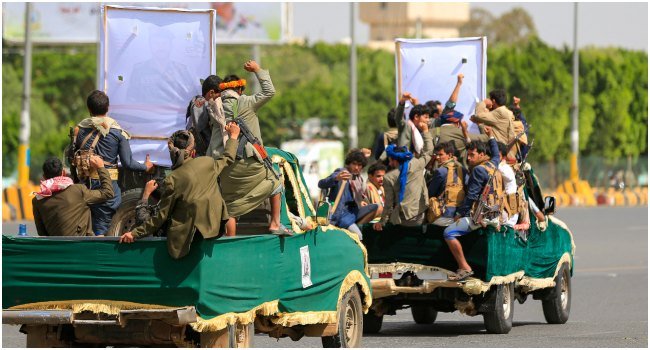
The United States has warned that the conflict involving Saudi Arabia and Yemen’s Iran-backed Houthi movement could escalate rapidly after the group launched a missile and drone attack targeting Saudi Arabia, including the capital, Riyadh.
The warning came after Saudi air defences intercepted a ballistic missile fired towards Riyadh early Saturday, September 19, in the latest escalation of the conflict. Saudi authorities said the missile was destroyed before reaching its intended target. No immediate casualties were reported from the interception, although residents reported explosions and smoke in parts of the capital.
The United States Department of State subsequently issued a security warning, saying the military conflict had the potential to “escalate rapidly” and advising Americans in the region to remain vigilant. The department also urged Americans outside the Middle East to seriously reconsider travel to and through the region because of the possibility of further disruption.
The Houthis claimed responsibility for the attacks, saying they had launched ballistic and cruise missiles as well as drones against targets in Saudi Arabia. The group said one operation targeted what it described as sensitive locations in Riyadh, while another targeted facilities belonging to Saudi oil giant Aramco in Yanbu, on the Red Sea coast. Claims concerning damage to the Yanbu facilities have not been independently verified.
The attack on Riyadh represents a significant development in the renewed fighting. Saudi Arabia has been carrying out airstrikes against Houthi-controlled areas in Yemen, while the Houthis have intensified attacks against Saudi territory and infrastructure.
The latest escalation has also raised concerns over the security of Saudi Arabia’s oil infrastructure and regional shipping routes. Yanbu is an important Red Sea export hub, while the wider conflict has implications for shipping around the Bab el-Mandeb Strait, one of the world’s important maritime trade routes.
The United States has so far signalled caution over becoming directly involved in the renewed Saudi-Houthi confrontation. According to reports, Washington recently declined a Saudi request to conduct strikes against the Houthis, while separately approving a $24.3 billion sale of 48 F-35 fighter jets to Riyadh. The US State Department said the aircraft would help Saudi Arabia deter present and future threats.
The developments come amid a wider regional crisis involving the United States and Iran. Tehran on Sunday also warned that any new attack by the United States and its allies could trigger retaliation against American bases and regional partners, adding another layer of uncertainty to the situation.
US President Donald Trump also returned unexpectedly to the White House on Saturday after cutting short a weekend stay at Camp David. The White House did not immediately provide an explanation for the change in schedule, and there has been no official confirmation that his early return was directly linked to the Houthi attack.
The United Nations and regional governments have expressed concern over the expanding violence. The latest attacks come after weeks of fighting that have reportedly displaced more than 110,000 people in Yemen and increased pressure on already vulnerable civilian and economic infrastructure.
For now, the immediate consequences of the Riyadh attack remain limited by Saudi Arabia’s successful interception of the ballistic missile. However, the United States’ warning reflects concern that continued attacks and retaliatory strikes could broaden the conflict and create additional risks for civilians, energy infrastructure, aviation and international shipping.