


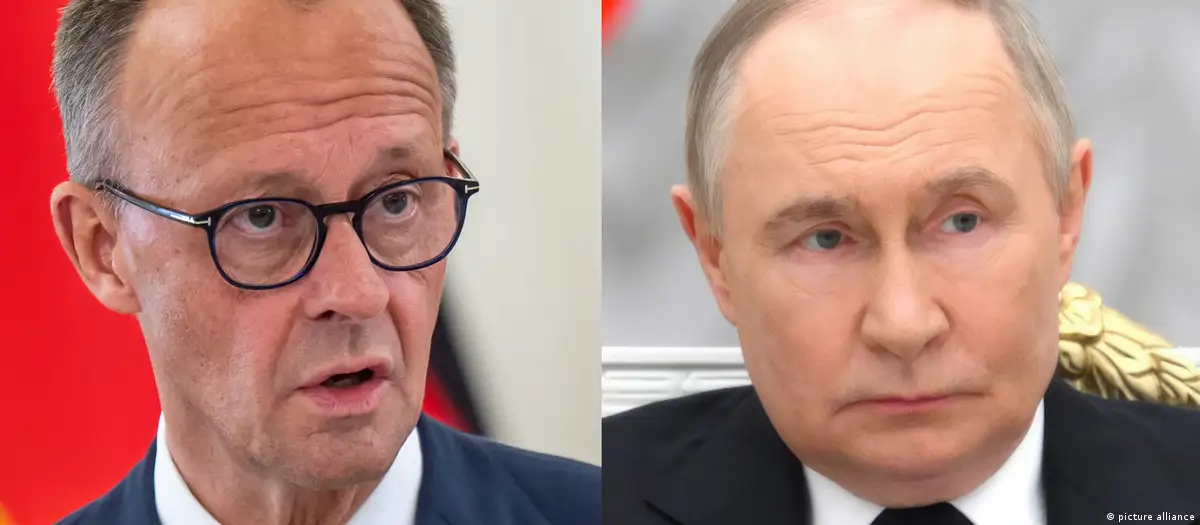
Relations between Germany and Russia have deteriorated sharply, with Berlin describing Moscow as increasingly hostile while diplomatic and economic ties between the two countries continue to shrink.
The latest assessment comes as Germany responds to what its government says are growing Russian hybrid threats, including alleged sabotage, espionage, disinformation and attacks against critical infrastructure. Deutsche Welle reported on September 19 that the relationship between Berlin and Moscow had reached a “freezing point” following years of deterioration accelerated by Russia’s full-scale invasion of Ukraine.
Germany’s Foreign Minister Johann Wadephul said earlier this month that Russia’s conduct formed part of a broader pattern of destabilisation, disinformation, threats and sabotage directed at Europe. He said Germany was not exempt from these activities and accused Russia’s leadership of treating Germany with “blatant hostility.”
Berlin’s assessment followed its attribution of an attempted attack near Leipzig Airport to Russia. The German government said the incident, involving a drone carrying explosives, was part of a wider pattern of hostile activity. In response, Germany announced measures including the closure of the Russian General Consulate in Bonn and the Russian House in Berlin, while strengthening protection against hybrid attacks.
The German National Security Council subsequently met on September 14 to assess the situation. The government said it believed Germany remained a target of Russian hybrid attacks and agreed on additional measures against espionage and sabotage, as well as steps to protect critical infrastructure. It also decided to reduce strategic economic and security dependencies on Russia and other potentially vulnerable suppliers.
The deterioration represents a significant shift from the relationship Germany and Russia developed over previous decades. Before the Ukraine war, Germany maintained extensive commercial ties with Russia, including major energy imports. Russian natural gas played an important role in Germany’s industrial economy, while projects such as Nord Stream 2 symbolised the depth of the economic relationship.
Russia’s invasion of Ukraine fundamentally changed that relationship. Germany has since reduced its dependence on Russian energy, supported Ukraine and backed European sanctions against Moscow.
Moscow, meanwhile, has rejected Berlin’s accusations. Kremlin spokesman Dmitry Peskov said earlier in September that Russia had never sought to sever relations with Germany, while questioning how far the current German leadership might take its policies toward Moscow.
The disagreement has also exposed a political divide inside Germany. While the German government continues to advocate support for Ukraine and a tougher approach to Russian security threats, the far-right Alternative for Germany (AfD) has called for a normalisation of relations with Moscow. Reuters reported on September 18 that representatives linked to Russian President Vladimir Putin and the AfD were preparing discussions that could include the possibility of restoring Russian gas supplies to Germany.
The issue has become particularly sensitive as Germany debates its future energy security, defence policy and relationship with Russia. The German government says reducing strategic dependencies is necessary to strengthen national resilience, while political opponents of the government’s Russia policy argue for reopening channels of cooperation.
For now, Berlin says it remains interested in eventually restoring constructive relations with Moscow, but only under conditions that include Russian willingness to cooperate and an end to the war against Ukraine. The Foreign Ministry has stressed that Germany’s objective is ultimately to restore a peaceful order in Europe and return to constructive relations with Russia.
The latest developments therefore point to a relationship that remains heavily constrained by the war in Ukraine, competing security assessments and the collapse of many of the economic links that previously connected the two countries.