


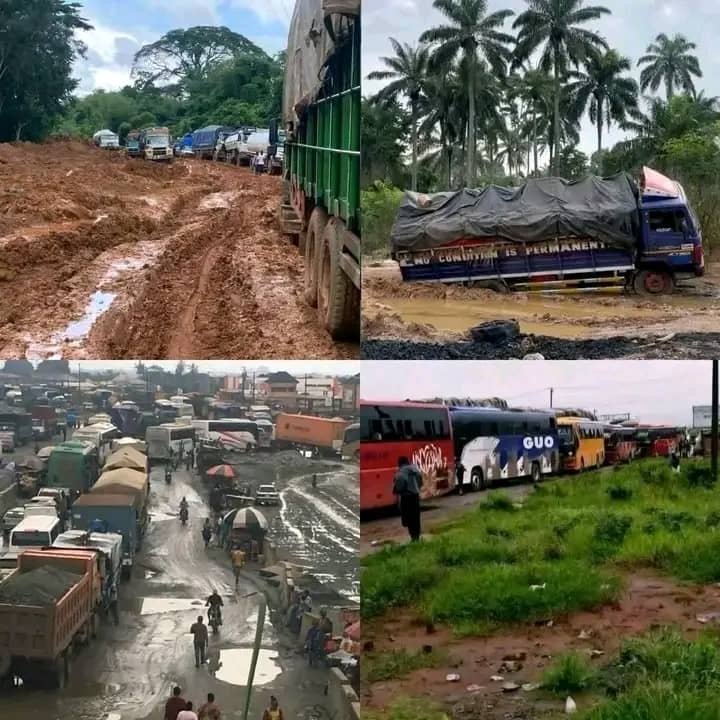
By Femi Mustapha in Kaduna
The convener of The Common Good Letter, Rev. David Ugolor, has said the emergency intervention on the Benin-Asaba Road is necessary relief for road users but must be followed by full accountability in the management of the highway concession.
Ugolor said this in a statement titled “Benin Asaba Road Rescue Operation: Relief for road users must be followed by full accountability,” made available to newsmen in Kaduna yesterday.
He said the deployment of more than 50 pieces of equipment for the emergency works is a welcome response to the severe hardship suffered by motorists, transporters, businesses, and communities along the strategic corridor, who have endured gridlock, damaged vehicles, high transportation costs, and safety risks.
He commended President Bola Ahmed Tinubu for authorizing the Federal Ministry of Works to intervene in the overriding public interest. He acknowledged the roles of Works Minister Senator David Umahi, Edo Governor Monday Okpebholo, Delta Governor Sheriff Oborevwori, members of the National Assembly, and communities whose advocacy drew national attention to the road.
He, however, stressed that Nigerians must understand that the intervention is only a rescue operation and not yet a resolution of the underlying concession failure.
Ugolor noted that the 125-kilometer corridor was concessioned to the Benin-Asaba Expressway Concession Company under a 25-year public-private partnership. However, the Federal Government has now admitted that the pace and manner of the action fell short of the agreement.
He said disclosures by the Works Minister—that the concessionaire rejected the government’s intervention options, that the government was required to seek permission before intervening, that asphalt was removed, leaving the base exposed, and that equipment was reduced—raise fundamental questions about how the concessionaire was selected and supervised.
He warned that a rescue operation cannot replace accountability, adding that the government must not use public funds to fulfill obligations assigned to a private concessionaire without establishing responsibility and a lawful cost-recovery mechanism. Otherwise, Nigerians may pay twice.
He demanded that the government disclose the cost and duration of the emergency works; the companies supplying equipment on the three sections; the legal and procurement authority for the engagement; applicable rates and specifications; the funding source; and whether the cost will be recovered from the concessionaire, its performance bond, or its insurers.
Ugolor questioned who approved a concession that restricted emergency government action, insisting that a properly structured PPP must include step-in and emergency provisions to protect public safety, avoid leaving citizens trapped, and not require private consent.
He called on the Federal Government and the Infrastructure Concession Regulatory Commission to publish relevant clauses of the agreement and explain what step-in rights, default provisions, guarantees, and penalties were included, and why timely intervention was blocked.
On capacity, he said that while consortium members show experience in investment and financial structuring, there is little public evidence that they had previously built a highway of this magnitude. He asked the government to publish the technical bid, comparable projects, the identity of the EPC contractor, evidence of financial close, and Independent Engineer reports.
He added that the plan to redesign the entire highway for reinforced-concrete pavement requires a new public case backed by pavement assessment, traffic studies, drainage design, lifecycle cost comparison, and a revised cost and timeline.
Ugolor warned that the government is spending public money on a road that remains legally concessioned and must clearly state whether it will enforce, restructure, terminate, or re-procure the concession to avoid improving the project’s value while the original concessionaire retains benefits.
“The government was right to intervene. No concession agreement should prevent the state from protecting lives, restoring mobility and safeguarding the economy. But emergency action must not become an excuse to bypass procurement rules or to shift private-sector failure onto the taxpayer. The Benin-Asaba Road must become a lesson in accountability,” he said.