


By TheDailyNewsHub Reporter
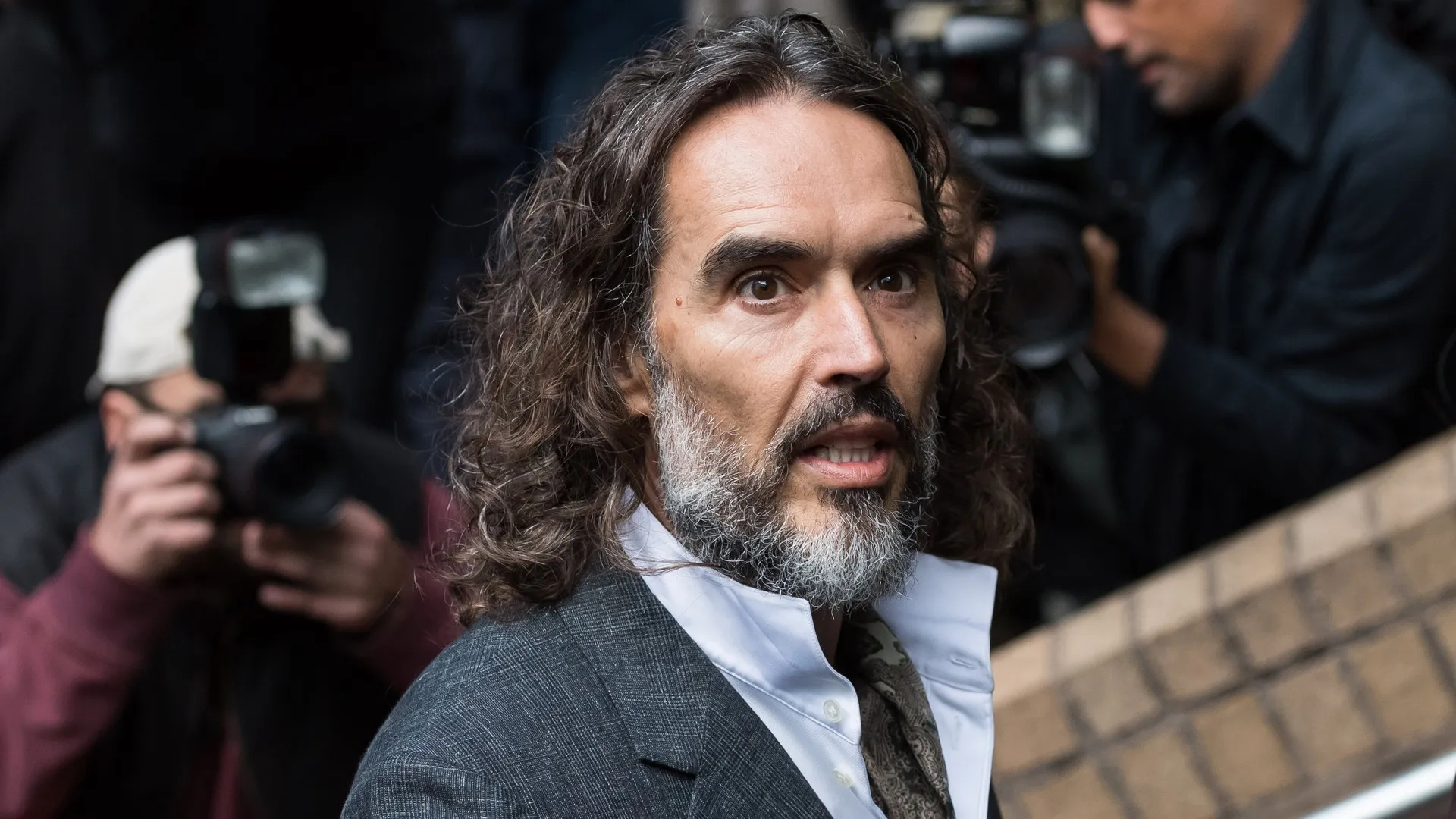
British comedian and actor Russell Brand has pleaded not guilty to seven sexual offence charges involving six women, as prosecutors opened their case against him at Southwark Crown Court in London on Wednesday, October 14, 2026.
During the opening statement, prosecutor Riel Karmy-Jones KC described the 51-year-old entertainer as a “ruthless, calculated and manipulative” sexual predator, alleging that he used his charm and public profile to pursue women and ignored their objections to sexual advances.
Brand denies all the charges, which comprise three counts of rape, three counts of sexual assault and one count of indecent assault. The allegations relate to incidents said to have occurred between 1999 and 2009, when he was establishing himself as a stand-up comedian, television presenter and actor.
The prosecution told the jury that the six women did not know one another and came forward independently after media reports and a television investigation in 2023 brought allegations of sexual misconduct against Brand into public view.
Karmy-Jones said the alleged incidents took place in different settings, including a hotel room, workplaces, a bar toilet and Brand’s home. She argued that his behaviour reflected a pattern of entitlement and disregard for the women’s wishes. These are allegations presented by the prosecution and have not been established as facts by the court.
One allegation concerns an encounter in 1999, when Brand was performing at an event associated with the Labour Party conference in Bournemouth, southern England. The woman involved alleges that he raped her in a hotel room.
Another allegation relates to 2001, when a woman who worked at MTV Europe said Brand attempted to pull her into a toilet cubicle. Prosecutors also outlined accusations involving a bar in London in 2004, an encounter with a media employee around 2004 or 2005, and two separate incidents alleged to have occurred in 2009.
In one of the 2009 allegations, a woman who was 21 at the time said that initially consensual sexual activity became non-consensual. Another woman, who worked for Channel 4, alleged that Brand demanded a massage and then pressed his face into her groin while they were working on a production.
The court is expected to hear evidence from the complainants and other witnesses as the proceedings continue. Their identities are protected in accordance with the reporting restrictions applicable to sexual offence cases in England and Wales.
Brand’s legal position remains that he did not engage in non-consensual sexual activity. Reuters reported that, during police interviews, he declined to answer questions but provided written statements in which he said he did not remember the women and maintained that any sexual activity was consensual.
The first witness to give evidence included Mark Pinheiro, a former friend and fellow performer who knew Brand around the time of the earliest allegation. Pinheiro told the court that Brand appeared unusually anxious after the alleged incident in Bournemouth and later said that things “may have gone a little bit too far”.
Brand’s lawyer challenged Pinheiro’s account, questioning whether the alleged conversation had taken place and pointing out that it had not been mentioned when Pinheiro first contacted police. Pinheiro rejected the suggestion that the conversation did not occur.
The trial marks a significant legal development for Brand, who became widely known in Britain through television and radio before moving into film roles and stand-up comedy. He later built a substantial online following through commentary on politics, religion, health and public affairs.
The allegations first received extensive public attention in 2023 following a joint media investigation involving a television programme and newspaper reporting. Police subsequently investigated the claims, and Brand was charged in 2025.
The proceedings are expected to last around six weeks, although the court has indicated that they could continue longer. Brand remains entitled to the presumption of innocence unless and until the charges are proved in court.
The prosecution’s opening statement sets out the case it intends to establish, rather than a finding of guilt. The jury must assess the evidence presented by both sides before reaching verdicts on the seven charges.