


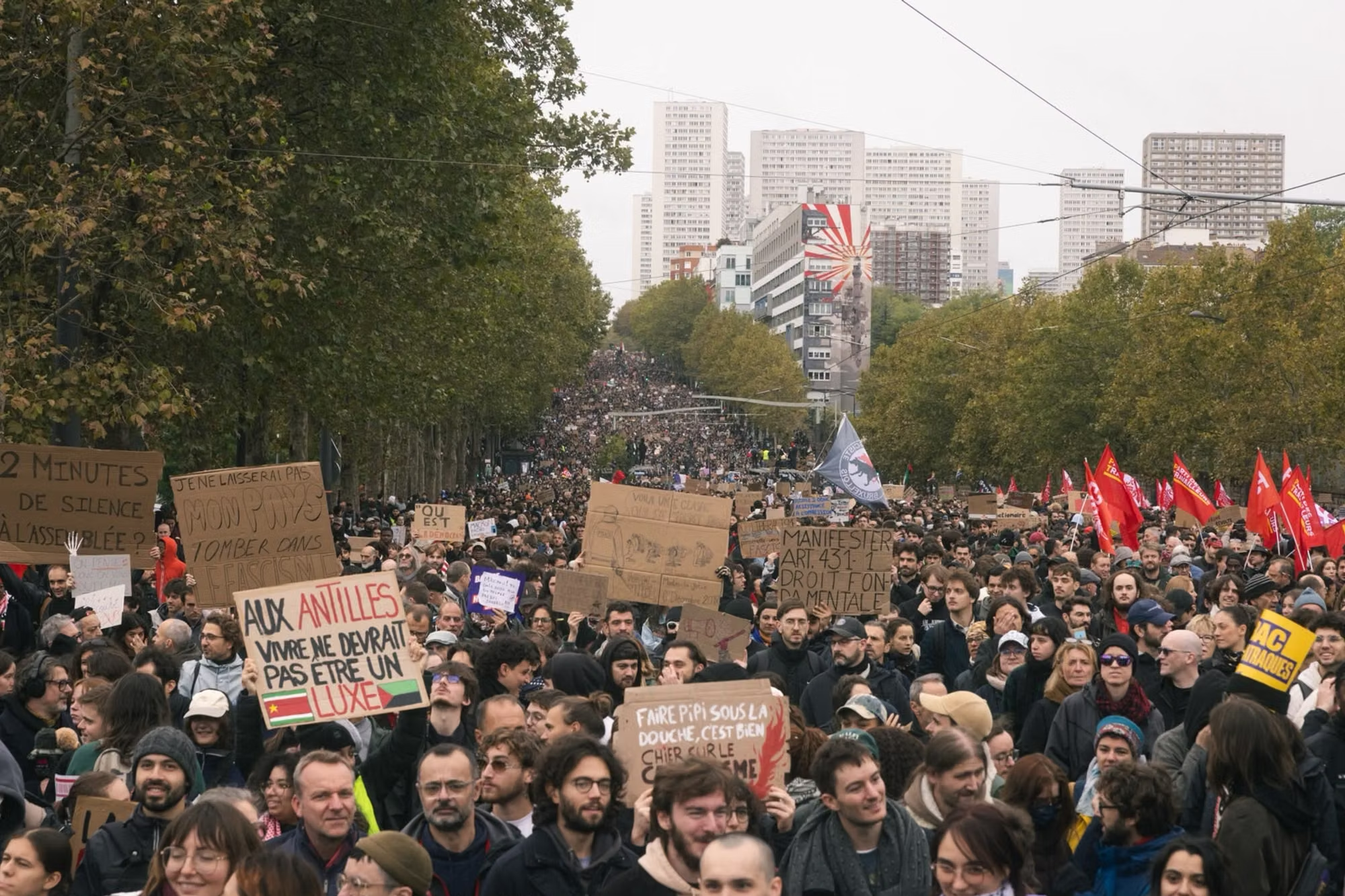
French police arrested 135 people during nationwide demonstrations on Saturday, October 24, as authorities deployed 70,000 police officers and gendarmes to prevent a repeat of the violence that erupted during protests the previous weekend.
Interior Minister Laurent Nuñez announced the arrests by early afternoon, saying security forces had also seized various items considered potential weapons. He added that there had been no major incident at the time of his update.
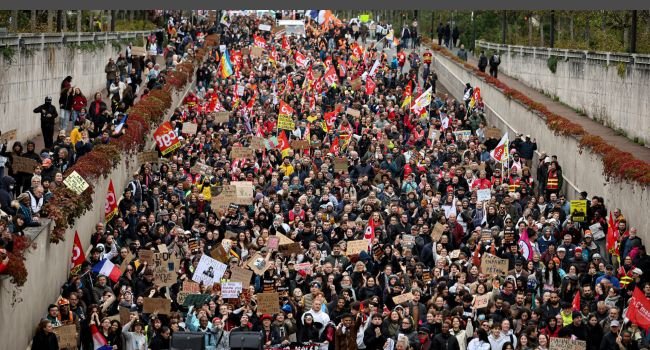
The demonstrations brought together students, workers, trade union members and other protesters angered by rising living costs, declining public services and concerns about economic inequality.
The latest protests followed widespread unrest on October 17, when demonstrations escalated into clashes, looting and attacks on public buildings in several French cities.
Heavy Security Presence Across Major Cities
The French government deployed 70,000 police officers and gendarmes nationwide, 10,000 more than during the previous weekend’s demonstrations.
Authorities also increased security checks, restricted access to certain areas and imposed bans on demonstrations in some city centres.
In Paris, police redirected the main demonstration away from parts of the city centre, while numerous businesses boarded up their windows in anticipation of possible violence. More than 20 metro stations were also closed as part of security measures, according to Reuters.
The increased deployment followed criticism of the authorities’ response to the previous weekend’s unrest, when violent groups damaged businesses and public infrastructure.
Tear Gas Used in Lyon
Although demonstrations in several locations began relatively peacefully, tensions emerged in some cities.
In Lyon, southeastern France, police fired tear gas to disperse approximately 150 protesters gathered in an area where demonstrations had been prohibited. Officers moved against the group after protesters attempted to block a road, according to an AFP journalist cited by Channels Television.
Security personnel also patrolled streets in other major cities, including Marseille, while armoured vehicles and riot police vans were deployed in areas considered vulnerable to disorder.
In Grenoble, authorities prohibited demonstrations in parts of the city and imposed a curfew in selected areas and shopping centres from 6 p.m.
Cost of Living Remains Central to Protests
The demonstrations originated in student protests over school conditions, including teacher shortages and deteriorating facilities, before expanding into a broader movement over living standards.
Participants have raised concerns about rising prices, wages, pensions, public spending and the quality of essential services.
Trade union members and supporters of the Yellow Vest movement have joined the mobilisation, reflecting wider dissatisfaction among groups who say economic pressures are affecting their ability to meet everyday expenses.
In Paris, protesters also challenged the decision to move the main demonstration away from central areas. Some participants argued that restrictions on protest locations limited their ability to make their concerns heard.
The government, meanwhile, has sought to distinguish peaceful demonstrators from individuals involved in violence and looting.
Protesters March Against Far-Right Politics in Orléans
In Orléans, central France, thousands of demonstrators marched against the far-right National Rally party, led by Marine Le Pen, as the party held its congress.
Protesters carried anti-fascist placards and chanted slogans criticising both the National Rally and President Emmanuel Macron.
The demonstration highlighted the political tensions surrounding the nationwide mobilisation, which has brought together people with different grievances and political positions.
Arrests and Seizures Reported
Nuñez said police had seized items including metal balls, lead pellets, fireworks, slingshots, improvised weapons, a katana and airsoft weapons.
Authorities said many arrests followed security checks and searches intended to prevent violence before it occurred.
By early afternoon, the interior minister had reported 135 arrests nationwide. The figure reflected the situation at that time and could change as demonstrations continued.
The government’s extensive security operation underscores its determination to prevent a repeat of the previous weekend’s violence while managing demonstrations driven by economic and social concerns.
The coming days are likely to test whether the authorities can maintain public order while allowing peaceful protests to continue.