


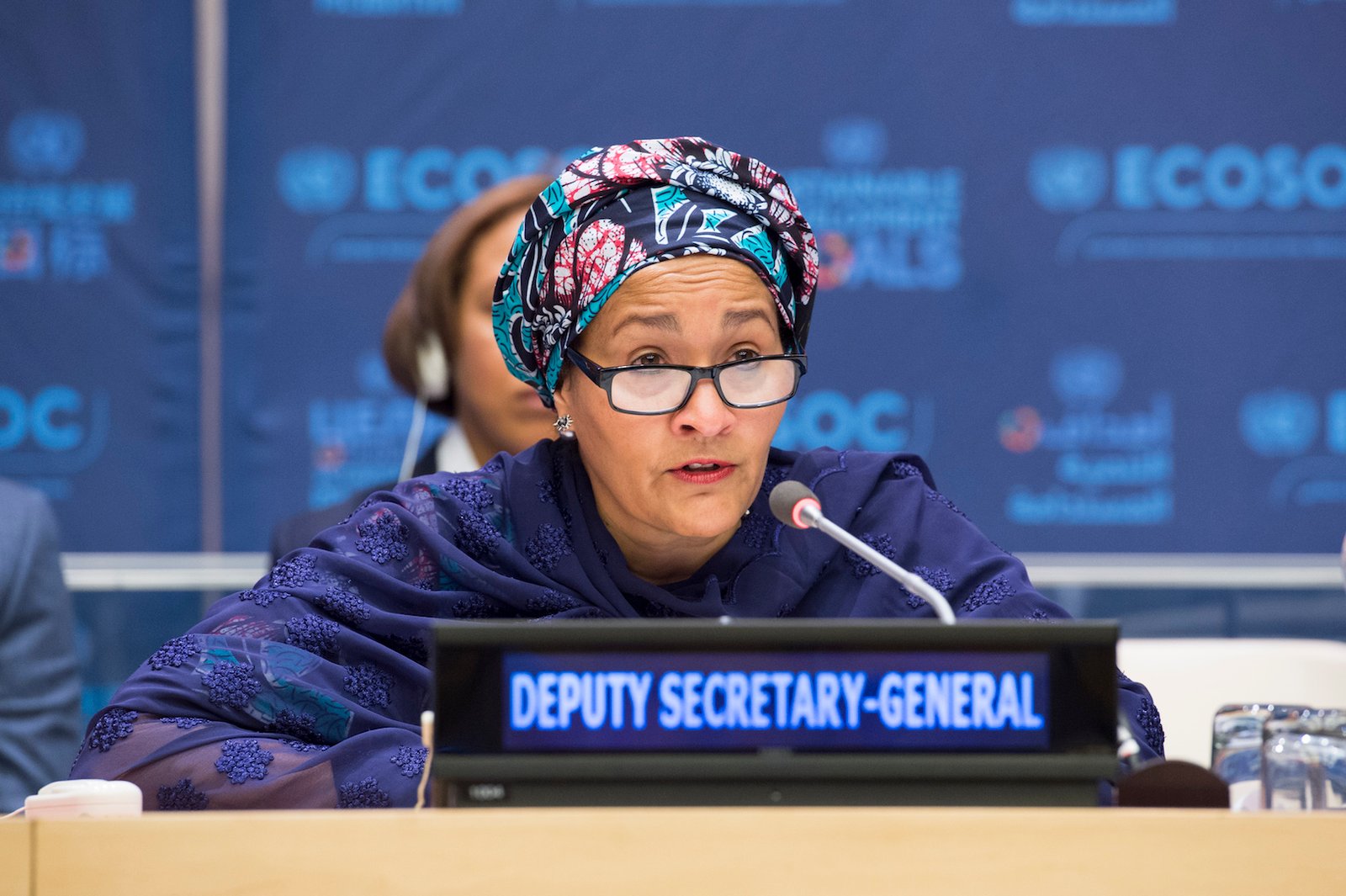
United Nations Deputy Secretary-General Amina Mohammed has urged Nigerians to take greater ownership of the country’s development narrative, saying confidence in Nigeria’s progress can influence how international investors view its economic prospects.
Mohammed made the call during a fireside chat titled “Africa’s Next Development Frontier: Inclusive Growth, Resilience, and Human Dignity” at the 2026 Nigerian Economic Summit in Abuja.
Acknowledging public frustration over decades of economic policy discussions and promises, she challenged Nigerians to examine the obstacles preventing the country from realising its potential while recognising progress already made.
“We have also had the feeling that we’ve been here before—that in Nigeria, we have been talking about these things for decades,” she said, reflecting concerns about whether successive policy initiatives have delivered meaningful change.
Mohammed urged citizens and business leaders to acknowledge incremental improvements rather than focus exclusively on shortcomings. She said the country needed to recognise the progress achieved while continuing to address unresolved challenges.
“We have to be the first confidence-builders of this nation,” she said, warning that the signals Nigerians send internationally could affect investor perceptions of the country.
The UN deputy chief acknowledged that Nigeria continued to face structural barriers to faster economic growth. She argued that confidence-building must go alongside efforts to address these problems rather than replace scrutiny of government policies and their outcomes.
Mohammed also stressed that sustainable development must prioritise inclusive growth, resilience and human dignity. She called on policymakers to complement market-oriented economic reforms with strong social protection measures to ensure vulnerable households are not left behind.
Her remarks came as policymakers, business leaders and investors gathered for the Nigerian Economic Summit to discuss economic reforms, productivity, job creation and shared prosperity.
The challenge for Nigeria, her comments suggested, is to communicate its development potential confidently while ensuring that reforms translate into tangible improvements in people’s living conditions.