


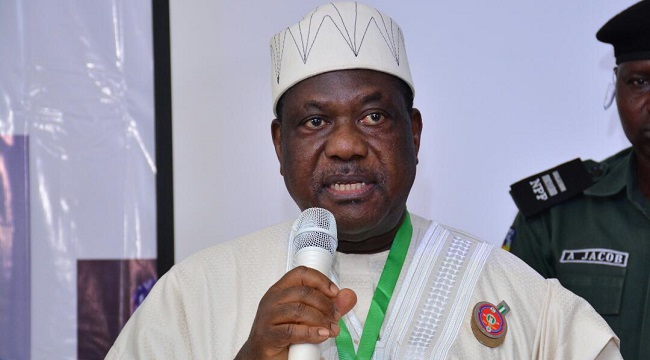
Secretary to the Government of the Federation (SGF), Senator George Akume, has described Nigeria’s North-South power rotation arrangement as fundamental to national unity, urging northern politicians to allow the South to complete its eight-year presidential tenure before seeking power in 2027.
Akume made the call on Wednesday in Abuja while receiving a delegation of the Order of the Knights of St. Mulumba Nigeria, led by its Supreme Knight, Sir Steve Adehi.
According to a statement issued by Chris Ugwuegbulam, Head of Information and Public Relations in the SGF’s office, Akume said the power-sharing understanding emerged from consultations among political leaders in Kaduna in 1999, ahead of Nigeria’s return to democratic rule.
He explained that the arrangement provided for presidential power to alternate between the North and South in eight-year cycles to promote fairness, political inclusion and mutual trust among the country’s diverse regions.
The SGF expressed concern over northern politicians seeking the presidency ahead of the 2027 general election, arguing that the South should be allowed to complete its current tenure following the eight years served by former President Muhammadu Buhari.
Akume maintained that power rotation should not be regarded as a temporary political convenience but as an understanding designed to prevent any region from feeling permanently excluded from the country’s highest political office.
His position comes amid growing political discussions over President Bola Tinubu’s re-election bid and the ambitions of opposition figures, including former Vice-President Atiku Abubakar, ahead of the 2027 elections.
However, the North-South rotation arrangement is a political convention rather than an explicit constitutional requirement. The Nigerian Constitution does not prescribe an alternating regional presidency, making adherence to zoning dependent on political agreements and party arrangements.
During the meeting, Akume also commended the Knights of St. Mulumba for their charitable interventions, including medical assistance, support for vulnerable inmates, provision of boreholes and renovation of schools and hospitals.
He stressed the importance of collaboration between government and non-governmental organisations in addressing social and economic challenges across the country.