


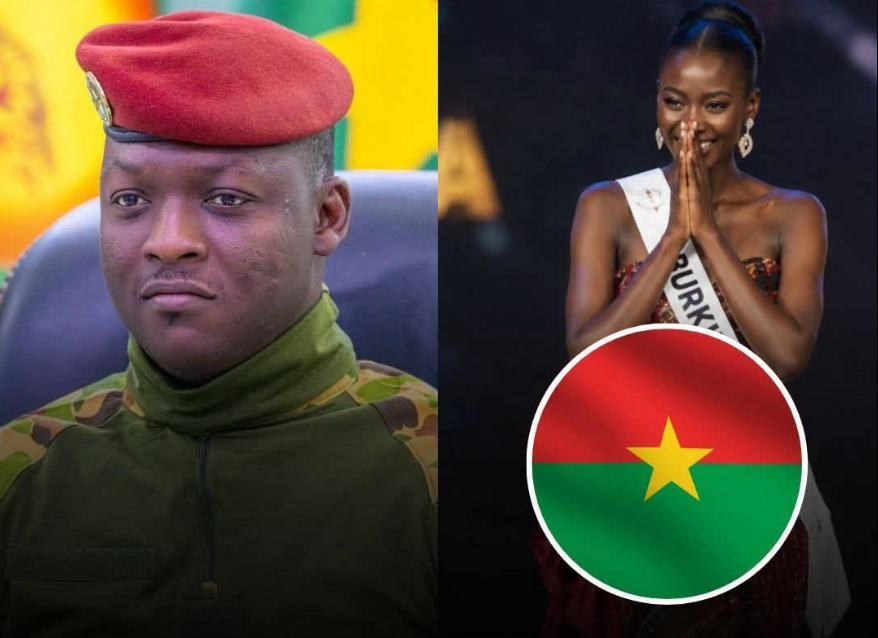
Burkina Faso has temporarily suspended beauty pageants nationwide while authorities develop new regulations, as the government promotes academic excellence among young women through a national science competition known as HAKILI Mousso.
The suspension, announced in June 2026, halted the issuance of new permits for beauty competitions at national, regional and local levels pending a review of the rules governing such events. Authorities said the review was intended to ensure that future competitions reflect the country’s cultural identity, traditional values and standards of human dignity.
The move has drawn renewed attention following the launch of HAKILI Mousso, a presidential initiative designed to identify and encourage young women with outstanding abilities in science. The competition brought together 84 finalists from across Burkina Faso to demonstrate their knowledge of mathematics, physics and chemistry.
The finalists, who completed their science-track secondary school examinations in 2026, underwent a week of preparation before sitting the examinations at the National Scientific High School in Ouagadougou. The initiative seeks to challenge stereotypes that portray scientific disciplines as areas primarily suited to men and encourage more girls to pursue careers in science and technology.
According to Burkina Faso’s government, the competition was inspired by President Ibrahim Traoré as part of efforts to recognise female scientific talent and strengthen the country’s technical capacity. Officials said the initiative would provide young women with opportunities to pursue university education and develop skills that could contribute to national development.
The competition culminated in an awards ceremony on September 19, 2026, attended by senior government officials and representatives of the education sector. Prime Minister Rimtalba Jean Emmanuel Ouédraogo represented Traoré at the ceremony.
The five highest-performing candidates in each of the three subjects were recognised, making 15 subject laureates. The top-ranked candidate in mathematics, physics and chemistry received two million CFA francs, a laptop, a motorcycle and additional prizes. Other high-performing contestants also received awards, while the teachers who prepared the leading candidates were recognised for their contributions.
The government also announced educational support for all 84 finalists, including national scholarships, access to university accommodation and dining facilities, and health coverage during their studies. The beneficiaries will be able to choose their preferred university course and higher education institution, subject to the programme’s arrangements.
Following the competition, Traoré received the finalists at the presidential palace, where the young women discussed their academic ambitions and the role of scientific expertise in Burkina Faso’s future. The initiative was presented as an effort to promote female leadership and encourage young women to contribute to the country’s development through research, innovation and technical professions.
Burkina Faso’s authorities have said the suspension of beauty pageants does not necessarily mean the competitions will disappear permanently. Culture Minister Pingdwendé Gilbert Ouédraogo said the events could return in a revised format designed to promote Burkinabè women while reflecting national cultural values.
The minister has cited the proposed use of traditional fabrics and locally rooted forms of presentation as possible features of future competitions. The government’s position is that beauty pageants should be reorganised rather than simply continued under their previous format.
The policy has also prompted questions about the relationship between cultural regulation, women’s personal choices and empowerment. Supporters of HAKILI Mousso have welcomed the emphasis on academic achievement and the encouragement of girls to enter scientific fields. Others may question whether suspending beauty competitions is necessary to achieve those goals.
The initiative comes against a backdrop of gender disparities in scientific education. Data presented by Burkina Faso officials showed that women accounted for 36.7 per cent of enrolment in scientific courses during the 2025–2026 academic year, compared with 59.5 per cent in non-scientific fields.
By combining scholarships, recognition and opportunities for further education, HAKILI Mousso is intended to encourage more young women to pursue science-related careers. Whether the initiative produces lasting changes will depend on continued educational support, access to scientific training and opportunities for women to enter technical professions.
For now, Burkina Faso is pursuing two parallel approaches: reviewing beauty pageants to bring them in line with its stated cultural priorities and investing in a competition that places young women’s scientific knowledge and academic potential at the centre of public recognition.