


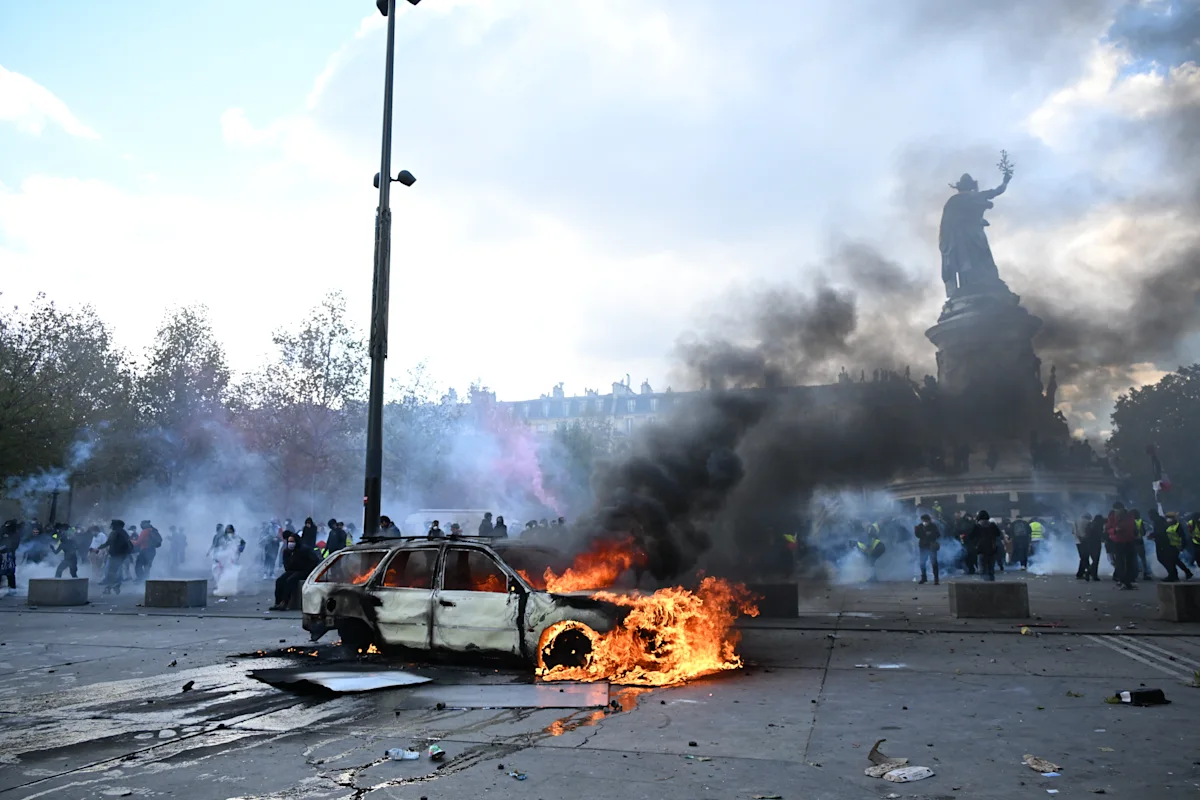
Protests against rising living costs in France escalated into violent confrontations on Saturday, October 17, with clashes between demonstrators and police, fires and looting reported in several cities as public anger over prices, fuel costs and declining purchasing power intensified.
The demonstrations brought together students, workers, trade union members and supporters of the Yellow Vest movement, which emerged in 2018 in opposition to fuel-price increases and broader economic grievances. The latest mobilisation also reflected dissatisfaction with public services, particularly the state of schools, where students have staged protests over teacher shortages, overcrowded classrooms and inadequate facilities.
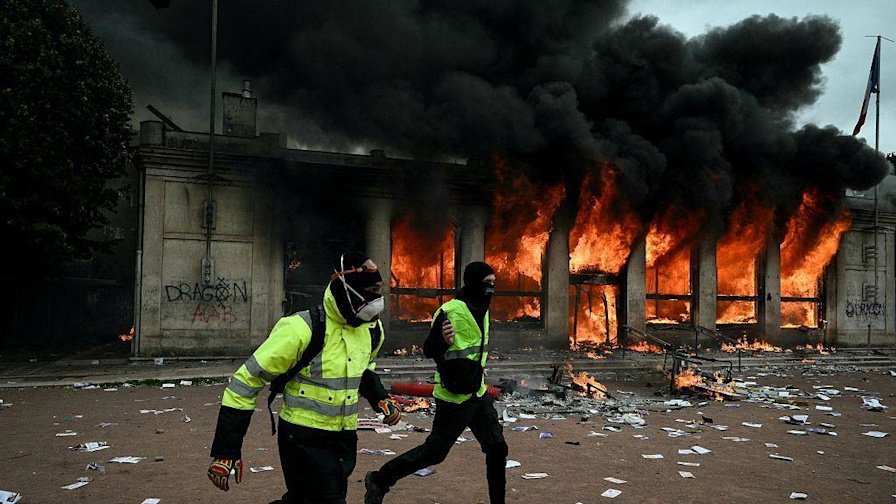
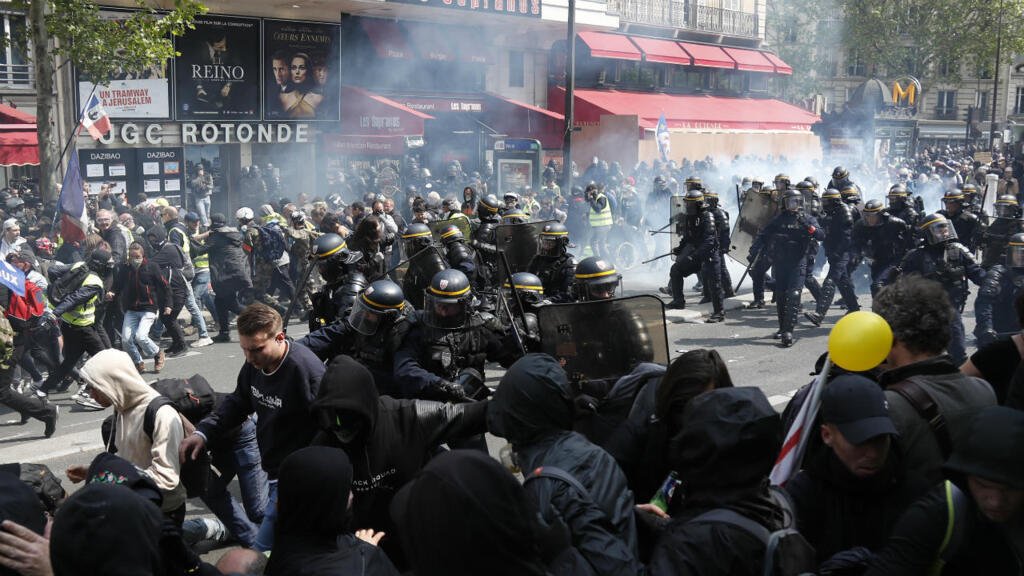
Violent incidents were reported in Paris, Marseille, Lyon and other cities. In the French capital, police used tear gas and water cannons against groups throwing fireworks and other objects at officers. Fires were reported involving vehicles and street infrastructure, while some shops were looted during confrontations on the sidelines of the demonstrations.
In Lyon, a fire broke out at the city’s tourist office, while Marseille experienced damage to shops and public facilities. Other cities also reported clashes and attacks on buildings. The incidents prompted a substantial security response as authorities attempted to restore order.
The scale of the violence varied across locations, and reports indicated that many participants joined peaceful marches. The unrest was associated with a smaller number of confrontations, vandalism and looting rather than every demonstration turning violent.
Photos from the scene sourced online..
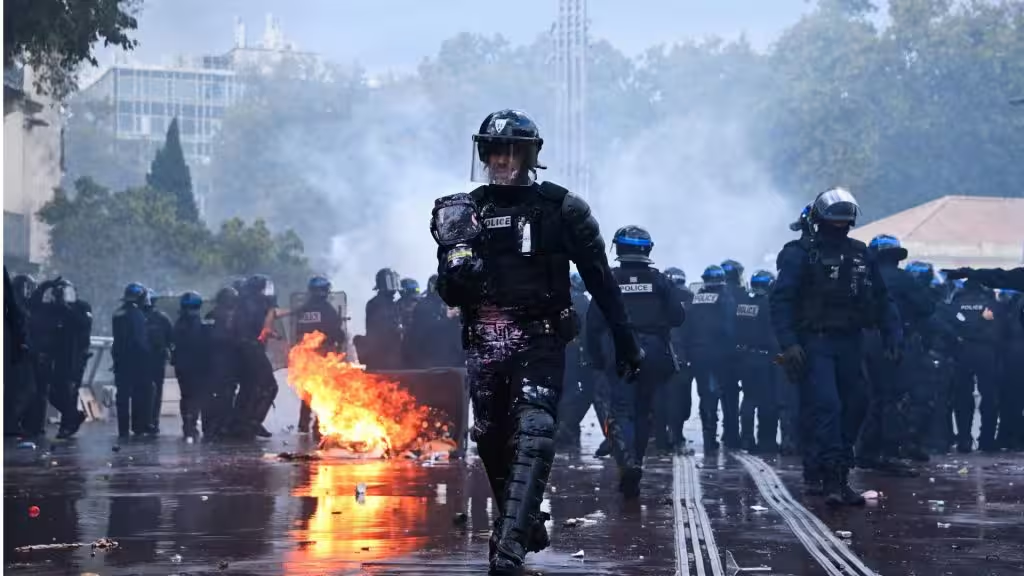
French authorities reported hundreds of arrests during the nationwide mobilisation. Estimates of participation differed between official figures and those provided by organisers, reflecting the difficulty of measuring turnout across multiple demonstrations.
The protests have grown from student-led demonstrations that began in September over educational conditions. They subsequently attracted wider support from workers, unions and activists concerned about inflation, fuel prices, wages, pensions and the pressure on household budgets.
The revived Yellow Vest mobilisation has added another dimension to the demonstrations, bringing back memories of the nationwide unrest that challenged President Emmanuel Macron’s government in 2018 and 2019. The current protests are unfolding ahead of France’s 2027 presidential election, adding to the political pressure surrounding the government’s response to economic hardship and public dissatisfaction.
Macron condemned the violence and called for respect for people and property, while Prime Minister Sébastien Lecornu criticised the destruction associated with the unrest. The government faces pressure to address demonstrators’ economic concerns while maintaining public order and holding those responsible for criminal acts accountable.
The latest unrest highlights the challenge facing French authorities as cost-of-living concerns converge with student grievances and wider dissatisfaction with public services. Whether the demonstrations lead to sustained nationwide mobilisation will depend partly on the government’s response and the willingness of the different groups involved to maintain a common campaign.