


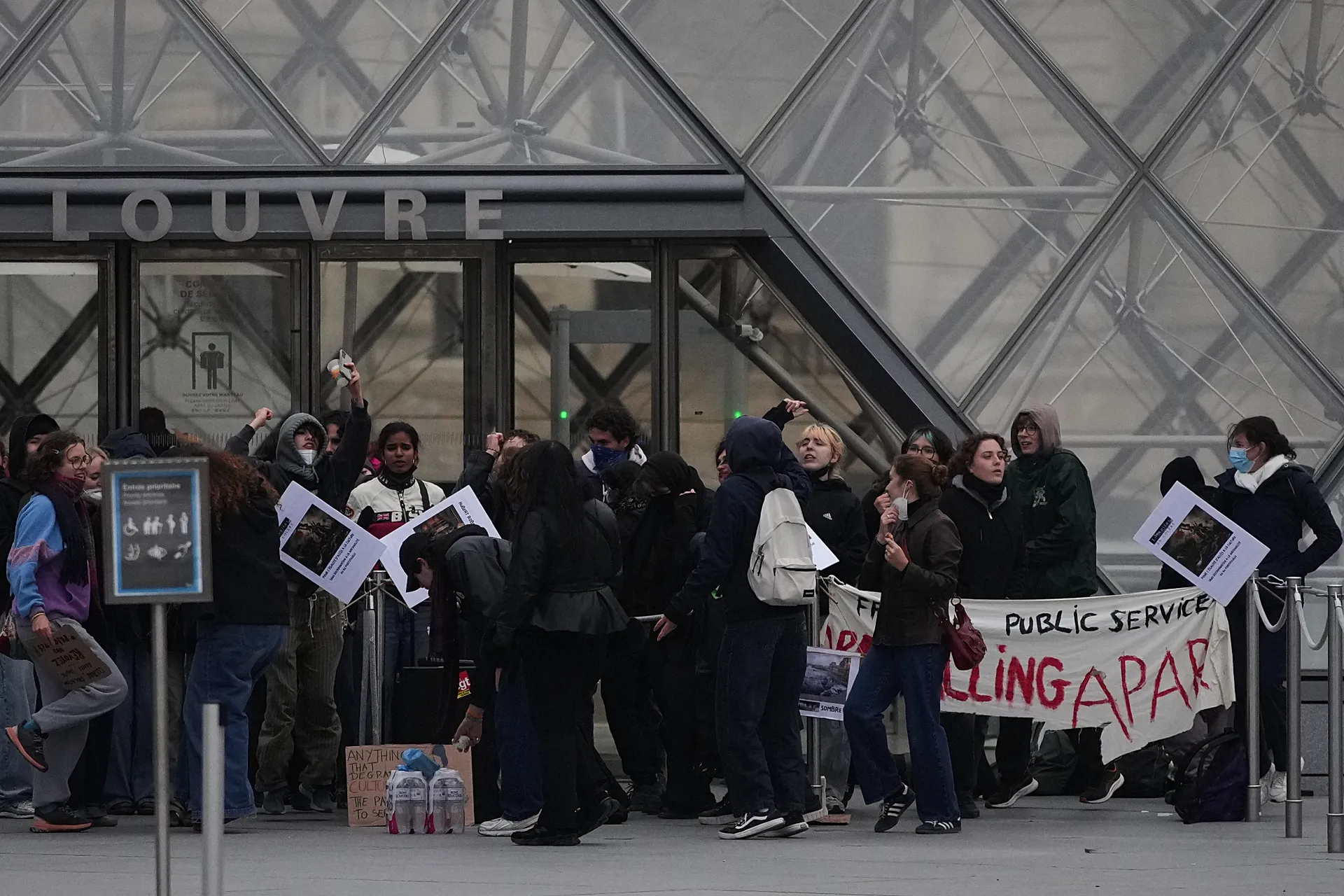
The Louvre Museum in Paris was forced to remain closed on Monday after protesters blocked its entrances in solidarity with a nationwide student movement, as France struggled to contain growing public anger over the cost of living and worsening conditions in public schools.
The demonstration on October 19 brought one of the world’s most visited museums into the centre of a wider wave of unrest that has swept across France in recent weeks. Students from the École du Louvre, an institution specialising in art history and museum studies, joined the action to support high school students and denounce what they described as police repression of protesters.
The museum was unable to open to visitors at its scheduled time of 9 a.m. as demonstrators blocked access and distributed leaflets explaining their demands. The Louvre’s management said the institution had become a platform for a broader protest movement rather than the direct target of the demonstration.
The blockade followed a weekend of nationwide demonstrations over rising living costs that escalated into violence, looting and attacks on public buildings in several French cities. The unrest has intensified pressure on President Emmanuel Macron’s government, which is facing mounting criticism over public services, household expenses and its handling of demonstrations.
According to French authorities, more than 2,300 people were taken into police custody over the weekend. The violence also caused extensive damage to businesses, with thousands of shops reported to have been affected or threatened by vandalism and looting.
The protests initially emerged from student grievances over conditions in secondary schools, including staffing shortages and concerns about the quality of education. They subsequently broadened to encompass rising prices, wages, public spending and dissatisfaction with government policies.
The Louvre demonstration also drew support from workers and trade union representatives in the cultural sector. Participants raised concerns about funding cuts and working conditions, linking the challenges facing cultural institutions to broader complaints about the state of public services.
The disruption left visitors unable to enter the museum as demonstrators maintained their presence around the entrances. The incident also highlighted the extent to which the protests have spread beyond schools and traditional political gathering points to prominent cultural institutions.
Macron has ordered a review of security arrangements following the weekend’s violence, acknowledging failures in the authorities’ preparations and response. Interior Minister Laurent Nuñez admitted that police had lost control in some cities during the unrest and offered his resignation, but the president rejected it.
The government is under pressure to restore public order while responding to the underlying grievances driving the demonstrations. Authorities have considered local restrictions on gatherings and other targeted security measures as they seek to prevent further violence.
The unrest has also raised concerns among businesses, particularly retailers and hospitality operators, over the financial consequences of damaged premises, looting and disruptions to normal trading. Business representatives have warned that the losses could run into hundreds of millions of euros.
Meanwhile, the Yellow Vests movement, which organised the weekend’s rallies, has called for another round of protests on Saturday, raising the prospect of further demonstrations in the coming days.
The movement’s renewed activity comes amid wider discontent over inflation and household purchasing power. Although the latest protests began with demands linked to education, the spread of demonstrations reflects broader frustrations over living standards and the perceived deterioration of essential public services.
Developments in France are also being watched elsewhere in Europe, where rising housing costs and pressure on household budgets have fuelled protests in countries including Spain, Portugal and Italy.
For the Louvre, Monday’s closure underscored how the unrest is disrupting everyday life and major public institutions. For the French government, the challenge is to contain the violence without deepening tensions with protesters whose grievances extend beyond policing to the cost of living and the quality of public services.
With another round of demonstrations expected, the coming days will test the government’s ability to restore calm while addressing the concerns that have brought students, workers and other demonstrators onto the streets.