


By Femi Mustapha in Kaduna
The British Government, the United Nations Office on Drugs and Crime, UNODC, and key Nigerian anti-corruption agencies have thrown their weight behind the Africa Network for Environment and Economic Justice, ANEEJ, in its push for a unified and transparent data management system for recovered assets in Nigeria.
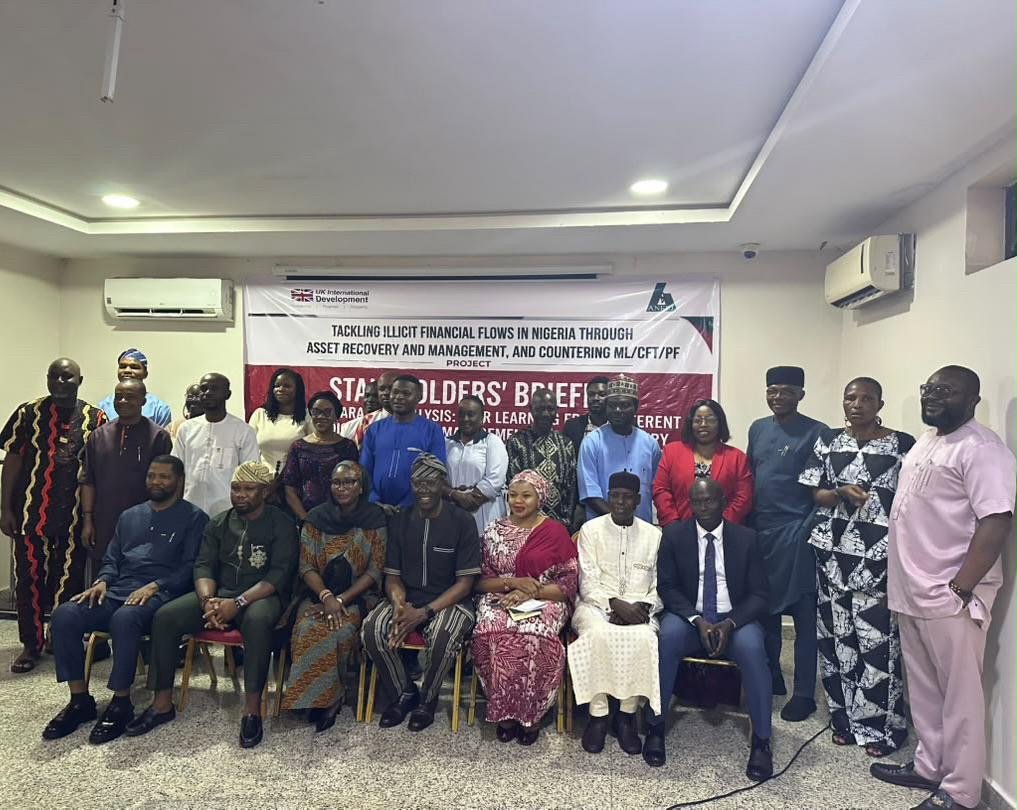
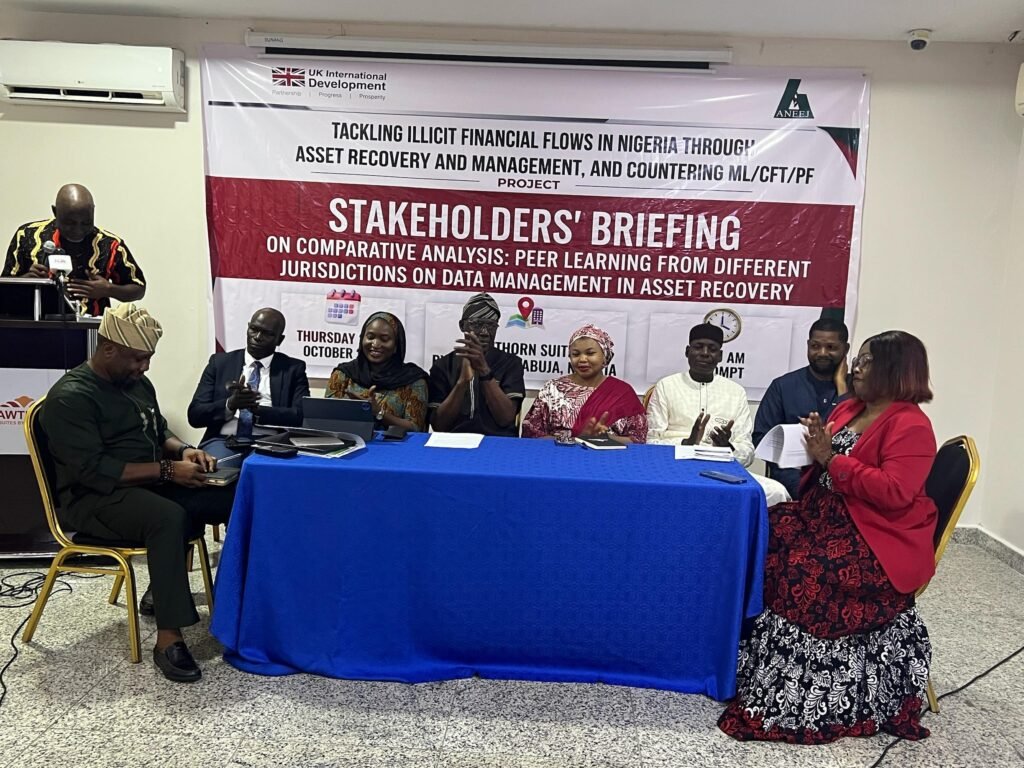
The endorsement came on Thursday at a stakeholder briefing on peer learning from different jurisdictions on data management in asset recovery held in Abuja.
Declaring the briefing open, the Executive Director of ANEEJ, Rev David Ugolor, who was represented by the Deputy Executive Director, Comrade Leo Atakpu, said ANEEJ convened the dialogue to strengthen transparency, accountability and integrity in Nigeria’s asset recovery process, noting that recovering an asset is only part of the task and that reliable data is critical to accountability.
According to Ugolor, stakeholders need to know what was identified, frozen, forfeited, where it is and how it is being managed, stressing that “without reliable data, that story cannot be told with confidence.”
He explained that ANEEJ studied how the United Kingdom, Italy, France and the United States manage asset recovery data and compared their practices with Nigeria’s framework under the Proceeds of Crime (Recovery and Management) Act, 2022, which he said gives Nigeria a strong legal foundation but still has implementation gaps.
Ugolor noted that as at April 2026, some agencies are already uploading data to the central database, while others are still finalizing access. Others have not started, adding that the database is not yet available to the public through a user-friendly portal. Nigeria still lacks a single persistent identifier for assets across agencies, courts and the Treasury.
Speaking for the British Government, the Illicit Finance Adviser at the Foreign, Commonwealth and Development Office (FCDO, British High Commission, Jehanzeb Khan, represented by Anicestus Atakpu, commended ANEEJ and said the UK values its long-standing partnership with Nigeria in fighting corruption and illicit finance, noting that effective asset recovery depends on reliable, transparent and accessible data systems.
Also speaking, the Country Representative of UNODC in Nigeria, Cheikh Ousmane Touré, represented by Princess Chifiero, who leads the anti-corruption portfolio, praised ANEEJ’s consistency and said Nigeria is a leading country in asset recovery, citing the launch of a national database of forfeited assets last May and Nigeria’s exit from the FATF grey list in October.
She cautioned that recovery is half the job, saying, “What was recovered? Where is it now? Is it worth it today? And what is it being used for? Until you can answer those questions from reliable records, public confidence will continue to stay fragile,” while citing Articles 31 and 57 of UNCAC and pledging UNODC support through its Stolen Asset Recovery Initiative with the World Bank and the GlobE Network.
On her part, the Director General of NAPTIP, Binta Lami Adamu Bello, OON, represented by Dr Amina Sa’idu Dauda, Senior Investigation Officer and Head of POCA Unit, said the comparative analysis is timely and transformative and that for NAPTIP, asset recovery is central to fighting human trafficking, declaring support for a unified, accurate and tamper-proof system.
Similarly, the Inspector General of Police, Olatunji Rilwan Disu, in a message delivered by DC Ibrahim M. Musa, Head of POCA Unit at the Force Criminal Investigation Department, described asset recovery as a hydra-headed issue surrounded by accountability and mistrust, and welcomed civil society’s constructive engagement to build stronger institutions.
In his goodwill message, the Chairman of the Code of Conduct Bureau, CCB, Dr Abdullahi Usman Bello, represented by Dr Fatima Kere Ahmed, Director of POCA in the Bureau, said recovery goes beyond tracing and seizure and requires proper documentation and preservation of asset value, calling for harmonized data management standards.
The Chairman of the ICPC, Dr Musa Adamu Aliyu, SAN, represented by Adamu Baba, Head of Asset Disposal Branch, said recovering an asset is the beginning of responsibility to preserve its value, noting challenges of fragmented records, inconsistent reporting and limited tracking beyond forfeiture, and advocating for common asset identifiers and transparent reporting.
Rounding off the messages, Civil Society Adviser at the Open Government Partnership headquarters, Uchenna Arisukwu, said asset recovery is critical to raising resources for government to deliver public goods, noting that OGP National Action Plan 4 has a commitment on asset recovery led by the Attorney General, and that management is as critical as recovery to prevent re-looting.
ANEEJ said the report is still a work in progress and urged stakeholders to review it and provide corrections to generate practical recommendations to strengthen Nigeria’s asset recovery ecosystem.