


By: Femi Mustapha in Kaduna
Non-State Actors in Kaduna State have intensified their advocacy for increased agricultural funding and greater budget transparency ahead of the 2027 budget, demanding that the government allocate the 10 percent share to agriculture as outlined in the CAADP Kampala Declaration.
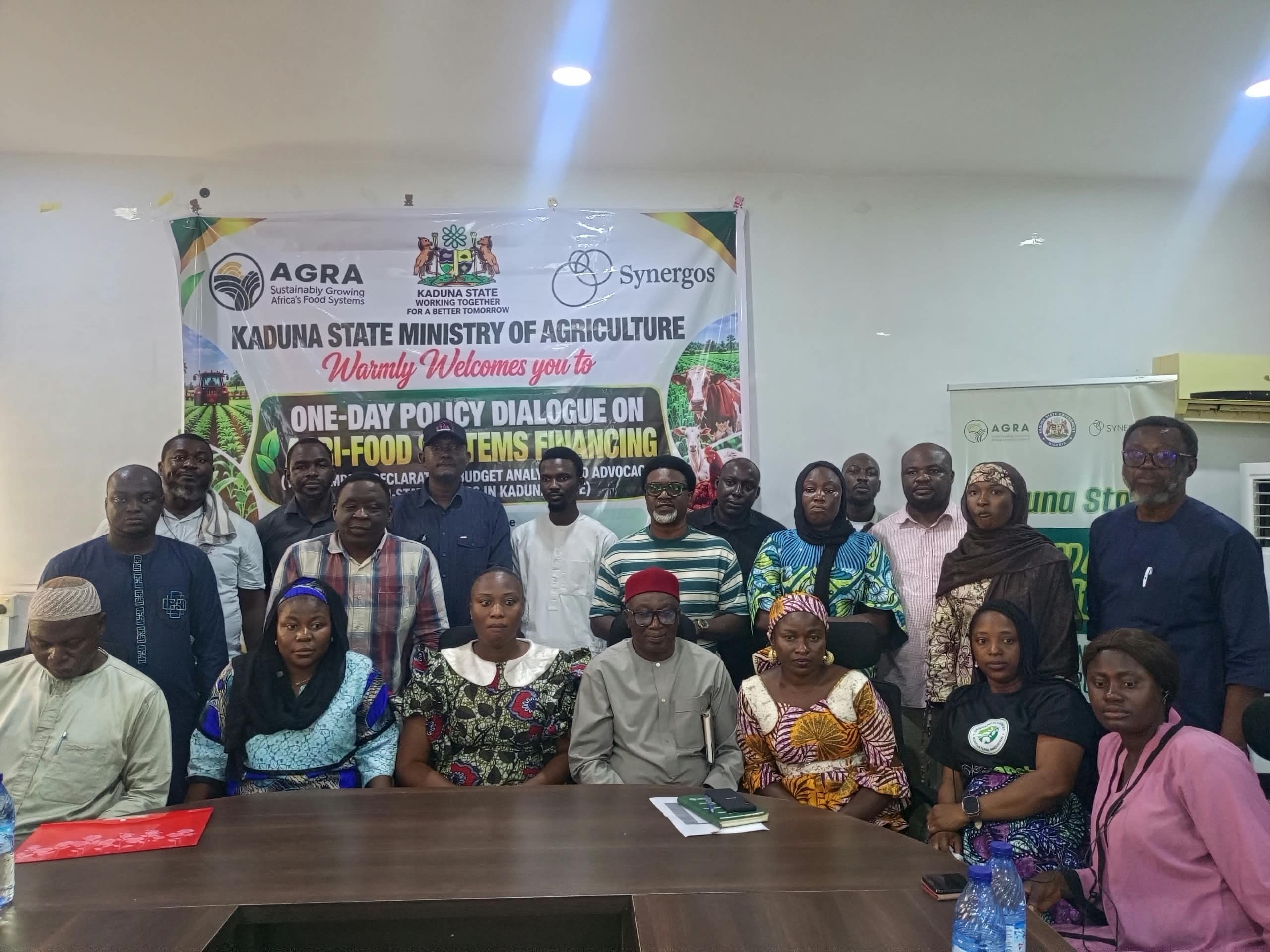
This was the focus of a Roundtable Dialogue on CAADP and Agri-Food System Financing, organized by the Kaduna Agriculture Advocacy and Social Accountability Mechanism (KADASAM), in partnership with Synergos and AGRA, on Tuesday, September 16, 2026, at the Ministry of Agriculture Conference Room, Kaduna.
According to the organizers, the meeting aimed to align continental agricultural commitments with sub-national budget execution through capacity building, budget analysis, and strategic policy development, including raising awareness about the transition from the Malabo Declaration to the Kampala Declaration (2026–2035).
During the dialogue, Mr. Adejo Abel I. of the Citizens Center for Inclusive Development and Sustained Initiative and a member of Kaduna’s agricultural platform highlighted Kaduna’s leading role in the Open Government Partnership and in Center oversight, which has become a model for other states.
He recalled that in June, Kaduna non-state actors shared insights with civil society groups from Niger State, eager to understand Kaduna’s approach to government budget engagement, and also participated in a North-Central civil society meeting in Nasarawa State to evaluate budget performance against the Kampala 10 percent target ahead of the 2027 budget.
Adejo mentioned that the Kaduna Planning and Budget Commission has released the Medium-Term Expenditure Framework (MTEF), calling on civil society to engage both the Commission and the Ministry of Agriculture to ensure citizens’ voices are considered in the 2027 budget.
He noted that a review of the Ministry of Agriculture’s budget implementation shows about 28 percent performance for the combined first and second quarters, emphasizing that each quarter should ideally achieve 25 percent to reach 100 percent by year’s end, while expressing confidence that performance will improve in quarters three and four.
The main goal of the roundtable, he said, is to produce a Joint Non-State Actors Position Paper to be presented at the upcoming State Council on Agriculture meeting, stressing that better agri-food financing will create more jobs, sustain farmers’ livelihoods, and boost Kaduna State’s GDP and internally generated revenue.
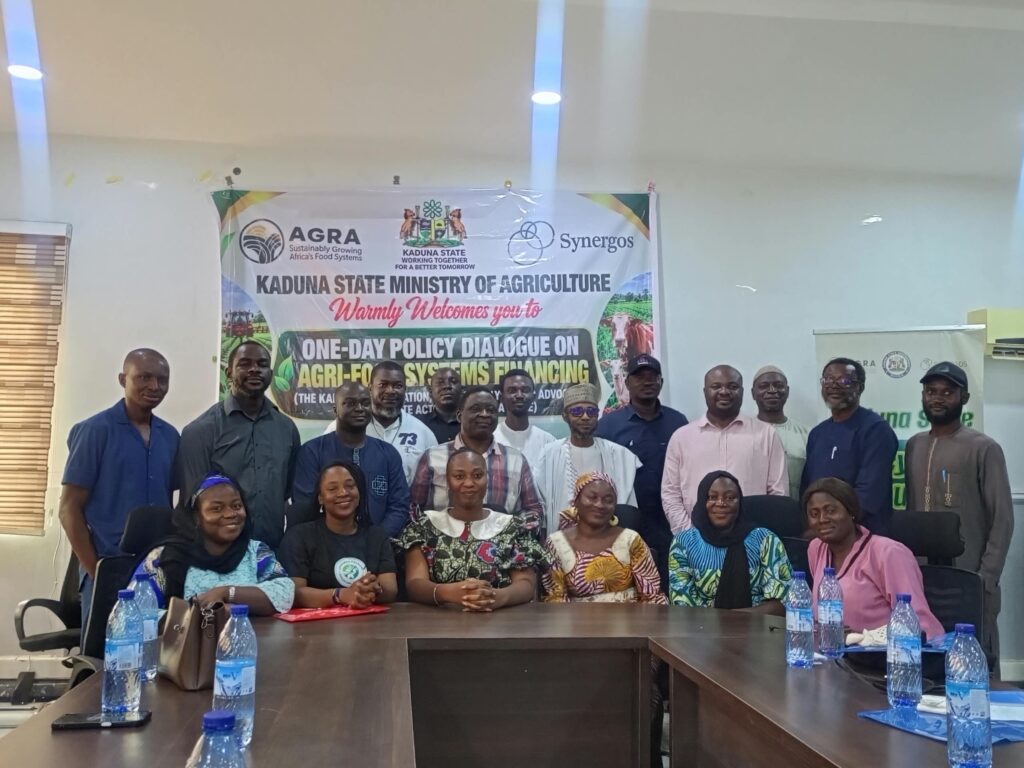
Also speaking, Mr. Yusuf Ishaku Goje of the Civic Impact for Sustainable Development Foundation explained that the dialogue brought together non-state actors from civil society, the private sector, academia, and the media to discuss the Kampala Declaration and the state’s agricultural performance on the agricultural budget. Goje added that the position paper would be submitted as a memo to the State Council on Agriculture and would serve as an advocacy tool during the budget town hall with the Governor and during the public hearing at the State House of Assembly.
He emphasized that non-state actors are essential stakeholders in agriculture, including smallholder farmers, agribusinesses, media, civil society, and research institutions, all responsible for ensuring that government investments benefit the entire value chain, from production to consumption.
He pointed out that under the Kampala Declaration, the focus has expanded from agriculture alone to agri-food systems, encompassing nutrition, health, education, and security. He stressed that NSAs must work to ensure that genuine farmers receive support, the private sector operates within an enabling environment, that research institutions are funded, and that civil society holds government accountable.
This Kaduna engagement aligns with the national stance adopted at the Two-Day Budget Refresher Training and Pre-Consultative Meeting on the 2027 Agrifood Systems Budget held in Lagos from August 3-4, 2026, supported by GIZ’s Global AgSys Program Nigeria, ActionAid Nigeria, and the Community of Agriculture Non-State Actors in Nigeria (COANSA).
At the Lagos meeting, program state actors recognized the Kampala Declaration and the National Agricultural Technology and Innovation Policy (NATIP 2022–2027). Still, they voiced concerns over the sharp decline in the federal government’s agricultural capital budget implementation, which fell from 94.05 percent in 2023 to 78.39 percent in 2024, and further to 43.77 percent in 2025.
They also noted that an Agrifood Systems Political Economy Analysis indicates that targeted investments of at least N15 billion per state could boost each state’s Internal Revenue Generation (IGR) by 6.22 percent to as high as 618.07 percent, with Kebbi, Yobe, Zamfara, Gombe, and Ekiti expected to see the highest gains.
The non-state actors called on the federal government to ensure the 2027 budget fulfills its 10 percent commitment, reverses the decline in capital implementation through consistent and full releases, allocates at least N15 billion in strategic capital to each state, guarantees fair producer pricing and targeted input subsidies, and enhances budget transparency.
They further urged the formal inclusion of COANSA in the 2027 budget planning, defense, and monitoring processes. They proposed establishing an annual NSA-Government budget dialogue to promote ongoing collaboration and accountability.
.