


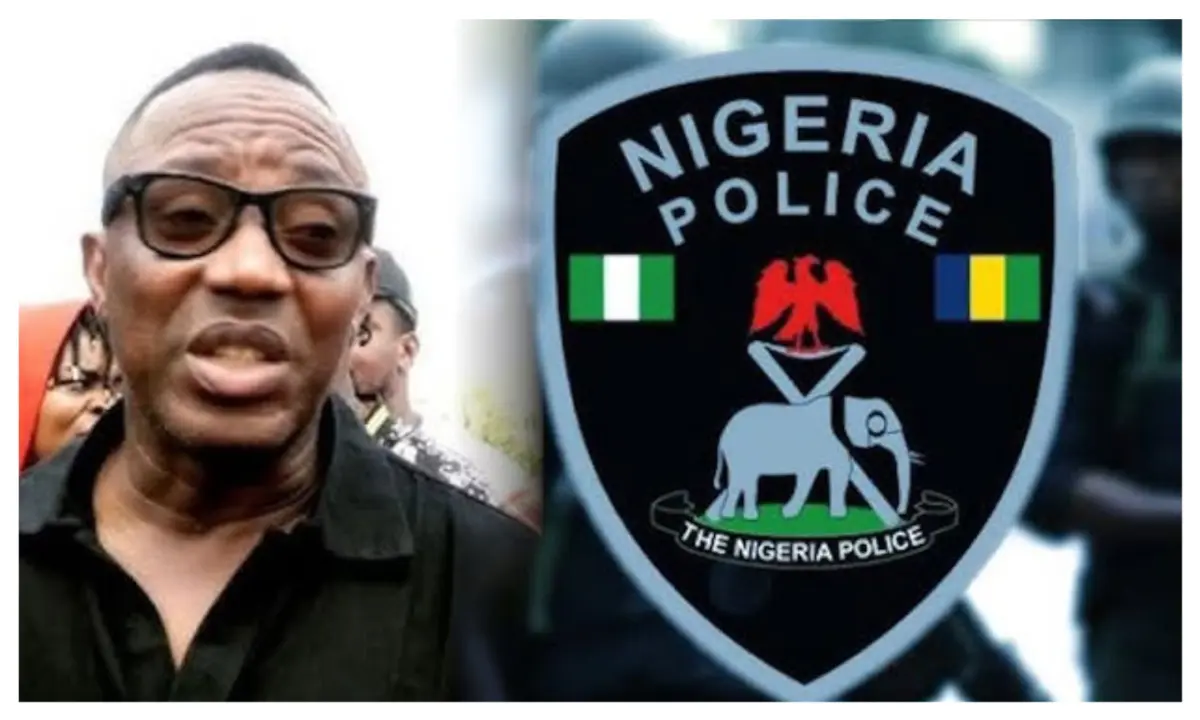
The presidential candidate of the African Action Congress (AAC), Omoyele Sowore, has called for caution over the state police bill and wants discussions about the matter shelved until after the 2027 general elections.
Sowore, an activist, said the timing of the bill and deliberations about state police is coming at the wrong time, especially with the election months away.
“I would say that we wait until the elections are over. The election is a major distraction at this time — the election is months away, and everybody is going to be more interested in how to campaign, how to choose their candidates, and how to ensure the elections are free and fair,” the publisher said on Tuesday’s edition of Channels Television’s The Morning Brief.
“To now insert state policing, a very major, major constitutional change of fundamental federal structural change that could lead to structural damage or that could lead to interference with the election, is not the best time.
“That is the only issue I have with it being rushed. So when we are done with the elections, we can commence immediately with a conversation about state policing and who is where in terms of breaking down the architecture in the country.”
On Monday, the Chief of Staff to the President, Femi Gbajabiamila, said President Bola Tinubu is expected to take the next major step in Nigeria’s proposed policing reforms on September 3, when the draft national policing bill is scheduled to be presented to him for approval.
During a briefing at the State House after a meeting of the Presidential Working Group on the National Policing Bill, Gbajabiamila said, “The resulting executive bill package is scheduled for presentation to the President on the third of September. Subject to his approval, a national consultation on the completed draft will follow.”
“But I think that we have tweaked that so the national consultation will come before the President’s final approval, after which the text and supporting materials will be revised and prepared for formal transmission to the National Assembly,” Gbajabiamila, who also chairs the Presidential Working Group, said.
The former Speaker of the House of Representatives said the approved work programme is a seven-week, milestone-driven exercise running from July 27 to September 14, 2026, with legal drafting, policy research, data analysis and implementation modelling taking place simultaneously.
However, Sowore has faulted the move, saying the decision on state police is being rushed.
According to him, there should be ample time for Nigerians to debate the issue and make inputs, citing the critical nature of the matter.
He said: “I also align, and I agree with those people who say this is suspicious, that this is being rushed and it’s not going through proper parliamentary procedures for the enactment of a major law like this, because this is a major constitutional change that we are going to experience.
“And that it should have been open to public debate. It should have gone across the states so that the public can make input, but we are being rushed and considering that the election year [is around the corner].”
Sowore also expressed concern over how governors will handle state police, claiming that “Nigerian state governors are not trustworthy to be handed, you know, security personnel of this scale”.
The AAC presidential candidate said he is concerned about it “so that we don’t end up in the middle of elections with state police in the hands of these very ravenous political juggernauts who are called governors, apparently some of the most powerful politicians in the country?”
Calls for state police have heightened in recent times, with insecurity worsening in certain parts of the country. President Bola Tinubu had promised to expedite action on the passage of the state police bill and has asked the National Assembly to hasten work on the document.
But critics fear that state police may be abused and are also concerned about funding for it.