


From: Femi Mustapha in Kaduna
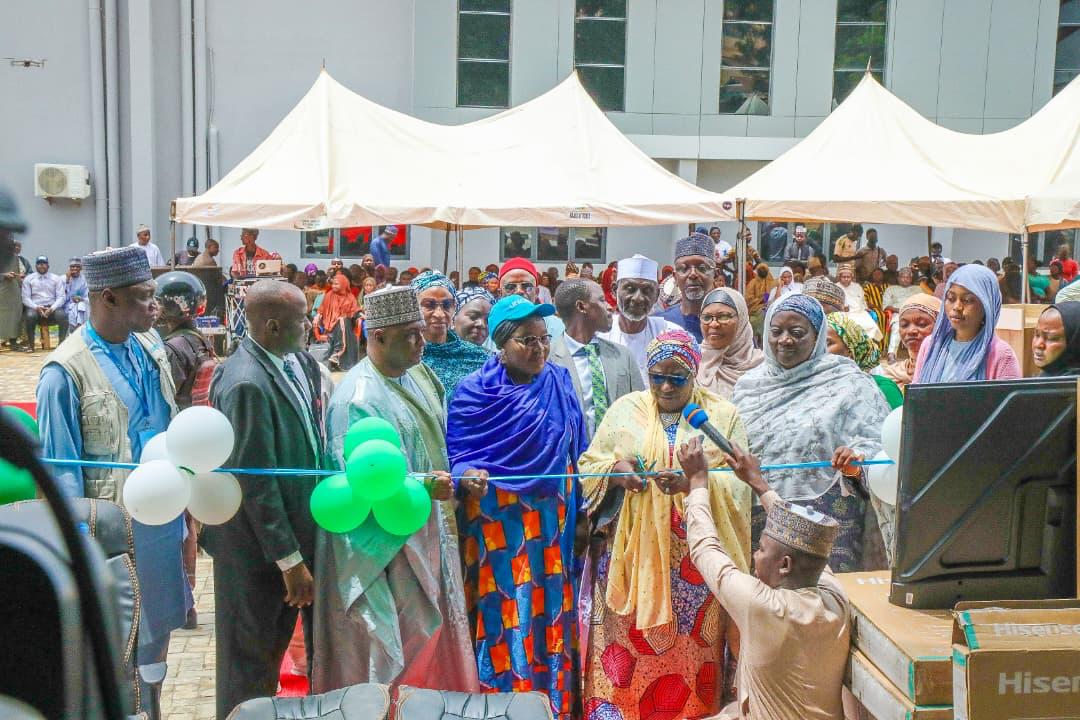
The Kaduna State Government, in partnership with UNICEF and Global Affairs Canada, today launched and distributed Adolescent and Young People (AYP) Safe Space equipment along with Maternal, Newborn, and Child Health (MNCH) supplies to selected primary healthcare facilities across the state.
Speaking during the event on behalf of Governor Uba Sani, CON, Deputy Governor Dr. Hadiza Sabuwa Balarabe said the initiative demonstrates the administration’s commitment to building a healthcare system where every citizen, regardless of age, gender, location, or economic status, has access to quality care.
“Today’s event demonstrates what can be achieved when government and development partners work together toward a shared goal,” she said. She thanked the Government of Canada through Global Affairs Canada, UNICEF, and the Gates Foundation for their ongoing partnership with Kaduna State.
Dr. Balarabe emphasized that this launch is more than just a bureaucratic milestone; it truly reflects the belief that the health of mothers, the safety of children, and the potential of young people are the real markers of progress.
She noted that adolescents and young people are a vital part of the population and deserve accessible, youth-friendly, confidential, and respectful services.
“The establishment and outfitting of the AYP safe spaces will create environments where adolescents and young people can find appropriate health information, counseling, and care in a supportive and conducive setting,” she explained.
Regarding maternal and child health, the Deputy Governor said that every mother should receive quality care during pregnancy, childbirth, and the postpartum period. Likewise, every newborn and child deserves prompt and proper healthcare.
She pointed out that having essential MNCH supplies and functional equipment at the PHC level is crucial to prevent complications and save lives.
Dr. Balarabe reiterated that health remains a key focus under the SUSTAIN Manifesto, with at least 15% of the state budget allocated to this sector. She mentioned ongoing efforts to improve infrastructure, supply essential medicines, train personnel, and maintain facilities, but emphasized that government cannot do it alone.
“The support of Global Affairs Canada through UNICEF is not merely about providing equipment and supplies. It is an investment in the health and future of our people,” she stated.
She urged the Kaduna State Primary Health Care Board, the facilities benefiting from the program, and health workers to take ownership of the resources, ensuring proper use, maintenance, and accountability. She also called on communities to support PHCs, promote antenatal visits, and allow adolescents to access accurate health information.

Dr. Balarabe concluded: “We are not just distributing supplies. We are distributing hope. We are planting seeds of health that will grow into a forest of prosperity. May the laughter of healthy children and the strength of empowered youth be the lasting legacy of this day.”
She then officially launched the deployment of AYP Safe Spaces equipment and MNCH commodities to health facilities across the nine LGAs.
In her remarks, UNICEF Kaduna’s Chief of Field Office, Dr. Gerida Birukila, praised Kaduna as one of three GAC beneficiary states—alongside Bauchi and Kebbi—under the MAMMI program. She commended the state government for creating an environment conducive to improving health outcomes for women and children.
“Adolescents, 10-19 years, constitute a significant proportion of our population. They are not just the leaders of tomorrow; they are the change makers of today,” Dr. Birukila said. She added that prioritizing access to health services, information, and life skills will empower young people, especially girls, to make informed choices.
Dr. Birukila detailed that the items deployed to the nine GAC-supported LGAs include 108 plastic chairs, 18 office chairs, nine tables, nine lockers, nine adult weighing scales, nine blood pressure monitors, nine table tennis sets, nine chess and checkers boards, nine smart TVs, nine home theaters, nine refrigerators, nine large Scrabble boards with dictionaries, motorcycles, and MNCH commodities.
During his remarks, Kaduna State Primary Health Care Board Executive Secretary, Prof. Dr. Bello Jamoh, thanked UNICEF and Global Affairs Canada for their timely support. He said these materials will help bridge gaps in PHC facilities and improve the quality of adolescent-friendly and MNCH services.
“We reaffirm our commitment to working closely with UNICEF, Global Affairs Canada, and all our development partners to ensure this intervention achieves its intended goals,” Prof. Jamoh said.