


By TheDailyNewsHub
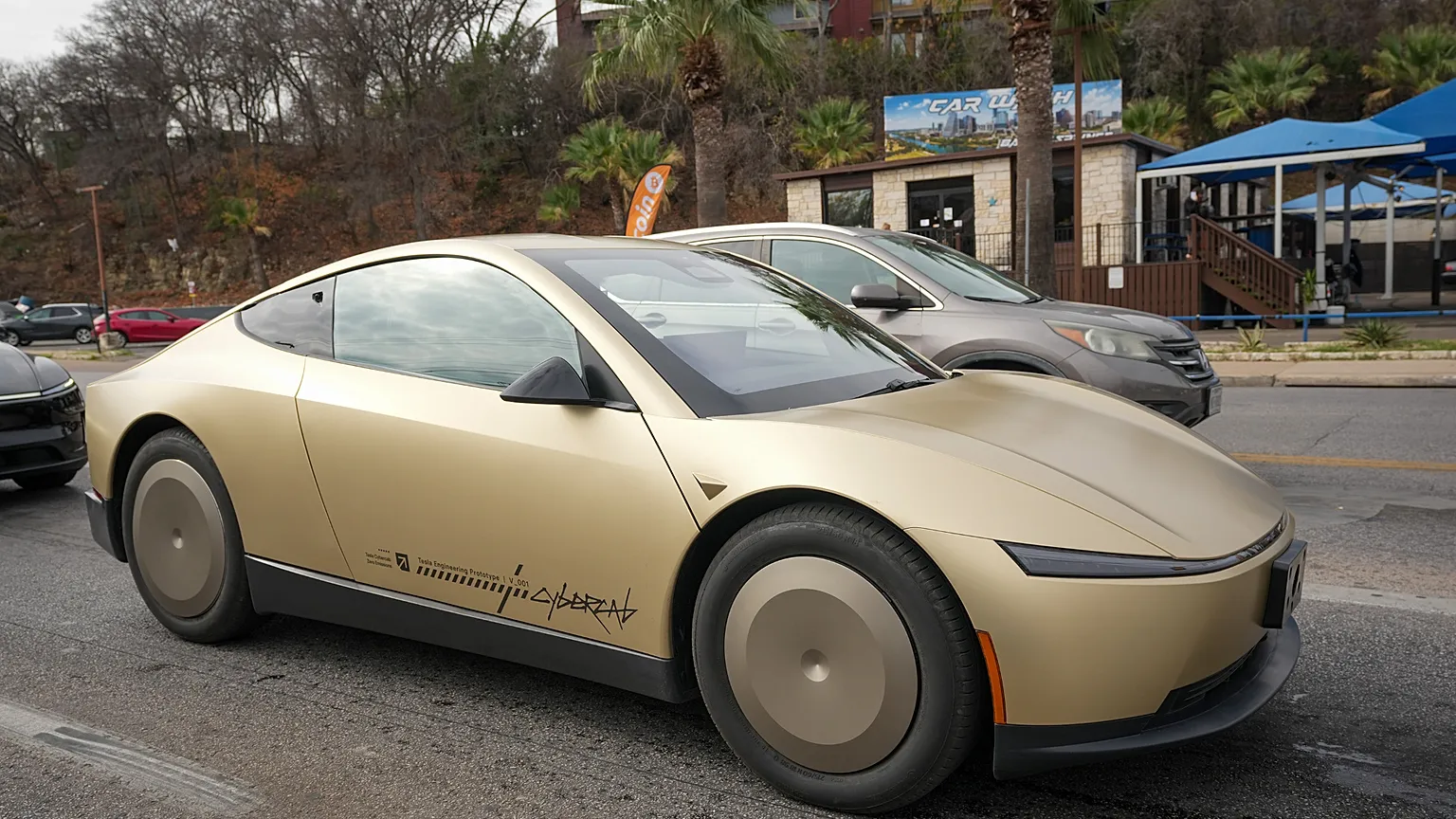
Tesla has taken another major step towards fully autonomous transportation with the launch of its purpose-built Cybercab, a two-seater robotaxi designed to operate without a steering wheel, accelerator or brake pedals.
The electric vehicle has begun carrying passengers as part of Tesla’s Robotaxi service in Austin, Texas, marking a significant milestone in the company’s push to make driverless transportation a reality.
Unlike conventional cars, the Cybercab has no traditional controls for a human driver. Tesla says the vehicle is designed specifically for fully autonomous operation, using cameras and sensors to navigate roads without someone behind the wheel.
Inside, the Cybercab has two passenger seats and a central touchscreen. Tesla’s rider guide confirms that the vehicle does not have a steering wheel, accelerator pedal or brake pedal.
A new era of transportation?
The Cybercab represents Tesla’s vision of a future in which passengers simply request a vehicle, enter their destination and allow the autonomous system to handle the journey.
Tesla currently offers autonomous Robotaxi rides in several US cities, including Austin, Dallas, Houston, Miami, Orlando and Tampa. The company describes its autonomous fleet as part of its broader effort to transform transportation through artificial intelligence and automation.
The company first unveiled the Cybercab in 2024, with CEO Elon Musk presenting it as a vehicle designed specifically around autonomous transportation.
The latest deployment brings that vision closer to reality—but it also raises an important question: Are passengers ready to trust a vehicle with no human driver and no steering wheel?
Safety and regulation remain major questions
The launch has immediately attracted regulatory scrutiny.
On Friday, the US National Highway Traffic Safety Administration (NHTSA) announced an investigation into Tesla’s self-certification of the Cybercab to determine whether the vehicle complies with applicable Federal Motor Vehicle Safety Standards.
The regulator’s action comes as the Cybercab lacks several conventional vehicle features, including a steering wheel and pedals, that are normally associated with federal safety requirements. NHTSA said it is examining Tesla’s certification that the vehicle meets the applicable standards.
The investigation does not itself establish that the Cybercab is unsafe. Rather, it highlights the regulatory challenge of introducing vehicles designed from the ground up for autonomous driving into a system built around human-controlled automobiles.
Can people let go of the wheel?
The biggest challenge may ultimately be public trust.
For generations, travelling by car has meant having a human driver capable of reacting when something unexpected happens. The Cybercab turns that model upside down: passengers have no steering wheel or pedals and must rely entirely on the vehicle’s autonomous technology.
That raises questions about how people will respond when confronted with unusual road conditions, emergencies, bad weather or situations in which they would normally expect a driver to take control.
Tesla is betting that advances in artificial intelligence and autonomous driving can make such vehicles safe, convenient and commercially viable.
For now, the Cybercab is operating on a limited basis. Its expansion—and the response of regulators and passengers—could help determine whether steering-wheel-free vehicles remain an ambitious experiment or become a normal part of everyday transportation.
The future may be arriving without a steering wheel. The question is whether people are ready to take the ride.