



From: Femi Mustapha in Kaduna
For over a decade, Northern Nigeria has suffered security challenges, with villages burned in Borno and Plateau.
Highways have become kidnapping traps in Kaduna and Niger. Forests in Zamfara and Katsina have turned into bandit camps.
Farms have been left fallow, schools have closed, markets have been deserted, and millions have been displaced.
For years, communities waited for help, hoping for federal deployment, promises, or official statements.
However, violence continued to spread, claiming lives, destroying livelihoods, and creating a generation of out-of-school children and unemployed youths now targeted by criminal groups.
On Tuesday, July 8, 2026, the 19 Northern State Governors said enough is enough. Meeting at Sir Kashim Ibrahim House in Kaduna under the Northern Nigeria Governors’ Forum (NNGF), they announced they are taking control of their own security.
They launched the Board of Trustees of the Northern Nigeria Security Trust Fund. They committed N1 billion each month for 12 months from every state and local government, forming a regional war chest of N228 billion to confront banditry, terrorism, and kidnapping directly.
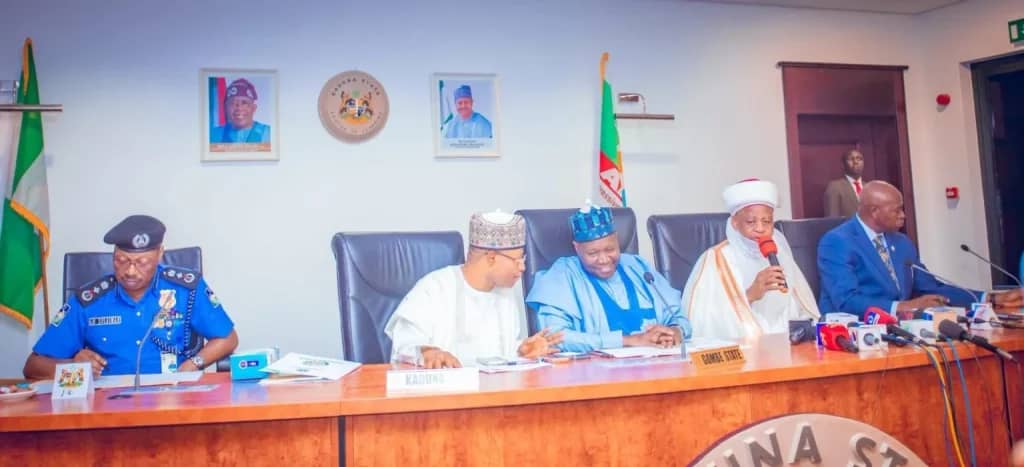
According to the Forum Chairman and Gombe State Governor, Alhaji Muhammadu Inuwa Yahaya, CON, the Northern Nigeria Governors’ Forum was founded about 16 years ago to revive, in a modern way, the unity and development efforts of the old Northern Region led by the late Sir Ahmadu Bello, the Sardauna of Sokoto. Its initial focus was on agriculture, education, and regional trade.
But as attacks increased, security issues overshadowed other goals. Past meetings agreed that the crisis required “prompt, coordinated, and decisive measures.” This time, the governors decided to back words with financial support and structural plans.
“While the Federal Government bears the primary responsibility for national security, the efforts of the 19 Northern States are crucial to support federal initiatives, improve intelligence sharing, and build a lasting framework for regional security and prosperity,” Governor Yahaya said.
He warned that the Trust Fund was created to mobilize resources and complement federal efforts — “not to become just another layer of bureaucracy.”
To lead the Fund, the governors turned to men with decades of experience on the front lines. They appointed former Minister of Defense, Alhaji Mahmoud Yayale Ahmed, CFR, and retired General Martin Luther Agwai, former Chief of Defense Staff, as Co-Chairmen.
The 19-member Board, inaugurated with them, reads like a directory of northern security expertise: retired Lt. Gen. Umar Farouk Yahaya, retired DIG Hafiz Mohammed Inuwa, retired AVM Kabiru Aliyu, Borno Security Commissioner Prof. Usman Tar, retired AVM Napoleon Bali, retired Maj. Gen. A.M Dikko, retired AIG Sunday Babaji, former IGP Usman Alkali Baba, and former SGF Boss Mustafa, among others, drawn from across the 19 states.
Co-Chairman Yayale Ahmed pledged transparency and results. He said the Fund will deploy drones, early warning systems, and digital mapping to shorten response times, but stressed that guns and gadgets alone will not win the war.
“Priority will be given to non-kinetic measures such as community intelligence, deradicalization, and youth empowerment, with traditional rulers playing a key role,” he said.
“The Trust Fund is being launched today as a direct response to the cries of our people for safety and peace. We pledge our full commitment to ensure the proper use and security of these funds.”
Security analysts say the N228 billion pledge is the largest regional security financing effort in Nigeria’s recent history. However, they warn that funding without proper coordination will fail.
Dr. Kabiru Sulaiman, a Kaduna-based security expert, called it “a turning point if done right.”
“If every state and LG truly remits N1 billion each month, we’re talking about significant resources for surveillance, logistics, victim support, and community policing.
The Board inspires confidence, but the Fund must collaborate closely with the military, police, and DSS to prevent duplication,” he said.
He added that emphasizing non-kinetic solutions is essential. “You cannot kill your way out of banditry. You need deradicalization, jobs for youths, and mutual trust between communities and security agencies. That’s where traditional rulers come in.”
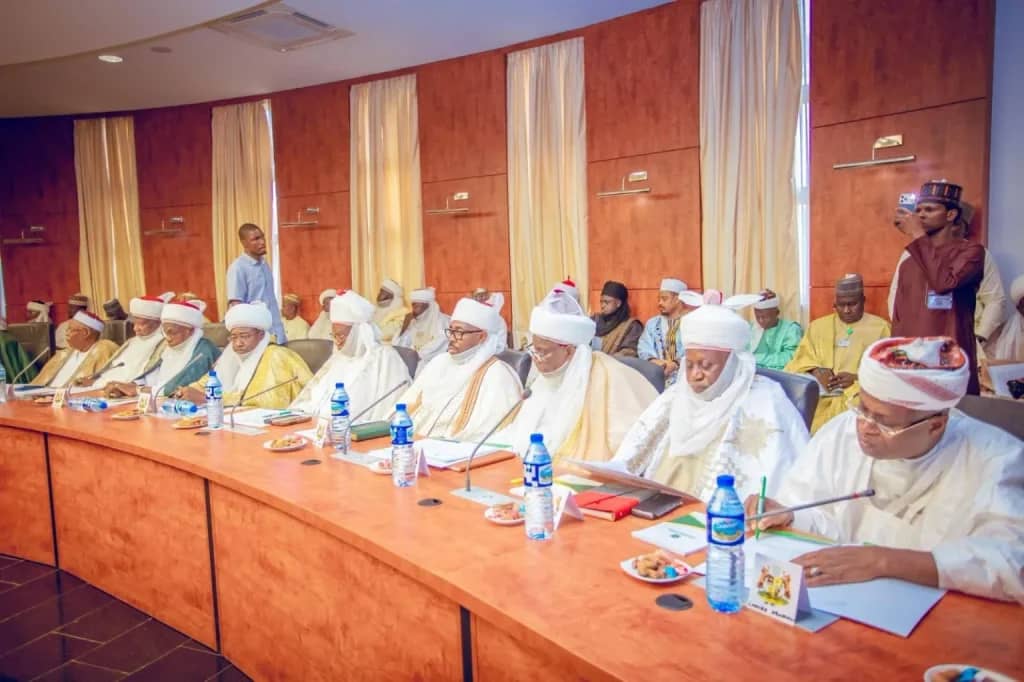
The Sultan of Sokoto, His Eminence Alhaji Muhammad Sa’ad Abubakar III, CFR, supported the initiative and pledged support from traditional institutions.
He also urged governors to address the root causes by making heavy investments in education, healthcare, and social services.
Host Governor, Senator Uba Sani of Kaduna State, placed the regional effort within the larger framework of federal initiatives led by President Bola Ahmed Tinubu.
He stated that the President has demonstrated a commitment to the North through initiatives in transportation, agriculture, healthcare, education, energy, and security.
“Nigeria has made encouraging progress in several areas. Progress is driven not by ignoring challenges but by facing them with determination, consistency, and collective purpose,” he said.
Governor Sani emphasized the importance of establishing the State Police as a key reform.
“For many years, governors across party lines have advocated for a policing structure that better reflects local realities. With Nigeria’s vast landscape and limited personnel, State Police will be a force multiplier in reducing bandits, terrorists, and kidnappers,” he argued.
He praised President Tinubu and the National Assembly for advancing the State Police Bill, stating, “History and posterity will remember” those who supported it.
As the meeting concluded, Governor Yahaya made a final appeal to the government, traditional rulers, religious leaders, civil society, and the private sector.
“Security is not the responsibility of the government alone. It is a collective duty,” he said.
For people across the North, the inauguration brings both hope and scrutiny. After years of bloodshed and meetings, they want to see patrols in rural areas, early warning systems in place, children back in school, and farmers returning to their land.
The Trust Fund now has the mandate, funds, and personnel. What remains is implementation.
As Co-Chairman Yayale Ahmed stated, the Fund was created “as a direct response to the cries of our people for safety and peace.”
“In the months ahead, those cries will determine whether this becomes a model for regional problem-solving or just another plan on paper,” he added.