


By TheDailyNewsHub
The Economic and Financial Crimes Commission (EFCC) and the United States Federal Bureau of Investigation (FBI) have agreed to deepen cooperation in investigating alleged diversion and mismanagement of funds provided under United States government-supported programmes in Nigeria.
The investigation will focus particularly on organisations that received funding under programmes supported by the United States Agency for International Development (USAID), including interventions targeting HIV and tuberculosis.
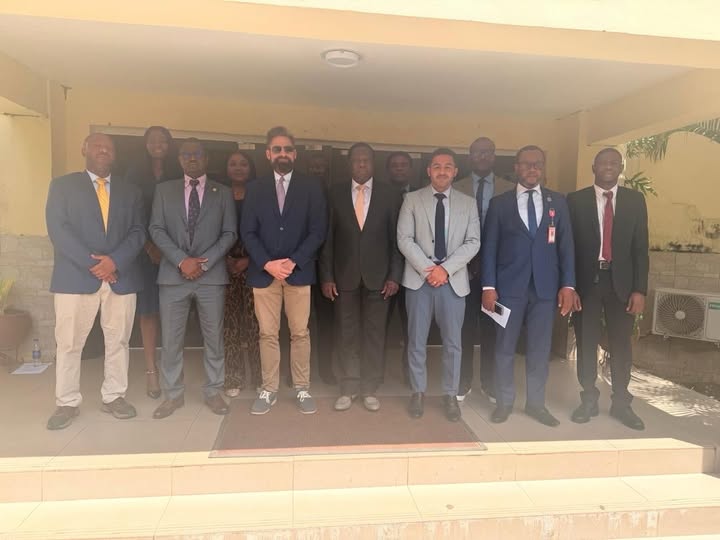
The development followed a meeting on Thursday, September 10, 2026, between an FBI delegation and officials of the EFCC’s Lagos Zonal Directorate 2.
The FBI delegation was led by Assistant Law Enforcement Attaché Macus Maccain, who met with the EFCC Acting Zonal Director, Assistant Commander of the EFCC, ACE I Bawa Usman Kaltungo, on behalf of EFCC Chairman Ola Olukoyede.
Maccain said the engagement was aimed at strengthening existing cooperation and intelligence sharing between the two agencies as investigators examine alleged financial irregularities involving organisations that implemented US-supported programmes.
According to him, concerns arose following the shutdown of some USAID programmes by the United States Government in 2025, particularly over funds that remained with implementing organisations after the programmes were discontinued.
He said some organisations were suspected of mismanaging or allegedly diverting funds provided before the affected programmes were terminated.
“We are seeking stronger engagement with the EFCC to establish how the funds were managed and identify possible financial misconduct arising from the termination of the programmes,” Maccain said.
Also involved in the discussions was Jeremy Kennon, a Special Agent with the Office of Inspector General of the US Department of State.
Kennon said the United States and Nigerian governments had previously entered into arrangements supporting HIV and tuberculosis interventions, with government funding provided to organisations responsible for implementing the programmes.
Some of the organisations, he explained, established one-stop centres where people living with HIV could receive treatment and related services.
However, subsequent reviews had raised concerns about inflated budgets and other financial irregularities in Kano State and several other states, he said.
Kennon stressed that the concerns were not limited to Nigeria, noting that similar issues had been identified in other parts of the world.
He also expressed interest in establishing a long-term working relationship with the EFCC, including reciprocal information sharing between US and Nigerian investigators.
“We’ll like to work with the EFCC on this on a long-term basis, and we’ll be sharing information with you; not just getting information from you,” Kennon said.
Responding, Kaltungo assured the US delegation that the EFCC would investigate the allegations and trace the movement of the funds to their ultimate beneficiaries.
He said the investigation would seek to establish how the money was spent, whether it was used for the purposes for which it was provided and whether any portion was mismanaged or diverted following the cancellation of the programmes.
Kaltungo added that the investigation would be coordinated across all states where the affected organisations and programmes operated, with the EFCC working with the FBI to follow the financial trail and establish the facts.
The EFCC has not disclosed the total amount of money allegedly diverted or mismanaged, nor has it publicly named the organisations or individuals under investigation.
The probe comes amid heightened scrutiny of US foreign assistance programmes following major changes to US foreign aid policy in 2025.
The United States Agency for International Development’s Office of Inspector General has a mandate to investigate allegations involving fraud, corruption, diversion and other misconduct affecting US taxpayer-funded foreign assistance programmes worldwide.
For now, the EFCC and FBI investigation remains at the fact-finding stage, and the allegations against any organisation or individual have not been established as proven offences.