


By Femi Mustapha
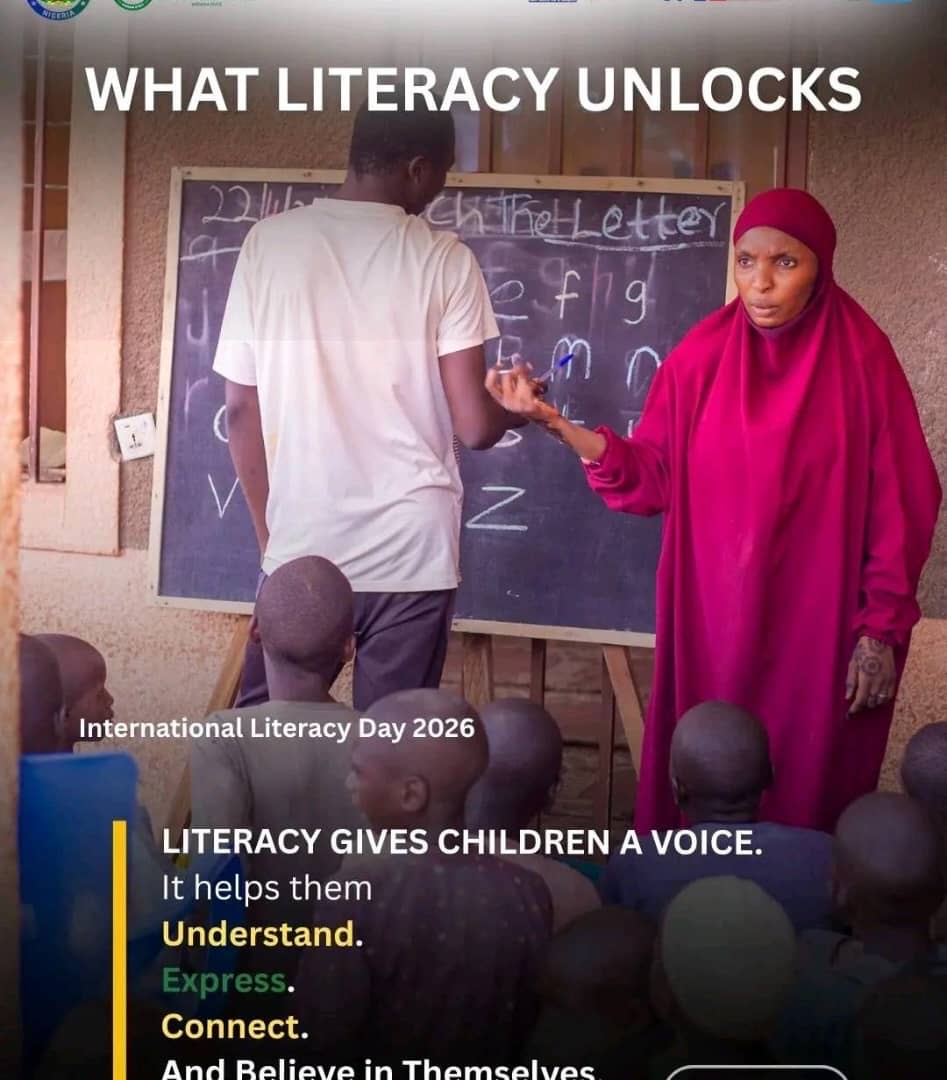
When the world first declared International Literacy Day in Tehran, Iran, in 1966, the goal was simple: teach people to read a letter and count a number. Sixty years later, in 2026, that goal has become more complex, more urgent, and more connected to survival than ever before.
This year’s theme, “Literacy for People, Literacy for Planets, and Literacy for Prosperity,” reflects this complexity. Literacy is no longer just about an individual’s ability to read. It also involves whether that person understands their environment and can turn knowledge into income in a world driven by Artificial Intelligence, digital skills, and vocational expertise.
For Nigeria, the theme could not have arrived at a more critical time. According to estimates by UNICEF and other partners, Nigeria still has about 18 million out-of-school children, one of the highest numbers globally.
UNESCO’s latest data report shows that 739 million people worldwide lack access to literacy, with over 400 million of them girls and young people in rural and hard-to-reach communities. Behind each statistic is a child hawking, farming, or learning in a Tsangaya without basic literacy skills.
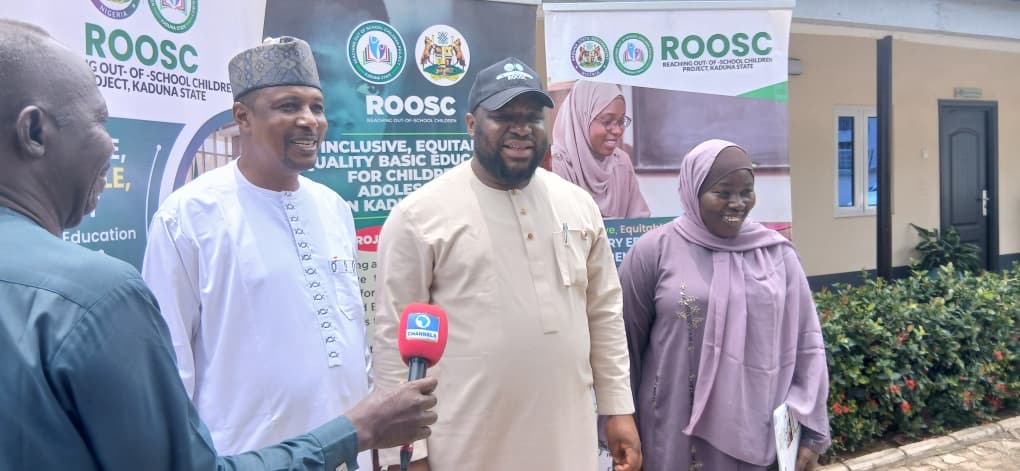
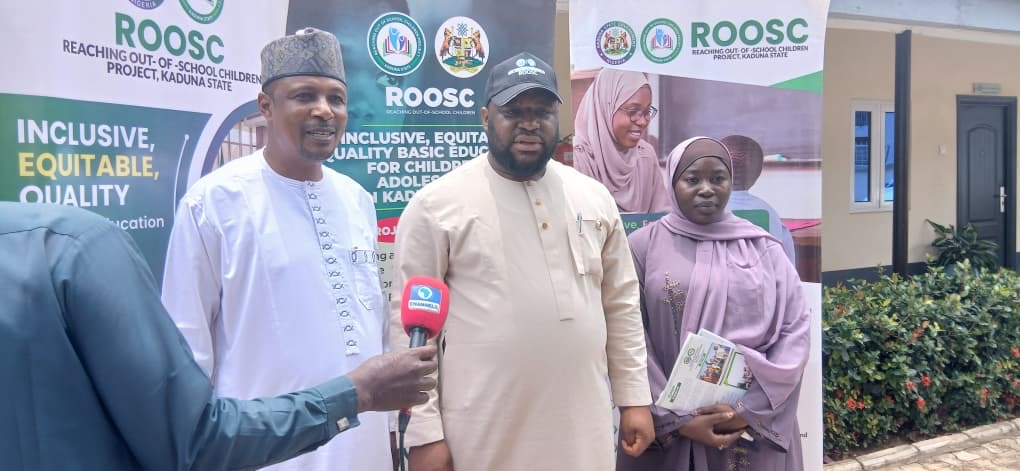
Addressing journalists in Kaduna during a media parley to mark the 2026 International Literacy Day, the Project Coordinator of the Kaduna State Reaching Out-of-School Children (ROOSC) Project, Mr. Ezra Angai, said the Renewed Hope Agenda of President Bola Ahmed Tinubu is confronting this crisis head-on through deliberate reforms in the education sector.
“The President, through the fierce efforts of the Minister of Education, Dr. Tunji Alausa, has been leading very strong reforms from policy to data to TVET, ensuring the Ministry of Education can respond on a national scale,” Angai said.
He said the Minister’s mantra that government cannot guess solutions but must be driven by data is now shaping national planning. For the first time, the 2025/2026 Annual School Census was collected digitally across all states through the D-NAMEIS platform, ending years of conflicting figures.
“Kaduna, under the leadership of Governor Uba Sani CON in the usual fashion of being a leader, was the first state in the country to collect over 98 percent of its data using that digital system,” Angai disclosed.
If the Federal Government is laying the national foundation, Kaduna State is building the house. Angai described Kaduna as an outlier state that is not just following federal policy but setting the pace.
Across the 23 local governments, the Kaduna State Facilities Management Agency, KADFAMA, and SUBEB are renovating and constructing primary schools, supplying furniture, uniforms and teaching materials. At the tertiary level, the state has reduced fees by 50 percent and released billions in scholarships.
More importantly, while Nigeria as a whole and most states budget about 6 percent for education, Kaduna has consistently allocated over 25 percent, surpassing UNESCO’s 15 to 20 percent threshold. Angai also pointed to one of the first executive orders of the administration on financial inclusion, noting that poverty remains the leading cause of children being out of school.
“The more people are excluded from the financial system, the less they can access benefits that improve their lives. If parents have more money, they feel less pressure to send their children to hawk,” he explained.
It is based on this understanding that Kaduna is implementing what Angai calls the only truly holistic out-of-school program in the country — the Reaching Out-of-School Children (ROSC) Project. The project is supported by a $62.8 million investment from global development partners, including the Islamic Development Bank, Kuwait Fund for Arab Economic Development, Global Partnership for Education, Education Above All, Save the Children International, and UNICEF. He noted that the Kuwait Fund’s participation is its first-ever investment in Nigeria, attracted by Kaduna’s seriousness.
The goal is clear: return 100,000 out-of-school children to formal classrooms within four years. But what makes it different is the method.
Before building any classrooms, Kaduna carried out one of the most comprehensive mapping exercises in the country’s history. Officials visited 360,000 households and identified 187,719 out-of-school children, recording their names, addresses, locations, and specific reasons for being out of school.
What they discovered challenged assumptions. Over 90 percent are out because of household poverty, and 57 percent are boys working on farms and in markets to support their families.
“So while we push for girls’ equality, we must also deal with the stark reality that our boys are not in the classroom,” Angai said.
The response has been layered. Under the project, 102 new schools will be built and 170 renovated, with 42 sites already operational, including 16 new schools. Recognizing that learning does not happen only in formal schools, the state engages Alarammas, heads of Tsangaya schools, to incorporate foundational literacy, numeracy, and life skills into religious education. Because their students are already skilled in memorizing the Quran, they adapt quickly to formal learning.
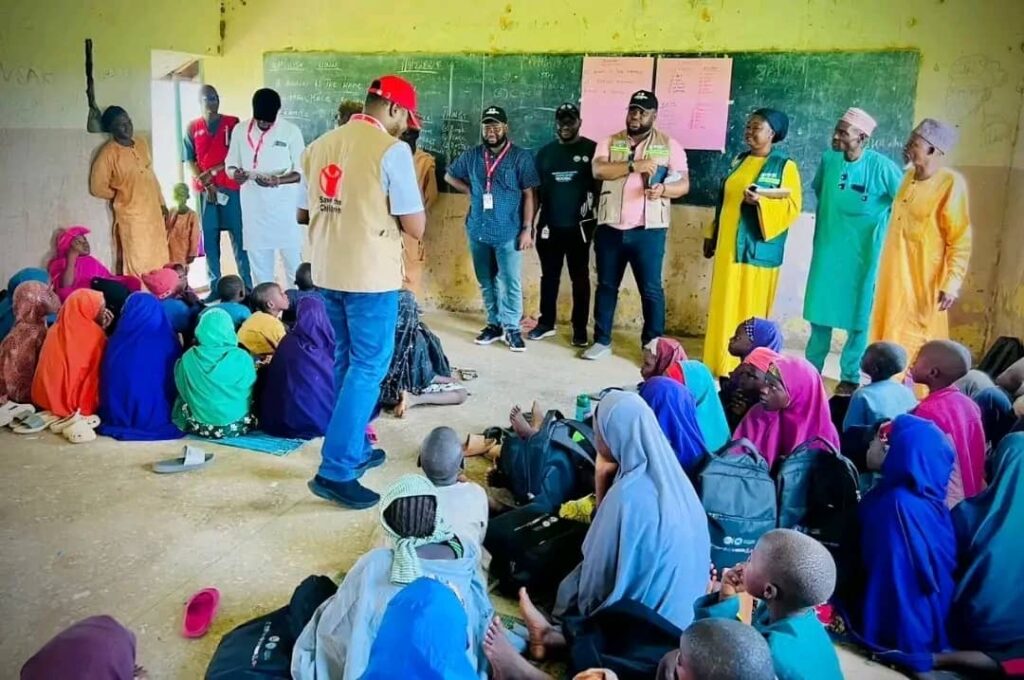
For over-age children between 11 and 17 who cannot join primary one, the state adopted the national Accelerated Basic Education Program, ABEP, which condenses basic education into two and a half years, allowing students to move on to secondary school or a vocational program with functional literacy.
The project has already distributed 44,000 teaching and learning materials, deployed radio-based education in volatile areas, and provided over 2,000 menstrual hygiene kits to help keep girls in school. Using the Washington Group of Questions, children with disabilities were identified and supported through assistive devices.
Angai shared the story of Israel, a boy who could not stand due to weak limbs and was unable to attend school because his mother had to carry him. The project provided a wheelchair and a locally made standing box, similar to a pulpit, on which Israel is strapped for 30 minutes daily for physiotherapy to strengthen his legs, freeing his mother to care for her other children.
Citizens in the benefiting communities say the difference is already visible. Malam Musa Danladi, a community leader in Igabi Local Government, said before the ROSC intervention, children roamed the streets during school hours. “We thought the government had forgotten us.
Now our Tsangaya has books, our daughters have uniforms and pads, and our sons who used to follow cattle are now writing their names. This is the first time education has come to our doorstep,” he said.
A mother of four in Chikun, Mrs. Saratu Ishaya, who withdrew her 12-year-old daughter due to a lack of menstrual hygiene support, said the project has helped keep her daughter in school. “She used to miss five days every month. Now she has pads, and she no longer stays at home. I want her to finish school and learn a skill,” she said.
Educationists argue that this combination of literacy and skills is exactly what Nigeria needs for the 21st century. Dr. Hauwa’u Ahmed, a lecturer in Adult Education at Kaduna State University, said the old definition of literacy has expired.
“Foundational literacy without digital literacy, vocational skills, and financial literacy is incomplete. A child who can read but cannot operate a computer, repair a phone, or process farm produce cannot prosper. Kaduna’s model that combines ABEP with life skills and TVET is the future,” she noted.
Similarly, Mr. Peter Ojonugwa, Executive Director of the Center for Education and Skills Development, said that addressing the 18 million out-of-school children requires connecting the classroom to livelihoods.
“Parents will keep children in school when they see that literacy leads to earning. Teaching a boy to read, weld, farm better, or code is how you convince a poor household that education is worth the investment. That is how you achieve literacy for prosperity,” he said.
To prevent any child from dropping out again, Kaduna implemented a four-layer monitoring system. Mainstreamed children are registered in the standard school register, marked with “REACH” and “SCI” to prevent discrimination but enable tracking. Case workers assigned to school clusters; Community Coalitions of traditional and religious leaders, parents, and SBMC chairpersons; weekly and monthly oversight by Save the Children International; tools developed specifically for out-of-school children by the Kaduna State Quality Assurance Authority; and quarterly joint monitoring by all partners work together seamlessly.
He recounted how case workers traced a girl who stopped attending school to another community where her father, separated from her mother, took her for marriage. The village head intervened, and she was brought back to school.
For Angai, the lesson from 60 years after Tehran is clear. Nigeria cannot go back to 1966, when literacy meant only reading letters. To address the 18 million out-of-school children, literacy must mean skills, inclusion, and prosperity.
That is what Renewed Hope looks like in the classroom:m a federal government driving reforms with data and TVET, and a state like Kaduna proving it with $62.8 million, visits to 360,000 households, and a boy learning to stand, showing that every child truly deserves access to quality and inclusive education.
At dusk in one of the ABEP centers in Giwa, a former out-of-school boy now writes his name on a chalkboard for the first time, his mother watching from the doorway with tears in her eyes because she herself never went to school.
Beside him, a girl who once missed school every month now raises her hand to answer a math question, her uniform clean, confidence louder than her voice.
Sixty years after Tehran, literacy is no longer just about letters on a page. In Kaduna, it is about a boy who learned to stand, a girl who escaped early marriage, and a mother who finally counted her own profit.
That is what Renewed Hope looks like, not in a policy document in Abuja, but in a small classroom where a once invisible child is finally seen, heard, and able to write his own future.