


By Femi Mustapha in Kaduna
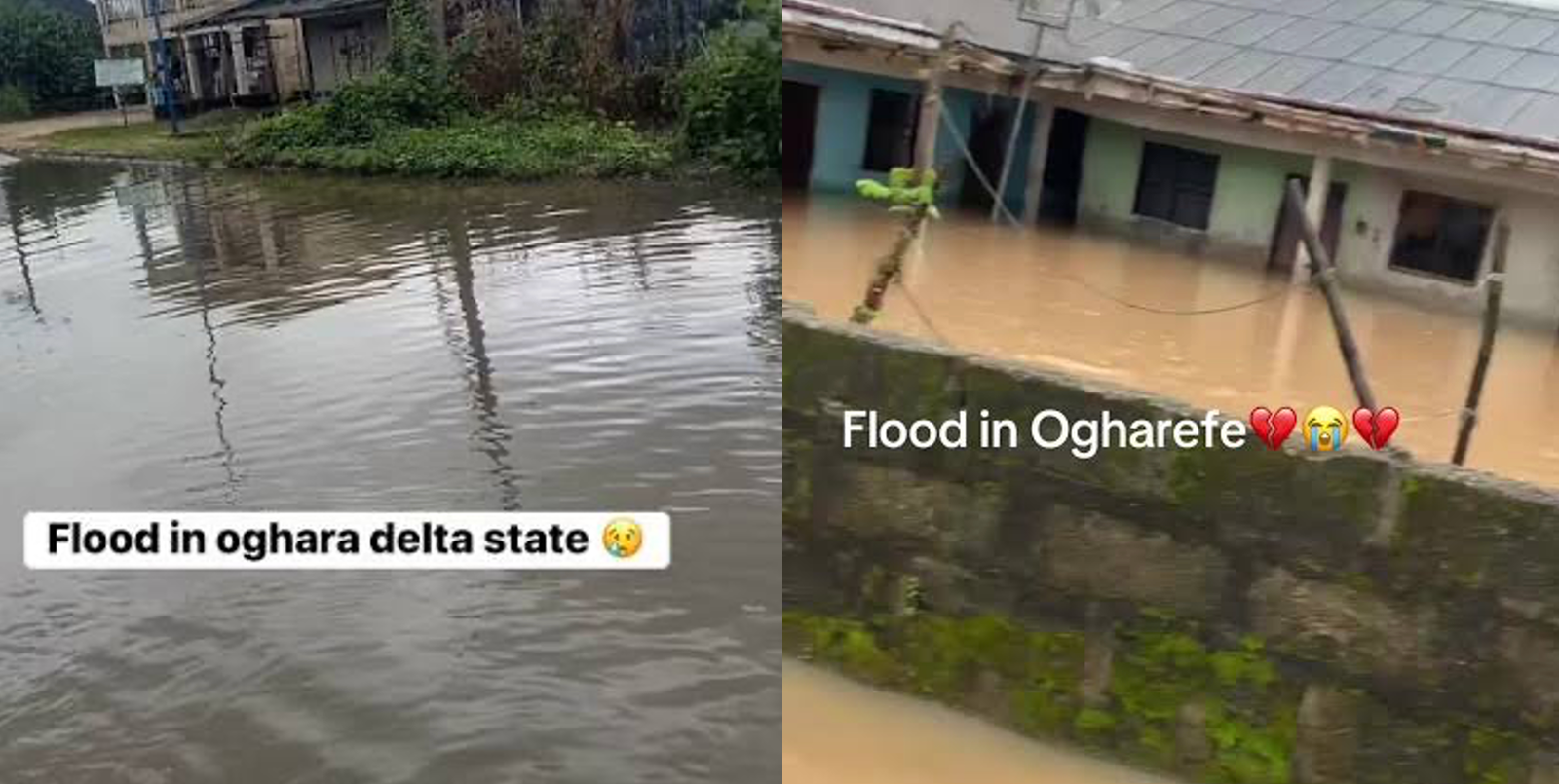
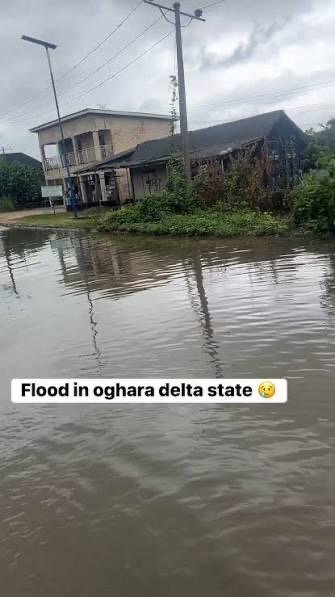
Residents of Oghara in Delta State have continued to count their losses as floodwater has entered homes, cut off streets, disrupted businesses, and displaced families, raising fresh concerns about the vulnerability of the oil- and gas-producing community.
In an open letter published on September 29, 2026, the publisher of The Common Good Letter, Rev. David Ugolor, questioned why Oghara, the headquarters of Ethiope West Local Government Area and a contributor to Nigeria’s energy economy, remains exposed to recurring flooding.
Rev. Ugolor noted that Pan Ocean Oil says its operations began at the Ogharefe oil field in 1976 and that it also operates the Ovade-Ogharefe gas processing plant, which supplies products to the Nigerian market. He added that the community’s contribution to the national economy makes the failure to protect residents harder to accept.
The cleric said public money had been available to address environmental threats, citing reports that Delta State received about N1.4 billion in ecological fund allocations across 2021 and 2022. A review of National Bureau of Statistics data put its allocation at N667.1 million in the first half of 2024 and N411.8 million from January to May 2025.
He said the figures cover different periods and do not constitute a complete five-year account. He called on the state and Ethiope West Council to publish the full annual ledger of ecological allocations received and projects financed from 2021 to 2025.
Rev. Ugolor also said Delta’s accounts require reconciliation, noting that its 2024 fourth-quarter budget performance report recorded N311.1 million under an ‘Ecological Fund’ revenue line for the year, while the separately reported federation allocation for the first half alone was N667.1 million.
He said the state should explain what each figure represents and reconcile allocations, deductions, and receipts, stating that residents cannot track ecological spending when the inflows themselves are unclear.
He further expressed concern over the state’s own record for Oghara, pointing out that the 2024 budget provided N20 million for ‘Flood/Erosion Control Measures at Oghara.” Still, the third-quarter performance report recorded zero spending against that line through September 2024.
According to him, the report also recorded zero spending against two separate N1 million lines for desilting drains in Ogharefe and constructing a discharge route from Ajagbodudu toward the River Ethiope.
He asked the state to clarify whether the work was carried out later, how much was paid, and what residents can inspect on the ground.
Rev. Ugolor recalled that in July 2025, Delta’s commissioner for economic planning reportedly said the state had invested about N17 billion in flood-prone areas during the first half of that year, describing the projects as financed through ecological funds. However, he said the reported list named other locations and did not identify an Oghara flood-control project.
He urged the state to publish the full project list, sources of financing, contracts, payments, and completion reports.
He also called on the Ethiope West Council to render its account, noting that its reported budgets rose from about N5.50 billion in 2023 to a N7.21 billion proposal in 2024 and a N14.6 billion approved budget in 2025. However, he said budgets are plans, not proof of money received or spent.
He asked the council to publish audited receipts and expenditures for each year, including any ecological allocation, and identify every drainage, road, and emergency project delivered in Oghara.
Rev. Ugolor said the Nigerian Navy must be part of the inquiry, stating that Oghara residents have long disputed the extent of land occupied by its Logistics Command and raised concerns about the loss of farmland and ancestral ponds. In contrast, the Navy said the disputed land had been ceded to it by Delta State.
He said residents now claim that lakes and low-lying areas that traditionally held water are inside the fenced area, and asked the Navy to release land and development plans and cooperate with an independent study of the entire flood catchment.
He said that if fences, earthworks, roads, or other structures obstruct drainage or reduce natural water storage, the responsible authorities must remedy the problem.
Rev. Ugolor disclosed that he was among the Oghara community representatives who raised the Navy land issue publicly in 2016. He added that his involvement makes it important that current flood questions be settled through publicly available records, independent engineering evidence, and direct engagement with affected residents.
He noted that Delta officials inspected the flooded community in early September and spoke of relief and lasting solutions, but said Oghara now needs a measurable response, including a register of affected households; safe shelter, clean water, and health support; a published drainage plan; and deadlines for the work.
He called on the governor, Ethiope West Council, the Navy, and relevant federal agencies to meet publicly with community representatives and assign responsibility for each action.
“Oghara has helped generate national wealth. Its people should not be left to bear the cost of flooding while ecological funds and promised works remain difficult to trace,” he said.
The Common Good Letter invited the Delta State Government, Ethiope West Local Government Council, and the Nigerian Navy to provide written responses, supporting records, and an immediate action timetable within seven days of publication, stating that their responses should be published in full.