


By TheDailyNewsHub News Desk | October 4, 2026
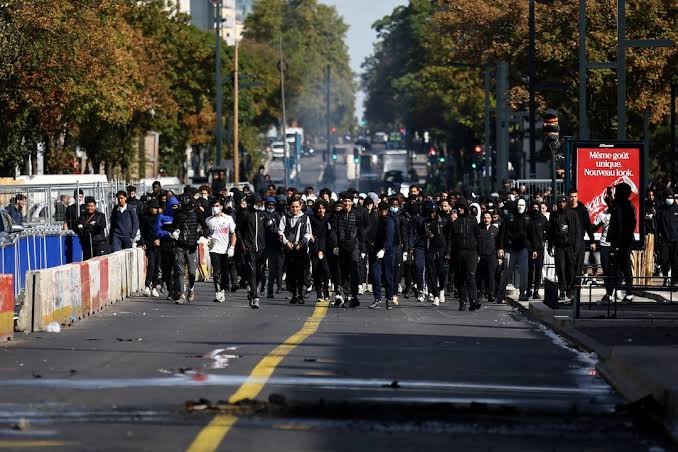
Student protests over worsening school conditions have spread across France, with more than 5,000 people arrested since the demonstrations began, as confrontations with police and disruptions to schools intensify.
The demonstrations, which started in the Paris suburb of Créteil in September, have expanded into a nationwide movement involving students, teachers and supporters demanding improved educational facilities, more teachers and better learning conditions.
According to Reuters, more than 1,200 high schools were affected by the protests during the week, while police used tear gas and rubber bullets in some confrontations with demonstrators. The reported arrest figure exceeds 5,000, although the authorities’ figures cover arrests accumulated over several days rather than a single demonstration.
The movement began on September 21 at Saint-Exupéry High School in Créteil, where students and teachers raised concerns about inadequate staffing and insufficient resources. It subsequently spread to other parts of the country, including Paris, Marseille, Lille, Strasbourg and Tours.
Students have identified several problems they say are undermining the quality of education. These include overcrowded classrooms, teacher shortages, deteriorating school buildings, long timetables and the absence of essential support staff.
Some demonstrators have also complained about the pressure associated with Parcoursup, France’s national platform for applications to higher education institutions.
The protests have particularly highlighted inequalities between schools in wealthier areas and those in disadvantaged communities around Paris.
In Seine-Saint-Denis, a department north-east of the French capital, students and parents have complained about schools operating without sufficient teachers, nurses and social workers.
Reuters reported that students at Lycée Le Corbusier in Aubervilliers said several subjects, including mathematics, English and humanities, had been affected by teacher shortages since the beginning of the academic year.
A student identified as Maisa, 17, told Reuters that she had previously sat a French examination without having a French teacher for the subject.
The demonstrations have also raised concerns about police conduct, particularly the use of tear gas and other crowd-control measures against young protesters.
French authorities have defended the police response, arguing that officers are required to intervene when demonstrations involve violence, damage to property or attacks on security personnel.
Interior Minister Laurent Nuñez has condemned the violence and called for public order to be maintained. However, some students and rights advocates have criticised what they consider excessive force during police operations.
The unrest has also disrupted normal school activities. France’s Education Minister, Édouard Geffray, said on Sunday that between 400 and 500 high schools could remain fully or partially closed on Monday because of security concerns and damage linked to the demonstrations.
The minister’s announcement came after student representatives met him on Friday. Following the meeting, some representatives said they had not secured concrete commitments addressing their demands and called for further mobilisation.
The protests are developing against the background of disagreements over the French government’s proposed 2027 budget.
Reuters reported that the education budget is scheduled to increase by 1.7 per cent to €65.53 billion, excluding teacher pensions. The proposed increase is below the rate of inflation, prompting criticism from those who believe the education sector needs significantly greater investment.
Education Minister Geffray has maintained that education remains a government priority, attributing the budget increase partly to a decline in the school-age population.
The scale of the demonstrations has prompted wider political debate about public spending, educational inequality and the government’s handling of youth concerns.
Prime Minister Sébastien Lecornu has convened discussions within government to address the growing unrest, while student organisations and education unions are preparing for another major day of mobilisation on Tuesday, October 6.
Teachers’ unions have announced support for the students’ demands, arguing that shortages of personnel and inadequate resources have affected schools for years.
The current movement has drawn comparisons with large student demonstrations in France during the 1990s, when protests over education funding led to increased government investment. However, analysts say the present economic climate, marked by pressure to reduce public spending, could make negotiations more difficult.
For President Emmanuel Macron’s government, the protests represent a significant challenge as it faces growing demands to address public service conditions while managing budgetary constraints.
Although the demonstrations have exposed widespread frustration among students and education workers, it remains unclear whether the government will introduce additional funding or staffing measures to address their concerns.
With further protests expected, the coming days are likely to test the government’s ability to restore normal school activities while responding to demands for improved education across the country.