


By TheDailyNewsHub News Desk | October 4, 2026
United States President Donald Trump has called on Congress to introduce mandatory minimum prison sentences for people convicted of defrauding federal benefit programmes, warning that offenders should no longer expect probation under his proposed legislation.
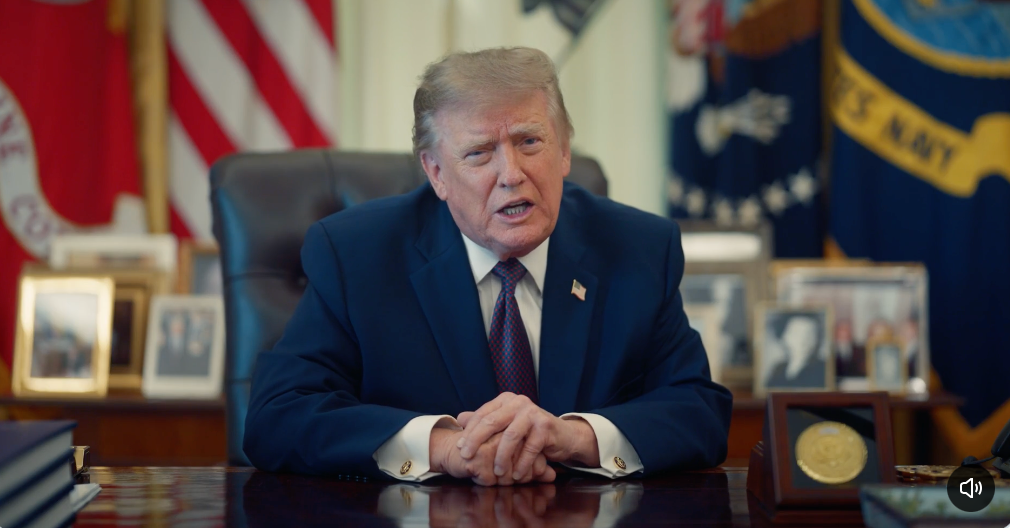
Trump made the announcement on Saturday, October 3, in a video shared on his Truth Social account, outlining measures targeting fraud involving Medicare, Medicaid and Social Security.
The proposed legislation would require people convicted of stealing from the programmes to serve prison terms, with the length of their sentences increasing according to the amount involved.
“Under our proposal, probation is no longer an option for the fraudsters. If you steal from the American people, you will go to prison and for a long period of time,” Trump said.
He added that repeat offenders would face tougher penalties, proposing that the sentence of anyone convicted of defrauding the programmes for a second time should be doubled.
“And the more you steal, the longer you’ll stay in that prison,” the US president said.
Trump’s proposal also seeks to hold state and local politicians financially responsible when they knowingly allow fraud to continue despite having the authority to stop it.
He said officials who are aware of fraudulent activities and fail to take action could be held personally liable for the full amount of taxpayers’ money lost.
“Under our proposal, if a state or local politician knows about fraud and has the ability to stop it, but does nothing about it, they can be personally liable for the full loss of the American taxpayers’ money that they should have stopped and they should have saved,” he said.
The president argued that the proposed measures would discourage both individuals involved in benefit fraud and public officials who deliberately ignore fraudulent activities.
However, the announcement represents a call for legislative action, not a new law. Congress would have to consider and pass the proposed legislation before the suggested sentencing requirements and financial liability provisions could take effect.
Trump did not provide specific minimum prison terms, define the amounts that would attract different sentences or explain how the proposed doubling of sentences would operate in individual cases.
He also did not provide details of the legal standard that would determine when a state or local official had sufficient knowledge of fraud or the authority to prevent it. Those questions would need to be addressed in any legislation presented to Congress.
The proposal comes amid increased enforcement efforts by US authorities against fraud involving government-funded programmes.
In June 2026, the US Department of Justice announced charges against 455 defendants in its National Health Care Fraud Takedown. The department said the alleged schemes involved more than $6.5 billion in false claims, including cases connected to healthcare programmes.
The figures represent allegations contained in criminal cases and do not mean that all those charged have been convicted.
Medicare and Medicaid are major components of the US healthcare system. Medicare primarily provides health insurance for people aged 65 and older and certain younger people with qualifying disabilities, while Medicaid provides healthcare coverage for eligible low-income individuals and families.
Social Security, meanwhile, provides retirement, disability and survivor benefits to eligible Americans.
Fraud involving these programmes can expose public funds to substantial losses and affect resources intended for healthcare, income support and vulnerable beneficiaries.
Trump’s latest announcement signals his administration’s intention to seek tougher penalties as part of its efforts to address such losses. However, the proposed restrictions on probation and the introduction of mandatory minimum sentences could generate debate over sentencing discretion, proportionality and the circumstances of individual cases.
The proposed financial liability for elected officials could also attract scrutiny, particularly over how prosecutors or regulators would establish that an official knowingly failed to prevent fraud.
Trump ended his video with a warning to people involved in fraudulent activities, saying: “So from now on, fraudsters, we’re watching you.”
It remains to be seen how Congress will respond to the proposed legislation and what specific provisions will appear in any bill formally introduced for consideration.