


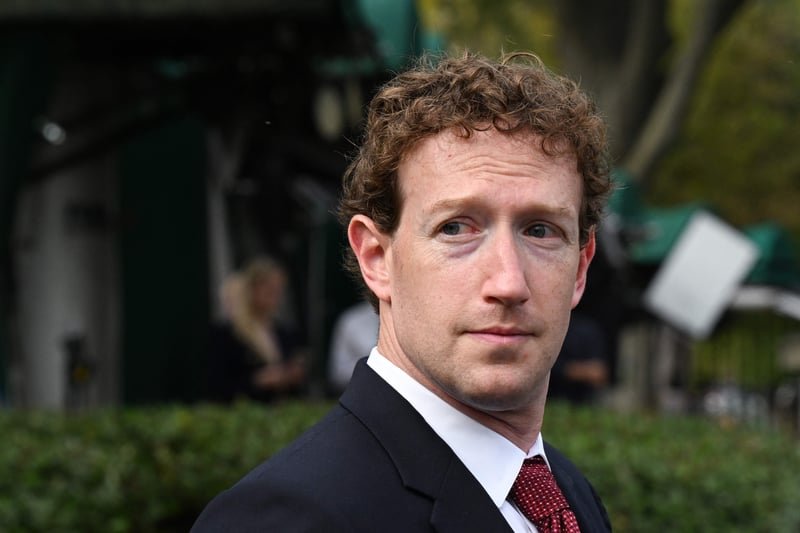
Meta Platforms Chief Executive Officer Mark Zuckerberg considered leaving California rather than face a potential multibillion-dollar tax bill under a proposed wealth tax targeting the state’s billionaires, according to a recent regulatory filing by the technology company.
The disclosure, made public on October 21, 2026, revealed that Zuckerberg had discussed relocating his primary residence outside California if voters approve Proposition 40, a proposed one-time 5 per cent tax on the wealth of residents worth more than $1 billion. California voters are scheduled to decide on the measure on November 3.
However, Meta’s board has reached an agreement designed to keep Zuckerberg in California while allowing him to raise money to meet a potential tax liability without surrendering his voting control of the company.
Under the arrangement, Meta will introduce a new class of non-voting Class C common shares that Zuckerberg can sell to raise funds, including to pay a possible tax bill. The agreement also commits him to remaining a resident of California, or wherever Meta maintains its corporate headquarters, for eight years, subject to specified exceptions.
The development highlights the growing tension between proposals to increase taxes on the wealthiest residents and concerns that higher tax liabilities could encourage wealthy individuals and business leaders to relocate.
Proposition 40 would impose a one-time levy of 5 per cent on the wealth of eligible California billionaires. The measure is intended to raise substantial revenue, with supporters arguing that the proceeds would help address funding pressures in healthcare and other public services.
Based on Zuckerberg’s estimated net worth of approximately $240 billion, his potential tax liability could run into more than $10 billion. Some estimates have placed the amount at around $12 billion, although the final liability would depend on the proposal’s provisions and the applicable valuation of his assets.
Much of Zuckerberg’s wealth is tied to his ownership of Meta, the parent company of Facebook, Instagram and WhatsApp. Unlike a conventional salary, the value of his holdings is largely linked to the market value of his shares.
This creates a potential challenge because raising cash through the sale of shares could affect his voting power, depending on the type and number of shares sold.
Meta’s proposed share arrangement is intended to address that concern. The new non-voting shares would provide Zuckerberg with additional financial flexibility while allowing him to retain control over the company’s major decisions.
The agreement also serves Meta’s corporate interests. The company’s board has argued that keeping Zuckerberg close to its headquarters in Menlo Park, California, is important to its leadership and management, particularly as the technology industry faces intensifying competition and the substantial costs associated with artificial intelligence development.
Meta has been investing heavily in AI infrastructure and talent as it competes with other major technology companies. The company’s recent expansion of its AI ambitions has increased its need for capital, making its share structure and long-term financing strategy significant issues for its board.
The agreement comes at a time when Meta is seeking to strengthen its position in the global AI market, including through new models and infrastructure investments. The company’s recent launch of its Muse Spark Open AI model reflects its broader effort to compete in a rapidly changing technology landscape.
The proposed California wealth tax has also generated debate over its potential impact on investment, public finances and the movement of wealthy residents.
Supporters say the measure would require billionaires to contribute more towards public services at a time when healthcare funding faces pressure. They argue that taxing accumulated wealth could generate substantial revenue beyond what the state collects through conventional income taxes.
Opponents, however, have warned that the proposal could encourage wealthy residents to move elsewhere, potentially reducing California’s future tax revenue and weakening its position as a centre for technology businesses and investment.
California Governor Gavin Newsom has expressed concerns about the potential economic consequences of the proposal, while other opponents have questioned whether the expected revenue would justify the risks of wealthy residents relocating.
Zuckerberg is not the only prominent technology billionaire whose financial and residential arrangements have come under scrutiny ahead of the vote. Google co-founders Sergey Brin and Larry Page have also taken steps to distance themselves from California, according to media reports, amid concerns surrounding the proposed tax.
Nevertheless, moving out of California would not necessarily eliminate Zuckerberg’s potential liability under Proposition 40. Reports on the proposal indicate that eligibility would be determined by residency on January 1, 2026, meaning a subsequent relocation would not automatically remove an individual from the measure’s scope if it becomes law.
The agreement between Zuckerberg and Meta therefore addresses both the possibility of a substantial tax bill and the need to preserve his voting control of the company.
The outcome of the November 3 vote will determine whether the proposed wealth tax proceeds. Until then, the agreement illustrates how a potential tax change can influence corporate governance, executive compensation and the financial decisions of some of the world’s wealthiest individuals.