


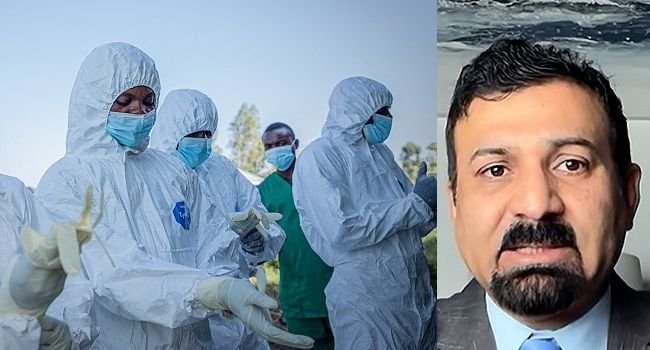
A United Kingdom-based virologist, Muhammed Munir of Lancaster University, has warned that the Bundibugyo strain of Ebola may take two to three weeks to produce noticeable symptoms, making early detection and contact tracing critical to containing infections.
Munir gave the warning during an interview on Channels Television’s The Morning Brief on Monday, October 26, amid Nigeria’s response to a confirmed case of Bundibugyo virus disease in the Federal Capital Territory.
He explained that the virus has a long incubation period, meaning an infected person may not immediately realise they have contracted the disease. Symptoms can emerge days or weeks after exposure, complicating efforts to identify where an infection occurred.
According to the World Health Organization (WHO), the incubation period for Bundibugyo virus disease ranges from two to 21 days. Early symptoms, including fever, fatigue, muscle pain, headache and sore throat, can resemble those of other illnesses, making clinical assessment and travel or exposure history important.
Munir also questioned the circumstances surrounding Nigeria’s confirmed case, noting that the patient had travelled from Uganda through Addis Ababa before arriving in Abuja on October 3. He said further investigation was needed to establish where the infection was acquired, particularly given the ongoing outbreak in the Democratic Republic of the Congo (DRC) and reports of cases in neighbouring countries.
Nigeria confirmed the infection on October 20 after the 42-year-old woman developed symptoms and sought medical care in Abuja. The Nigeria Centre for Disease Control and Prevention (NCDC) said 53 contacts had been identified and placed under follow-up as of its October 24 situation report.
The virologist urged people who may have been exposed to seek medical attention and cooperate with health officials, stressing that early reporting helps authorities identify cases and limit further transmission.
The NCDC has also urged healthcare facilities to maintain vigilance, promptly isolate suspected cases and follow infection-prevention procedures. The agency says Ebola spreads through direct contact with the blood or body fluids of an infected person who has developed symptoms, or with contaminated materials.
The development follows Nigeria’s earlier decision to strengthen surveillance after the regional outbreak spread across parts of Central and East Africa. TheDailyNewsHub previously reported on Nigeria’s confirmation of an imported Ebola case in Abuja and the activation of emergency response measures.
Health authorities continue to investigate the source of the infection and monitor contacts as part of efforts to prevent further cases.