


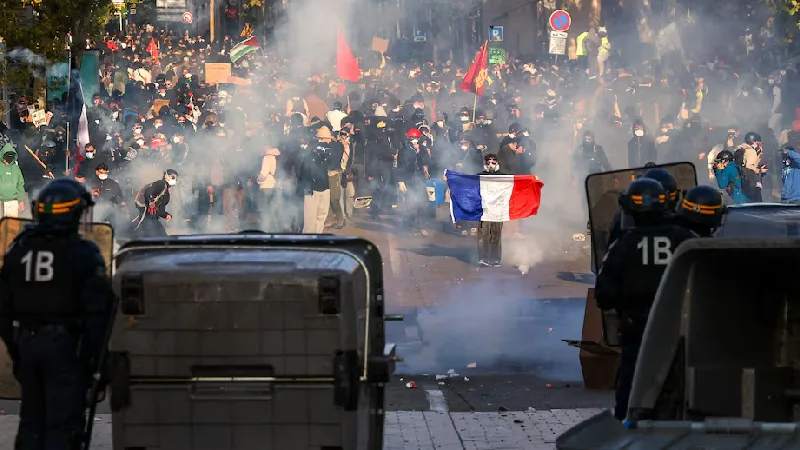
Hundreds of thousands of people took to the streets across France on Saturday, October 31, to protest rising living costs, inequality and deteriorating public services, as demonstrations in Paris and other cities ended in clashes between protesters and police.
The protests marked the third consecutive weekend of nationwide demonstrations, bringing together members of the Yellow Vest movement, trade unions, high school and university students. France’s Interior Ministry estimated that approximately 320,000 people participated nationwide, including 70,000 in Paris. Youth organisations, however, put the turnout at nearly 500,000.
Although most marches remained peaceful, violence broke out towards the end of demonstrations in Paris. Groups of masked protesters dressed in black reportedly used hammers to remove paving stones and throw them at security forces. An incendiary device, including a Molotov cocktail, was also thrown at a police officer, who sustained minor injuries.
Police responded with tear gas, stun grenades and baton charges. Clashes were also reported in Lyon, Toulouse, Marseille and other cities, where officers used tear gas and water cannons to disperse groups involved in confrontations. The Interior Ministry reported 565 arrests nationwide, while four police officers and one gendarme were injured in Paris.
The government had deployed approximately 70,000 police officers and gendarmes across the country ahead of the demonstrations, following widespread rioting, looting and damage to public buildings during earlier protests. Interior Minister Laurent Nuñez condemned the attacks on security personnel and described the violence as extraordinary.
The protest movement initially grew out of students’ complaints about inadequate school facilities, teacher shortages and education funding. It later expanded to include wider concerns about rising living costs, fuel prices, economic inequality and the quality of public services. Protesters have also criticised restrictions on demonstrations and raised concerns about police conduct.
The unrest comes as France approaches its next presidential election, with growing political tensions and mounting pressure on President Emmanuel Macron’s government. Authorities have faced demands to address economic hardship while maintaining public order, as opposition parties continue to debate the government’s handling of the demonstrations.
Student organisations have indicated plans for further school and university blockades next week, alongside a demonstration scheduled for November 5 with workers and trade unions. The latest clashes have intensified debate over the right to protest, police response and the government’s ability to address the grievances driving the movement.
The demonstrations follow earlier restrictions imposed by French authorities on protests in several cities after previous outbreaks of violence. TheDailyNewsHub reported on France’s ban on fresh protests and the government’s security measures following the earlier unrest.