


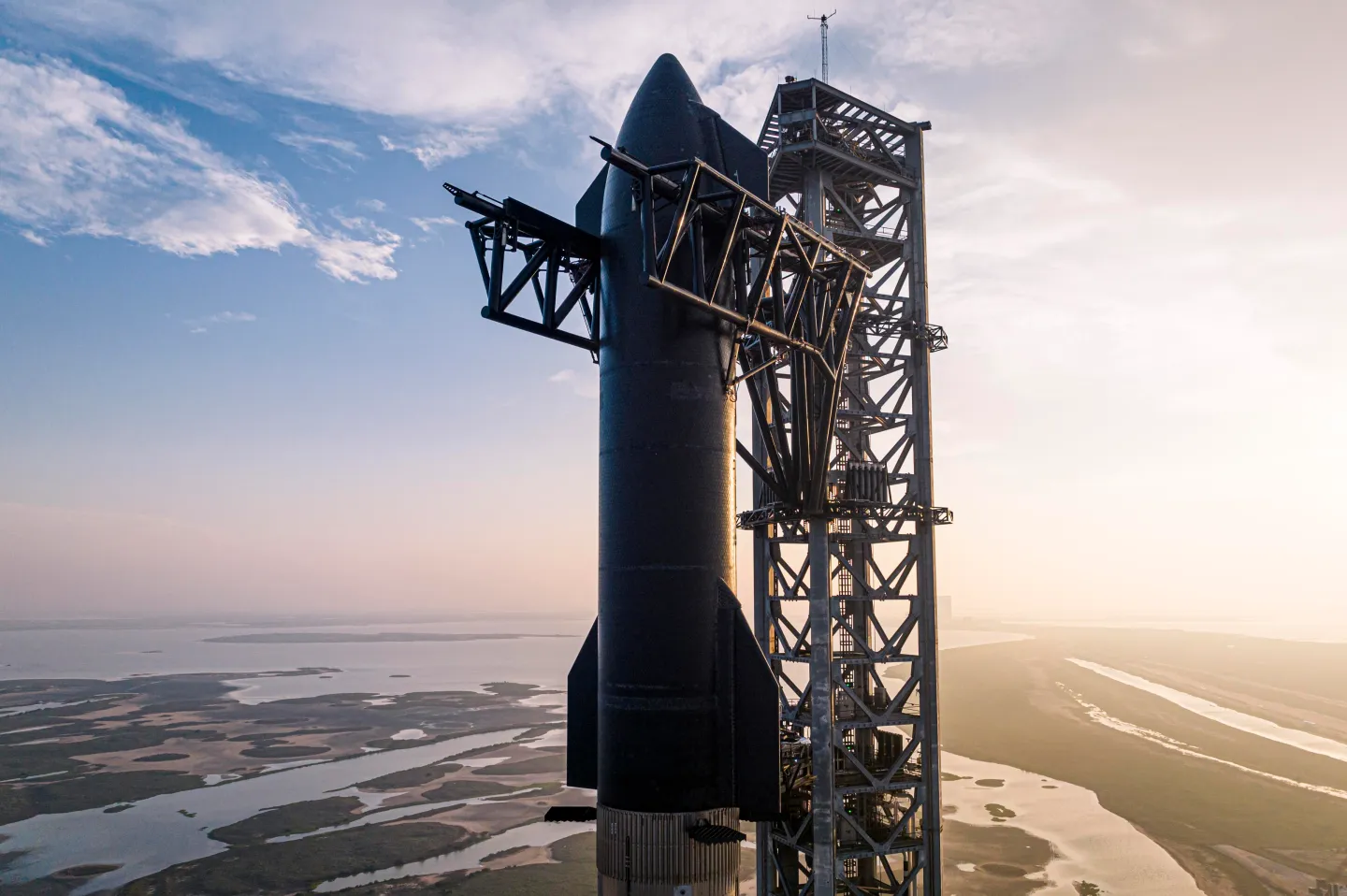
SpaceX has successfully caught its Starship spacecraft with the giant mechanical arms of its launch tower for the first time, marking a significant breakthrough in the company’s efforts to develop a fully reusable rocket system.
The historic achievement took place on Saturday, November 14, at SpaceX’s Starbase facility in South Texas, when the Starship upper stage returned from a more than 22-hour orbital mission and was captured by the launch tower’s mechanical arms, popularly known as chopsticks.
The milestone came during Starship’s 15th test flight, designated Flight 15, which began on Friday, November 13. The spacecraft, identified as Ship 42, completed approximately 14 orbits around Earth before returning to its launch site.
During the mission, Starship successfully deployed 26 Starlink V3 satellites into orbit, demonstrating its capacity to carry and release payloads during an extended orbital flight.
The spacecraft then began its journey back to Earth, executing a deorbit burn before entering the atmosphere. During its final descent, it reignited its engines, performed a controlled landing flip and manoeuvred towards the launch tower.
At approximately 4:20 p.m. Eastern Time on Saturday, the spacecraft was successfully caught between the tower’s mechanical arms, completing the first-ever tower catch of a Starship upper stage returning from orbit.
The achievement represents a major development for SpaceX, which has spent years testing the technology required to recover and reuse its massive launch vehicles.
However, the mission did not deliver a complete recovery of both stages of the rocket.
The Super Heavy booster, which separated from Starship during the initial ascent, failed to complete its planned return to the launch tower. A low-fuel alarm prompted the cancellation of its catch attempt, and the booster was diverted towards a water landing in the Gulf of Mexico.
The booster subsequently splashed down and was destroyed, meaning SpaceX successfully recovered the upper spacecraft but did not achieve its broader objective of catching both components during the same mission.
SpaceX had previously demonstrated successful catches of its Super Heavy boosters on three occasions. Flight 15, however, marked the first time the company successfully captured the Starship upper stage itself.
The distinction is important because Starship travels much higher and returns at significantly greater speeds, making its recovery a more challenging engineering task.
The successful catch brings SpaceX closer to its ambition of making the entire Starship launch system rapidly reusable. The company believes that recovering both the booster and spacecraft could significantly reduce the cost and turnaround time associated with launching payloads into space.
Starship is central to SpaceX’s long-term plans for transporting cargo and people beyond Earth orbit, including missions to the Moon and eventually Mars.
The rocket is also an important part of NASA’s Artemis programme, under which SpaceX has been contracted to develop a lunar landing system capable of carrying astronauts to the Moon’s surface.
Although the unsuccessful booster recovery shows that significant technical challenges remain, the first successful orbital return and tower catch of Starship represents one of the programme’s most important milestones.
SpaceX is expected to use data gathered during Flight 15 to assess the spacecraft’s performance, improve recovery procedures and prepare for subsequent test flights.
For the company, the achievement demonstrates that catching a spacecraft returning from orbit is no longer merely a development target but a capability it has now successfully demonstrated.
[…] recently reported on SpaceX’s historic Starship achievement after its spacecraft returned from orbit and was caught…, highlighting the pace of developments in the commercial space-launch […]