


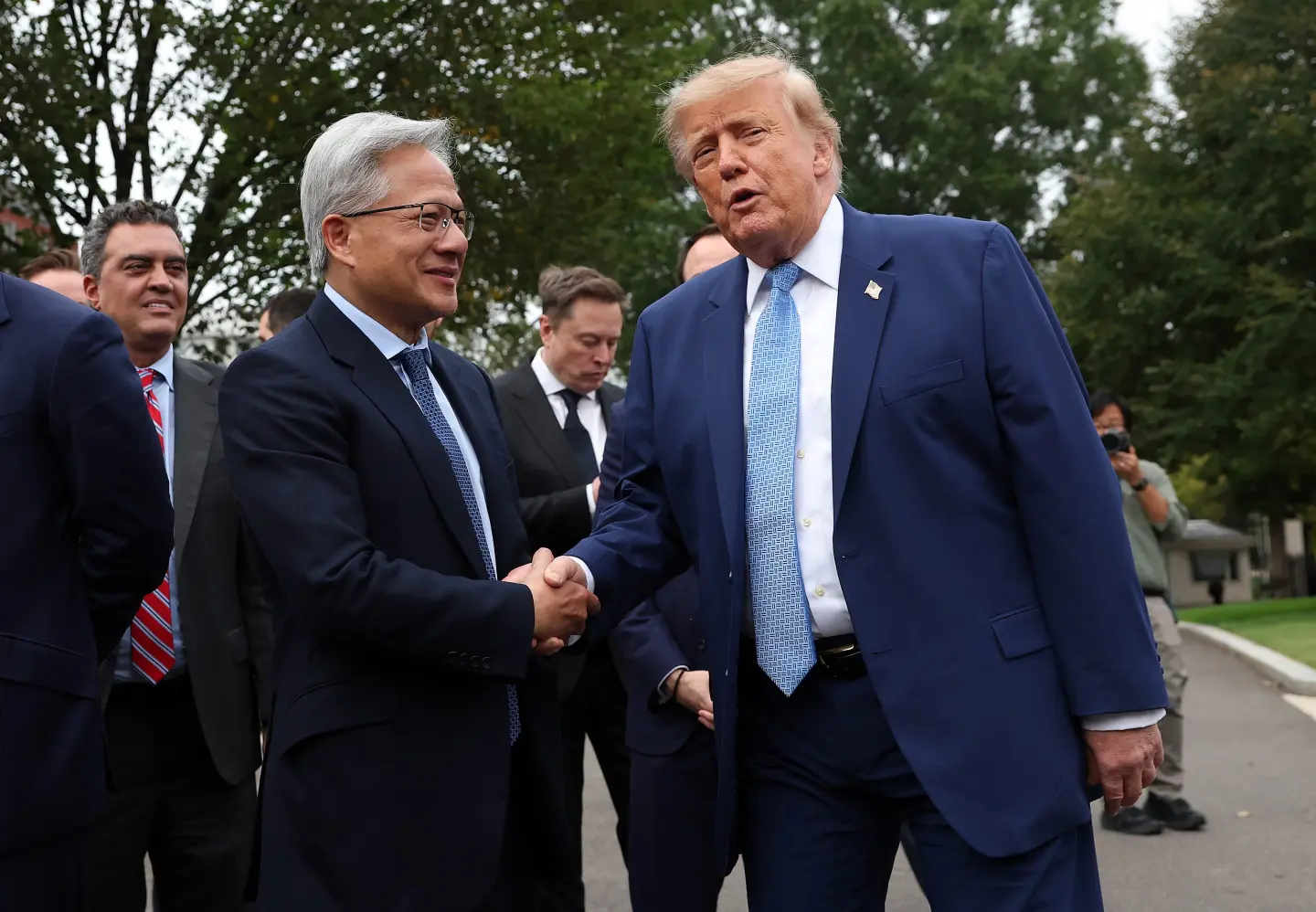
US President Donald Trump has welcomed Nvidia’s decision to reinstate Jensen Huang as president and chief executive officer, describing the board’s move as the “correct and proper decision”, even as lawmakers from both major political parties raise questions about national security and the circumstances surrounding his return.
Trump made the remarks on Monday, November 23, in a post on his Truth Social platform, shortly after Nvidia announced that its board had unanimously reinstated Huang, reversing its earlier decision to accept his resignation.
The president said the United States had no reason to believe Huang’s return posed a national security risk, adding that Attorney General Todd Blanche had confirmed that the government possessed no evidence that the Nvidia chief had engaged in unlawful conduct.
Trump described Huang as a “Great Patriot and National Treasure”, arguing that his leadership was important to Nvidia and the wider American economy.
He also urged the company to continue its internal investigation into compliance with US export controls, stressing the need to protect American national security.
The president’s endorsement followed his repeated public calls for Nvidia to reconsider Huang’s departure. Trump had previously argued that the technology executive deserved a second chance, describing him as one of the most brilliant minds in the world.
TheDailyNewsHub previously reported on Trump’s appeal to Nvidia to bring back Huang, which came after the company’s board had publicly ruled out reversing its decision.
However, the latest development has not ended concerns among lawmakers, with members of Congress seeking explanations about the national security implications of Huang’s return and the administration’s involvement in the decision.
Senate Minority Leader Chuck Schumer criticised the Trump administration’s intervention, arguing that the circumstances surrounding Huang’s reinstatement required congressional scrutiny.
Schumer said Congress would investigate any potential wrongdoing involving the administration, Huang, Nvidia executives or other parties connected to the controversy. He also called for stronger measures to prevent advanced American technology from reaching China’s military and other strategic competitors.
Republican Senator John Cornyn also questioned the basis for the board’s national security assessment, asking what evidence supported the conclusion that Huang’s return posed no risk.
Another Republican senator, John Curtis, questioned what information had changed since Nvidia’s board announced the previous week that it did not intend to reinstate Huang.
Curtis called for clarification about which government officials provided input to the board, what information they shared and how that information informed the decision.
Members of the House Intelligence, Foreign Affairs and China committees have also indicated that Huang’s reinstatement will not affect their efforts to obtain answers about Nvidia’s operations, export controls and potential national security risks.
The committees have been seeking information from Huang about the company’s safeguards and the possible diversion of advanced Nvidia processors to China. Their position is that the leadership change does not remove the need for congressional oversight.
The controversy has also attracted criticism from Democratic lawmakers, including Senator Elizabeth Warren, who argued that Nvidia’s board and the Trump administration still owe Congress an explanation about the decision.
The concerns come amid reports that the Trump administration had direct contact with Nvidia’s board before the reinstatement. Trump told CNBC that he had communicated with board members directly and indirectly and had pushed for Huang’s return.
The president’s involvement has also prompted questions about possible conflicts of interest. Reports have highlighted his financial dealings in Nvidia shares, while critics have raised concerns about the relationship between the administration and the company. These concerns remain allegations and questions raised by political opponents, not established findings of wrongdoing.
Nvidia announced Huang’s return on Monday following extensive discussions with him and consultations with senior US government officials. The company said its directors were satisfied with his candour and leadership and had concluded that his reinstatement did not pose a national security risk.
The decision reversed the board’s earlier position, announced on November 17, when Chairman Harvey C. Jones said the company did not intend to bring Huang back after accepting his resignation.
TheDailyNewsHub had earlier reported on Nvidia’s refusal to reinstate Huang despite reporting quarterly revenue of $115.8 billion.
Huang resigned on November 12 after more than three decades leading the company he co-founded in 1993. Nvidia appointed Chief Financial Officer Colette Kress as interim chief executive while the board began searching for a permanent replacement.
His departure followed reports concerning alleged extramarital relationships, including one involving Alice Huang, a Chinese businesswoman suspected by US intelligence officials of having links to Chinese intelligence operations. The allegations have not established that Jensen Huang knowingly participated in espionage or that Nvidia’s confidential information was compromised.
The company’s board had launched an independent investigation into reports that Huang was targeted by a foreign intelligence effort. Nvidia has maintained that it had no reason to believe its confidential information or US national security interests had been compromised.
The investigation is continuing despite Huang’s reinstatement. Nvidia has also announced additional oversight measures, including a National Security and Export Control Committee comprising independent directors and plans to recruit a chief compliance officer.
The campaign for Huang’s return had attracted support from some Nvidia employees, investors and prominent technology executives before Monday’s announcement. TheDailyNewsHub previously reported on calls by Nvidia employees urging the board to reconsider his departure and Elon Musk’s support for the campaign.
Huang is expected to face further questions from US lawmakers as congressional scrutiny of Nvidia’s export-control compliance and the security implications of its technology continues.
The dispute highlights the strategic importance of Nvidia’s advanced processors in the competition between the United States and China over artificial intelligence and semiconductor technology.
Although Trump has publicly endorsed Huang’s return and Nvidia’s board says it is satisfied with the assurances it received, lawmakers from both parties have made clear that questions about the company’s national security responsibilities and the administration’s role in the reinstatement remain unresolved.