


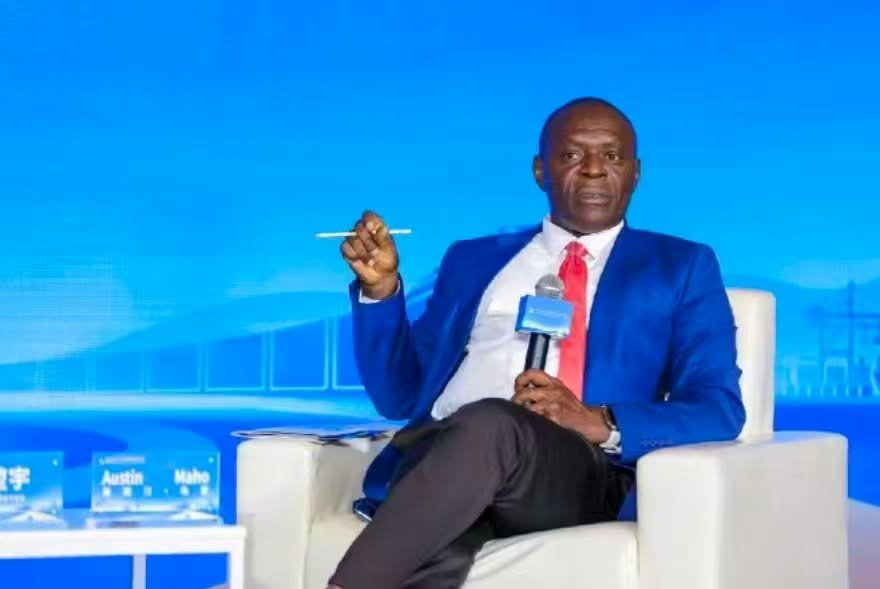
A scholar, Dr. Austin Maho, has charged Nigerian political parties to build strong, disciplined and organised structures ahead of the 2027 general elections, drawing lessons from Xi Jinping Thought and the Communist Party of China (CPC).
Maho spoke on Wednesday at the DICAN International Stakeholders Engagement Forum on Anti-Corruption, Party Building and Democratic Governance, held at the Ministry of Foreign Affairs, Abuja.
In his paper, Maho said the question before Nigeria as it moves towards 2027 is what kind of parties should take the country forward.
He queried whether Nigeria wants parties that exist only during elections, owned by one man, changing candidates like football clubs change jerseys, or parties that are organised, disciplined and trusted by the people.
According to him, Xi Jinping Thought, the official guiding ideology of the CPC since 2017, holds that to govern China well, the party must first govern itself well.
He explained that for Xi, discipline is how a ruling party of over 99 million members stays unified, avoids corruption and keeps its legitimacy.
Maho said Xi’s approach rests on political unity, zero tolerance for corruption, and strong organisation, summarized in the principle that officials must not dare to be corrupt, must not be able to be corrupt, and must not want to be corrupt.
He narrated a personal experience from a recent trip to China, where a CPC member and journalist friend refused to drink alcohol at a bar because he had driven himself there.
According to Maho, the friend said that as a party member, drinking and driving, even without causing an accident, could cost him his party membership.
“Discipline is not what you do when the party is watching you. Discipline is what you do when nobody is watching you. That is integrity,” Maho said.
He contrasted the CPC with Nigerian parties, saying while the CPC is an organisation first and an election machine second, Nigerian parties are election machines first and organisations almost never.
Maho said most Nigerian parties have members only on paper, cannot account for real members in wards, fabricate registers before congresses, and have no consequences for indiscipline.
He listed three lessons for Nigeria: parties must be organised from the grassroots, discipline is the life of a party, and anti-corruption must be real, not a slogan.
On organisation, he said every ward must have a functional executive, every local government a real membership register, and every state a secretariat that works all year round.
On discipline, he said members who lose a free and fair primary should stay and support the winner, and no member – not a governor, minister or former president – should be above the party.
On anti-corruption, he said Nigeria has the EFCC, ICPC and Code of Conduct Bureau, but lacks consistency, fighting enemies and protecting friends.
He called on parties to vet aspirants, ask about the source of their wealth, clean up party finances, and reduce the high cost of nomination forms.
Maho made three concrete proposals for 2027: every party should publish its membership register and hold transparent congresses; every party should set up an independent disciplinary committee that can sanction any member and publish its decisions; and every party should have an Anti-Corruption Pact to withdraw any candidate found guilty of corruption and not protect any elected official who steals.
“These are not Chinese proposals. These are Nigerian proposals, inspired by a universal lesson: that a party that cannot govern itself cannot govern a country,” he said.
He concluded that Nigeria’s future will not be built by prayer alone, but by organisation, discipline and integrity.