


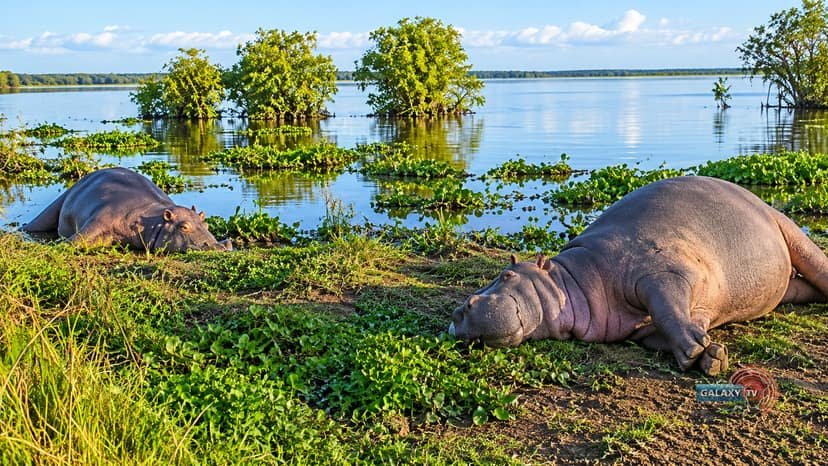
Kenyan wildlife authorities are investigating the deaths of seven hippopotamuses at Lake Naivasha after preliminary findings linked some of the deaths to discarded fishing nets and the consumption of maize stalks.
The Kenya Wildlife Service (KWS) said the deaths occurred between October 28 and November 19, 2026, prompting concerns about the impact of human activities on wildlife around the lake.
KWS spokesperson Duncan Juma Wanyama told the media that a team had been deployed to investigate the incidents and establish the circumstances surrounding the deaths.
Post-mortem examinations have provided possible explanations in two cases.
In one examination, veterinary officers discovered a compacted mass of synthetic fishing net inside the stomach of a young female hippo. The material had caused a complete physical blockage at the junction between the stomach and the small intestine.
According to KWS, the obstruction resulted in serious physiological complications, with cardiopulmonary failure identified as the tentative cause of death.
In another case involving an adult female hippo, veterinary examinations revealed severe gas accumulation in the animal’s multi-chambered stomach.
Maize stalks were found among the stomach contents and may have contributed to dietary overload and excessive fermentation, resulting in bloating.
The swelling reportedly pushed the animal’s diaphragm towards its chest cavity, severely compressing the lungs and interfering with normal breathing. Veterinary officers identified acute gastrointestinal bloating as the likely mechanism behind the respiratory distress and eventual cardiopulmonary failure.
Wanyama said the other five hippos were also suspected of consuming highly fermentable maize stalks, although the precise circumstances surrounding each death remain under investigation.
He said authorities were concerned about the increasing number of incidents and had deployed a team to get to the root of the problem. He did not confirm whether deliberate poisoning was suspected.
The deaths have also attracted attention among communities around Lake Naivasha. A separate report by Kenya’s Daily Nation on November 19 said fishermen had reported additional carcasses, bringing the number of reported dead hippos to nine. However, KWS said some of the reported cases were yet to be confirmed, highlighting the difference between reported sightings and officially confirmed deaths.
Lake Naivasha, located in Nakuru County in central Kenya, is an important freshwater ecosystem that supports wildlife, fishing, tourism and other economic activities.
The lake is home to a significant population of hippopotamuses, which frequently move between the water and nearby grazing areas, sometimes bringing them into contact with fishing activities and surrounding communities.
Discarded fishing equipment presents a serious danger to wildlife because synthetic materials cannot be digested and can cause potentially fatal obstructions when swallowed.
The maize stalk findings also highlight the risks associated with exposing wild animals to unsuitable food materials, particularly where human activities overlap with natural feeding areas.
In response, the Kenya Wildlife Service has appealed to fishermen, local communities, beach management units and other stakeholders to adopt responsible environmental practices.
The agency urged fishermen to ensure that fishing nets, equipment and other materials are properly handled and disposed of to prevent animals from accidentally consuming them.
It also called for greater awareness about protecting wildlife from inappropriate food materials.
The latest deaths have renewed concerns about the relationship between human activities and wildlife conservation around Lake Naivasha, where communities depend on the same environment for their livelihoods.
Although the initial veterinary findings have identified fishing nets and maize stalks as possible causes in some cases, authorities are continuing their investigation to establish the circumstances surrounding the wider series of deaths.