


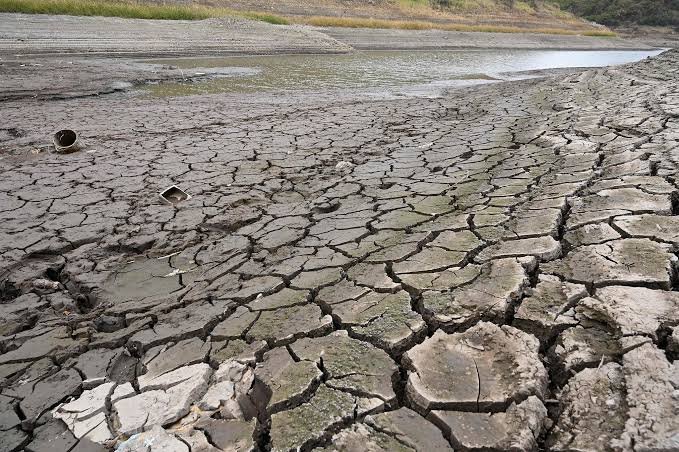
The intensifying El Niño weather phenomenon is increasing economic pressures across vulnerable countries, threatening agricultural production, disrupting food supplies and deepening disagreements over climate financing as world leaders gather for the COP31 climate conference in Türkiye.
The 2026–2027 El Niño event is expected to become one of the strongest on record, raising the likelihood of extreme heat, droughts and flooding across different parts of the world. Its effects are already being felt in agricultural markets, with crop losses reported in Central America, Peru and parts of Asia.
A Reuters report published on Thursday, November 19, said the weather phenomenon was compounding existing economic difficulties in developing countries, many of which are struggling to secure the financial resources needed to prepare for climate-related emergencies.
The World Meteorological Organization (WMO) has warned that the current El Niño could reach exceptional intensity, with its effects expected to extend well into 2027.
According to the organisation’s October seasonal outlook, sea surface temperatures in the tropical Pacific could rise to approximately 3.8 degrees Celsius above average between November 2026 and January 2027.
El Niño is a naturally occurring climate pattern characterised by unusually warm surface waters in the central and eastern tropical Pacific Ocean. It influences atmospheric circulation and changes rainfall and temperature patterns across different regions.
The phenomenon does not produce identical effects everywhere. Some countries experience prolonged drought and water shortages, while others face excessive rainfall, flooding and damage to agricultural land.
The current event is particularly concerning because it is developing against a background of rising global temperatures, increasing the risks associated with extreme weather.
Agricultural production is among the sectors already experiencing pressure. Reuters reported that maize harvests in Central America, anchovy catches in Peru, and rice and sugar cane production in parts of Asia have been affected.
The anticipated effects on East Africa have also raised concerns, with forecasts pointing to possible droughts and flooding across the region.
These disruptions could have consequences beyond individual farming communities, affecting international food supplies, commodity prices, employment and government revenues.
Food-producing countries facing poor harvests may experience reduced export earnings, while import-dependent economies could encounter higher costs for essential commodities.
The economic implications extend to inflation and household purchasing power. When agricultural production declines, food prices can rise, particularly in countries where households spend a substantial proportion of their income on basic necessities.
Research published by the Oesterreichische Nationalbank, Austria’s central bank, in October 2026 estimated that a very strong El Niño could reduce global economic output by approximately 0.4 to 0.7 per cent of gross domestic product, although the impact would vary considerably between countries.
The research identified countries whose weather patterns are particularly sensitive to the phenomenon as facing greater potential economic losses.
For the euro area, the estimated direct effects were comparatively limited, although the bank warned that wider international economic disruptions could still affect the region.
The International Monetary Fund has similarly warned that extreme weather, prolonged drought and water stress associated with El Niño could disrupt commodity markets, increase food and energy prices and place additional pressure on vulnerable economies.
The consequences could be particularly severe for countries with limited fiscal resources, weak social protection systems and significant dependence on imported food and energy.
Meanwhile, the growing economic risks have intensified disagreements over climate financing at COP31, where developing countries are pressing wealthier nations to provide more resources for adaptation and disaster preparedness.
Developing countries argue that they face disproportionate consequences from climate-related disasters despite contributing relatively little to historical greenhouse gas emissions.
According to Reuters, developing countries require approximately $300 billion annually for climate adaptation, but received only about $36 billion in public and private adaptation finance in 2024.
Negotiations at the conference have encountered difficulties over the scale and delivery of financial commitments, with a proposal to clarify that an earlier agreement to triple adaptation financing meant at least $120 billion annually reportedly removed from the latest negotiating draft.
Funding announcements made during the talks have also remained considerably below the estimated needs of vulnerable countries.
The financial disagreements have exposed continuing divisions between developed and developing economies over responsibility for addressing climate change and the costs of protecting communities against its effects.
United Nations officials have warned that delaying preventive action could make the eventual humanitarian and economic consequences significantly more expensive.
The United Nations has estimated that approximately 50 million people could face increased hunger because of the weather phenomenon, highlighting the potential scale of the food security challenge.
The Food and Agriculture Organization has also emphasised the importance of early intervention to protect farmers, agricultural production and vulnerable households before the worst effects of the weather conditions emerge.
The climate threat is particularly relevant to African countries, where millions of people depend on rain-fed agriculture for their livelihoods. Changes in seasonal rainfall can affect planting schedules, crop yields, livestock production and access to water.
In Southern Africa, forecasts of below-normal rainfall could threaten agricultural production and water availability, while parts of East Africa face the possibility of excessive rainfall and flooding.
Nigeria also faces significant exposure to climate-related economic disruptions, particularly through agriculture, food prices and the vulnerability of rural communities to changing rainfall patterns.
TheDailyNewsHub previously reported on the United Nations warning that El Niño and geopolitical tensions are increasing global food and fuel costs, highlighting how climate disruptions and higher energy prices can combine to increase pressure on household budgets.
Beyond agriculture, El Niño can affect energy production, particularly in countries that rely heavily on hydropower. Reduced rainfall and lower reservoir levels can constrain electricity generation, forcing governments and businesses to seek more expensive alternatives.
The resulting pressure on energy supplies can increase production costs across manufacturing, transportation and other economic sectors.
Experts have therefore stressed the importance of early-warning systems, climate-resilient infrastructure, improved agricultural practices and targeted financial assistance for vulnerable populations.
The United Nations has also emphasised that investing in disaster prevention and preparedness can significantly reduce the cost of responding to climate-related emergencies.
As COP31 negotiations continue, the intensifying El Niño event has brought renewed attention to the relationship between climate risks, economic inequality and international financial cooperation.
For vulnerable countries, the challenge is no longer limited to responding to extreme weather after it occurs, but ensuring that sufficient resources are available to protect food systems, livelihoods and national economies before the most severe impacts emerge.