


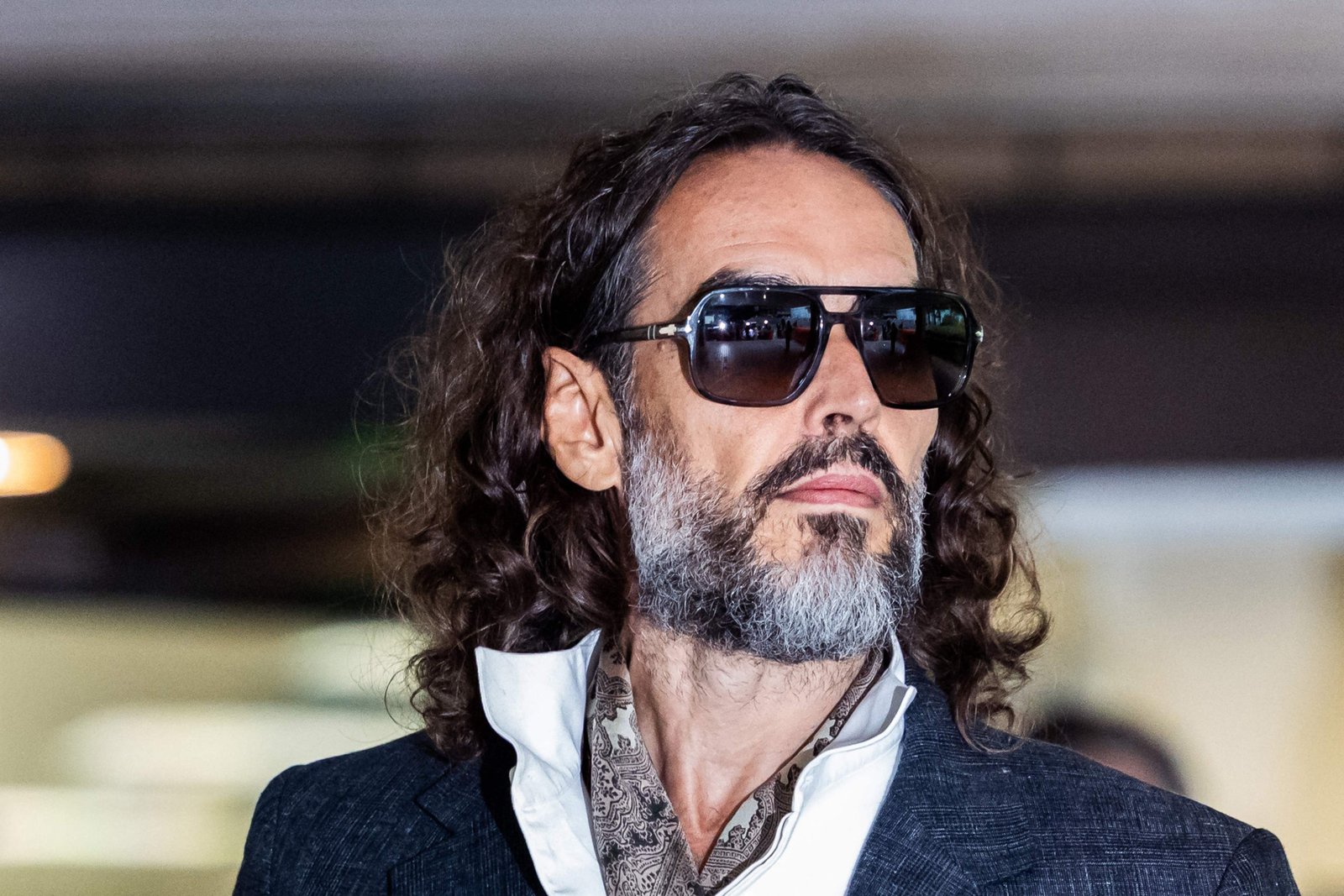
The United Kingdom government has asked YouTube to remove a video in which comedian and actor Russell Brand insists he is innocent, despite being convicted of rape and sexual assault and sentenced to 10-and-a-half years in prison.
The Ministry of Justice confirmed on Thursday, November 19, that it had approached Google, YouTube’s parent company, requesting the removal of the video, which features Brand’s wife, Laura Brand, reading a statement from him.
Brand, 51, was found guilty of rape and three sexual assaults involving four women following a criminal trial earlier this month. He was subsequently sentenced to 10 years and six months in prison.
In the video, which was uploaded to the couple’s YouTube channel on Sunday, Laura read a message in which Brand maintained that he was innocent and continued to challenge the convictions.
The publication attracted criticism from victims’ advocates and political leaders, who argued that the message could cause further distress to the women involved in the case.
A Ministry of Justice spokesperson said the government believed YouTube should remove the video because of its potential impact on the victims.
“It is only right that the government asks for content that is distressing for victims to be taken down, and we strongly believe YouTube should remove this content,” the spokesperson said.
However, the ministry acknowledged that the final decision rests with the platform and its content policies.
The government’s request followed criticism from Prime Minister Andy Burnham’s spokesperson, who described the video as “clearly appalling” and said the focus should remain on the victims.
Housing Minister Matthew Pennycook also confirmed that ministers had approached Google representatives, describing the request as an exceptional case.
He argued that prisoners are prohibited from making statements to the media that could cause distress to victims and said the government wanted YouTube to remove the specific video.
Pennycook maintained that although the government could request the removal of the material, it did not have the authority to compel Google to take it down.
Google, however, has not agreed to the government’s request. A company spokesperson told AFP that the organisation was aware of the new content and that its teams were investigating.
The BBC also reported that Google had declined the request after determining that the video did not breach its platform rules.
At the time of reporting, the video remained available on the couple’s YouTube channel, which has approximately 6.6 million subscribers, and had attracted more than 850,000 views.
The controversy has also raised questions about whether prisoners can communicate public statements through family members or other intermediaries.
Under UK prison regulations, inmates are restricted from communicating with the media without authorisation, particularly where such communications could affect victims or undermine the administration of justice.
The Ministry of Justice has opened an investigation into whether Brand’s message, published through his wife’s account, breached prison rules.
Officials are also considering whether restrictions should be placed on communications between Brand and his wife if further breaches are established.
The case has renewed debate about the responsibility of social media companies when convicted individuals use online platforms to challenge their convictions or communicate with large audiences.
Former safeguarding minister Jess Phillips has argued that the government may need stronger legal powers to address such situations, raising questions about whether existing online safety regulations adequately cover prisoners’ use of social media through third parties.
The issue has also attracted criticism from political figures across party lines, with some arguing that private platforms should retain the authority to determine whether content violates their policies.
Brand’s social media presence has already faced restrictions. YouTube suspended his channel from its Partner Programme in September 2023, preventing him from earning advertising revenue through the platform.
Meta has also disabled his Facebook and Instagram accounts following his recent conviction.
Despite those restrictions, his YouTube channel remains accessible, allowing the latest video to reach a substantial audience.
The controversy comes amid wider changes in Britain’s approach to criminal justice and the treatment of people affected by historical prosecutions. TheDailyNewsHub previously reported on the UK’s decision to grant automatic pardons to women convicted under historic abortion laws, another development involving changes to the country’s criminal justice framework.
The latest dispute places YouTube at the centre of a disagreement between the British government and a major technology company over platform responsibility, prisoners’ communications and the protection of victims.
While ministers have urged Google to remove the video, the company maintains that the matter must be assessed under its own content policies. The Ministry of Justice’s investigation is expected to provide further clarity on whether Brand’s communication breached prison regulations.