


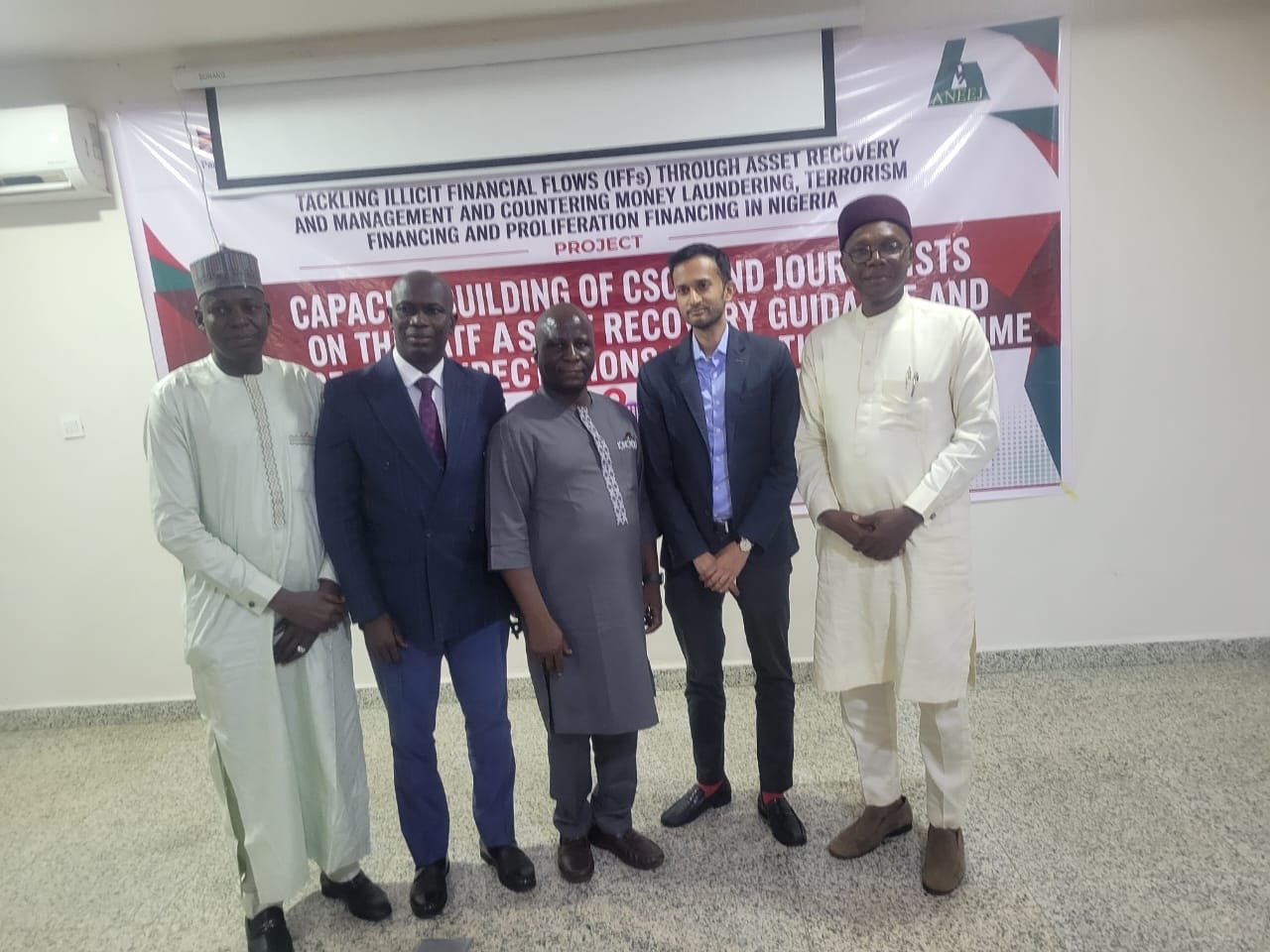
By Femi Mustapha in Kaduna
The illicit finance adviser at the UK Foreign, Commonwealth and Development Office (FCDO) in Nigeria, Jehanzeb Khan, has said the world is going through a difficult phase that demands new approaches to governance, anti-corruption, and asset recovery.
Khan spoke at a one-day workshop for civil society organizations (CSOs) and journalists on the FATF Asset Recovery Guidance and Nigeria’s Expectations Under the New Regime, organized by the Africa Network for Environment and Economic Justice (ANEEJ) on Tuesday, November 24, 2026.
He said he sometimes felt like converting after listening to the Reverend, describing him as a very powerful speaker and agreeing 100 percent with everything he said.
Khan said the world has been shaken in the last few years and that the ground on which the international community and public policy professionals stand has shifted. He said everyone is still finding their feet and that it will take several years to do so, adding that the strategies used over the past 10, 20, and 30 years need to change.
He said the call to do things differently is 100 percent spot on, stressing that civil society, government, and international actors must rethink their approach to issues.
Khan noted that many international organizations are more contested and disputed than before, but some are still standing their ground, including the Financial Action Task Force (FATF).
He pointed out that despite the United States’ withdrawal from a number of other organizations, including the Open Government Partnership (OGP), it remains front and center in the FATF and put a huge amount of work into its recent mutual evaluation, which went to the FATF.
He added that the UK has taken on the FATF presidency this year and will hold it for the next year and a half, noting that some multilateral institutions have shown they can adapt to how the world is changing. Those will be the crucial ones to keep engaging with.
Khan said the workshop’s approach of examining the FATF process, in which Nigeria is highly engaged and responsive, is very good. He added that civil society needs to better understand FATF. He said the standards are often quite technical, complicated, and exhaustive, but need to be demystified and presented in a way that is relatable to the everyday person.
He explained that it makes a big difference for a country whether it is on the FATF gray list or well regarded, as this affects its standing in capital markets, credit rating indexes, and other areas. He described FATF as a very tangible instrument that people beyond technocrats and government officials should engage with and understand better.
Khan also urged stakeholders to look within their own borders for the incentives and resources to advance issues such as asset recovery, anticorruption, and transparency. He said even the UK is struggling more with accountability, democracy, and transparency. At one point, the UK was a shining beacon on many of these issues, but compared with 10 to 20 years ago, many of the challenges in the relationship between governments and citizens have worsened, and the UK is dealing with them domestically as well.
He said all stakeholders need to understand that these are shared challenges, and it is no longer a case of the UK or the US, as donors, coming in to help another country. Rather, it is about working together on issues that everyone is struggling with in the modern age.
Khan assured participants that the UK will continue to support where it can, but realistically, the scope for the kind of developmental work it once did will be a little less as the world progresses. He thanked participants for attending the workshop, describing the day as really constructive, the approach as very strong, and progress on the issues as gradual but real.
Responding, the executive director of ANEEJ, Rev. David Ugolor, commended Mr. Khan for his steadfast support for Nigeria’s anticorruption and asset recovery efforts, describing him as a true friend and partner of the country. He said Khan’s presence and commitment in Nigeria at a time when fighting corruption is not easy speak volumes about his courage, conviction, and belief in the Nigerian people.
Ugolor noted that the fight against corruption has become even more difficult following decisions by some major countries to step back from supporting the fight against corruption in Nigeria, a development he said has left local actors feeling abandoned at a critical moment. He said such withdrawals make the work of civil society, journalists, and reform-minded institutions harder because corruption thrives where international solidarity weakens.
He therefore thanked Khan and the UK government for refusing to walk away, saying their continued partnership through the FCDO has kept hope alive for accountability, transparency, and justice in Nigeria. Ugolor urged other partners to emulate the UK’s example, stressing that Nigeria needs friends who will stand with it in difficult times, not only when it is convenient, if recovered assets are to work for Nigerians truly.