


By Femi Mustapha in Kaduna
Stakeholders from government, civil society and the media have demanded stronger transparency, coordination and accountability in Nigeria’s asset recovery system, insisting that recovered public funds must be seen to work for Nigerians.
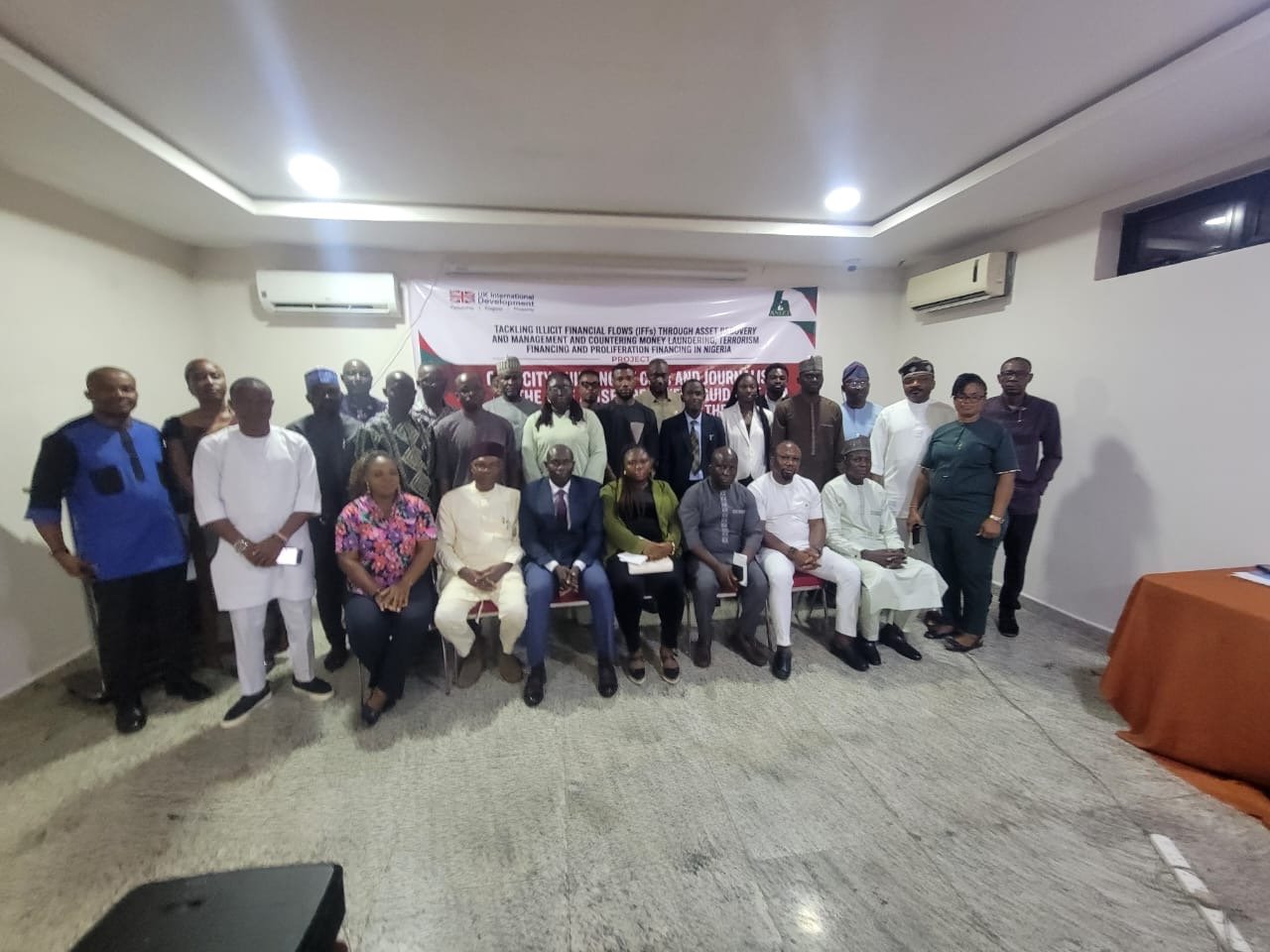
The demand was made at a one-day workshop for Civil Society Organisations, CSOs, and journalists on the FATF Asset Recovery Guidance and Nigeria’s Expectations Under the New Regime, organised by the Africa Network for Environment and Economic Justice, ANEEJ, on Tuesday, 24th November 2026.
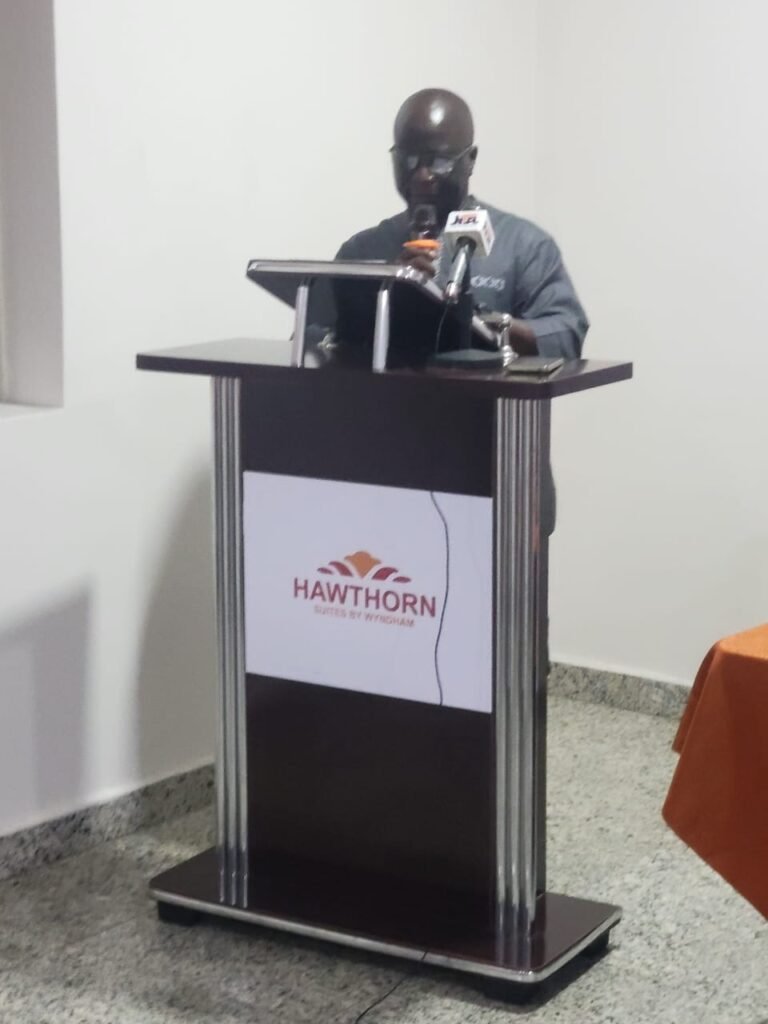
In his welcome address, the Executive Director of ANEEJ, Rev David Ugolor, said Nigeria loses significant public resources to corruption, money laundering and other illicit financial flows, noting that recovering the proceeds deters wrongdoing and returns stolen assets to the people they were taken from.
He explained that the Proceeds of Crime (Recovery and Management) Act, 2022, POCA, gave Nigeria a consolidated legal framework, while the global standard has also moved, as in November 2023 the Financial Action Task Force, FATF, strengthened Recommendations 4 and 38, and on 4 November 2025 published its first comprehensive Asset Recovery Guidance and Best Practices.
According to him, the Guidance, though not binding, is clear that asset recovery must be a policy priority, with countries expected to show results in assets traced, frozen, seized and confiscated, adding that it covers proceeds of all serious crime, draws on more than 85 case examples from the FATF Global Network and is written for a wide audience, including civil society.
He said that meeting that expectation is not the job of government agencies alone, as CSOs and journalists monitor performance, generate evidence, advocate for reform, and inform the public.
The workshop was meant to close the knowledge gap while also supporting Commitment 10 of the OGP National Action Plan IV to strengthen asset recovery and management in Nigeria.
Ugolor thanked the UK Government, through the Foreign, Commonwealth and Development Office (FCDO, for funding the Tackling Illicit Financial Flows (IFFs) through Asset Recovery and Management and Countering Money Laundering, Terrorism Financing and Proliferation Financing in Nigeria project.
In his goodwill message, the Inspector General of Police, IGP Olatunji Rilwan Disu, represented by DC Ibrahim M. Musa, Head of the POCA Unit at the Force Criminal Investigation Department, said the fight against money laundering, terrorism financing, and other financial crimes requires more than law enforcement efforts alone.
He said it demands a coordinated, transparent and inclusive approach involving government institutions, CSOs, the media and other stakeholders, as no single institution can confront illicit financial flows and transnational organized crime alone.
He added that asset recovery remains central to disrupting criminal networks by tracing, identifying, seizing, confiscating and recovering proceeds of crime. He reaffirmed the Force’s commitment to effective asset recovery, investigative capacity and cooperation.
Also speaking, the representative of the FCDO, Mr. Anicetus Atakpu, on behalf of the Advisor on Illicit Finance, JK Khan, reaffirmed the importance of strengthening asset recovery efforts in Nigeria and across Africa.
He emphasized sustained collaboration among government institutions, CSOs, the media and development partners, noting that effective asset recovery goes beyond identifying, tracing and recovering stolen assets to transparent management, accountability and responsible utilization for citizens, and reiterated the UK’s commitment to transparency, accountability, institutional capacity and the rule of law.
Delivering the goodwill message on behalf of the Chairman of the Independent Corrupt Practices and Other Related Offenses Commission, ICPC, Dr. Musa Adamu Aliyu, SAN, Mr. Adamu Baba, who heads the Asset Disposal branch of the ICPC, commended ANEEJ, under the FCDO-supported Tackling Illicit Financial Flows project, for convening the timely workshop.
Baba said at the Proceeds of Crime Management Directorate, POCMD, of ICPC, they live the practical day-to-day realities of asset recovery, which is often the most tangible way to show the public that crime does not pay, but also one of the most complex aspects of their work.
Baba described POCA 2022 as a watershed moment that moved Nigeria away from fragmented asset management approaches and established a clear, centralized legal framework, but warned that laws on paper are only as good as their implementation.
He said the revised FATF guidance emphasizes that asset recovery must be a priority from the very beginning of investigations, not an afterthought, and calls for robust international cooperation, proactive tracing and effective management of seized assets so their value does not depreciate while trials are ongoing.
He listed practical hurdles, including ensuring transparent disposal mechanisms, managing the costs of maintaining complex or perishable assets, and ensuring that proceeds of crime are redirected to benefit the Nigerian public who were victims of corruption.
Baba described journalists and CSOs as critical partners, noting that the new FATF regime demands transparency and the media plays a vital role in ensuring the process is not shrouded in secrecy, as public trust grows when stolen assets are recovered, properly disposed of and returned to the treasury.
He urged fellow practitioners to use the workshop to identify bottlenecks in inter-agency collaboration, stressing that the fight against illicit financial flows requires a whole-of-government approach, and concluded that the ICPC is fully committed to the new regime and to delivering the economic justice Nigerians deserve.
In his remarks, the Civil Society Adviser, OGP, Uchenna Arisukwu, said that Money recovered or returned should serve a purpose, as the primary function of government is security and welfare of citizens, which requires resources and transparency around how those monies are spent.
He announced that the Attorney General, the Minister of Justice, had written to the OGP Secretariat last week, documenting that the Ministry of Justice will be responsible for the asset recovery commitment, with a focal person appointed to liaise with civil society and funding promised, adding that across all 12 commitments, nine have been received from heads of MDAs with political support and funding.
He saluted ANEEJ as one of the few CSOs that have gone ahead to implement commitments even before the drafting was finished, saying that for the asset recovery commitment, the OGP Secretariat can go to sleep because the government commitment exists and ANEEJ is there to champion it.
A participant from the Support for Girls, Boys, and Women Initiative in Cross River State commended ANEEJ and partners for organizing the timely capacity-building workshop, saying that strengthening knowledge of asset recovery, transparency, and accountability is essential to promoting good governance and restoring public trust.
In a technical presentation titled “Nigeria’s Asset Recovery Framework Under the Proceeds of Crime (Recovery and Management) Act, 2022, POCA, and Its Regulations: Institutions, Roles and Current Practice,” Aliyu M. Yusuf, Esq., Former Director, Proceeds of Crime (Recovery and Management), EFCC, said POCA, Act No. 16 of 2022, which came into force on 12 May 2022, establishes a comprehensive framework for identification, tracing, freezing, seizure, confiscation, forfeiture, management and disposal of assets derived from unlawful activities.
He explained that the Act contains 12 Parts and 83 sections, providing for non-conviction-based forfeiture, criminal confiscation, appointment of asset managers and international cooperation, while the Proceeds of Crime (Standardized Automated Asset Forfeiture Management System) Regulations, 2024, introduced under Section 81(1), provide a standardized, technology-driven approach, unveiled with the National Central Database of Forfeited and Recovered Assets on 27 May 2025.
Yusuf said 20 institutions are responsible under Section 83 of POCA Section 3 to provide for a Proceeds of Crime Management Directorate in each relevant organization to manage forfeited properties, maintain lists of approved auctioneers and valuers, maintain databases, appoint bonded and insured asset managers, and cooperate with the Federal Ministry of Justice on international recovery, while Sections 68 to 72 establish the Confiscated and Forfeited Properties Account with the Central Bank of Nigeria, its audit and expenditure.
Yusuf cited examples of utilisation to include the returned Abacha money, with $723 million in 2006 spent on the National Economic Empowerment and Development Strategy, NEEDS, towards the Millennium Development Goals, MDGs, and $320 million in 2017 spent on social investment programmes, as well as N50 billion approved in 2024 and another N50 billion in 2026 for the Nigeria Consumer Credit Corporation, CreditCorp, the 753-unit Lokongoma Estate forfeited in December 2024, NOK University Kachia converted to the Federal University of Applied Sciences, Kachia, Kaduna State, and the $52.88 million Alison Madueke-linked asset return agreement signed in January 2025 for rural electrification.
He noted current practices to include increased use of non-conviction forfeiture, establishment of Proceeds of Crime Management Directorates, the National Central Database and international recovery through mutual legal assistance.
He listed challenges to include institutional fragmentation, weak coordination and information sharing, inadequate asset management capacity, transparency gaps, judicial delays and difficulties in international cooperation.
He concluded the that success should be measured not only by the volume of assets recovered but by transparency, proper management and application of proceeds in accordance with the law.