


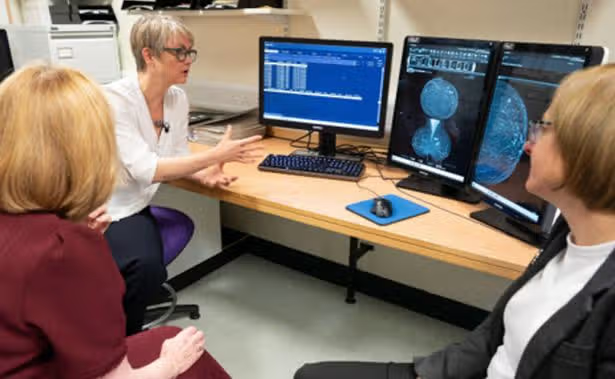
The United Kingdom has launched what is being described as the world’s largest trial of artificial intelligence-assisted breast cancer screening, with nearly 700,000 women expected to be invited to participate over the next three years.
The £10 million research programme, known as EDITH (Early Detection using Information Technology in Health), will examine whether artificial intelligence can help specialists identify breast cancer earlier while reducing the workload of medical professionals.
Recruitment began at Cambridge University Hospitals, making Cambridgeshire the first location to participate in the national study. The trial is expected to expand to 30 breast screening centres across the UK.
The project is being led by the University of Warwick, the University of Cambridge and Cambridge University Hospitals NHS Foundation Trust, in collaboration with NHS England. It is funded by the National Institute for Health and Care Research (NIHR).
Under the current NHS breast screening system, two specialist professionals independently examine each mammogram, an X-ray image of the breast, to identify possible signs of cancer.
The EDITH trial will investigate whether AI-assisted technology can support this process and allow most mammograms to be reviewed by one specialist working alongside artificial intelligence.
Researchers hope the technology will help identify subtle abnormalities, including signs of cancer that may be difficult to detect, while enabling radiologists to spend more time supporting patients who require further investigation and treatment.
The study will assess two approaches to AI-assisted screening. In one, artificial intelligence will analyse and grade mammograms before they are reviewed by NHS specialists. In another, the technology will examine images after the human specialist has completed an initial assessment.
However, the trial will not remove human oversight from breast cancer screening. Every mammogram will continue to be reviewed by at least one qualified human specialist, with final decisions about cancer detection made through established clinical procedures.
Women invited to routine NHS breast screening will receive information about the study alongside their screening invitation. Participation is voluntary, and eligible women will have the option to opt out.
The trial will not change the screening appointment itself or require women to undergo additional procedures. It will focus on how images collected during routine appointments are subsequently examined.
Women aged between 50 and 71 are routinely invited for breast screening every three years in the UK. Approximately 2.1 million women attend NHS breast screening annually.
According to the NIHR Biomedical Research Centre in Cambridge, the national screening programme helps prevent around 1,300 deaths each year through the early identification of breast cancer.
Professor Fiona Gilbert of the University of Cambridge and Addenbrooke’s Hospital, one of the trial’s co-leaders, said the study would determine whether AI could make mammogram reviews more efficient while maintaining the professional standards expected of NHS screening services.
Professor Sian Taylor-Phillips of the University of Warwick is also leading the research.
Health and Social Care Secretary Yvette Cooper visited the breast screening unit at Addenbrooke’s Hospital to mark the beginning of the trial and meet researchers involved in the project.
Cooper described artificial intelligence as a technology with significant potential to improve healthcare but stressed the importance of evaluating its effectiveness and ensuring appropriate safeguards.
The programme comes amid concerns about pressure on the NHS radiology workforce, with specialists facing increasing demand for diagnostic imaging services.
The Royal College of Radiologists welcomed the start of the trial, saying AI could potentially support radiologists and improve the efficiency of breast screening. However, its president, Dr Stephen Harden, cautioned that the research would not provide an immediate solution to existing shortages of specialist doctors.
Four AI companies are participating in the study, which is expected to run for approximately three years.
The project will also be supported by the AI Research Screening Platform, developed by NHS England with nearly £6 million in government funding. The platform is intended to make it easier for NHS organisations to participate in research evaluating artificial intelligence in screening.
The trial follows growing international interest in the use of artificial intelligence in medical imaging. Researchers are investigating whether machine-learning systems can identify patterns in mammograms that may improve cancer detection while reducing the time specialists spend reviewing images.
However, the effectiveness and safety of AI-assisted screening must be established through rigorous testing before the technology can become part of routine clinical practice.
The NHS has said the results of the EDITH study will help determine whether AI can be introduced into breast screening without compromising patient safety or the quality of existing services.
If successful, the research could influence how breast cancer screening is delivered across the UK and potentially provide evidence for other healthcare systems considering similar technology.