


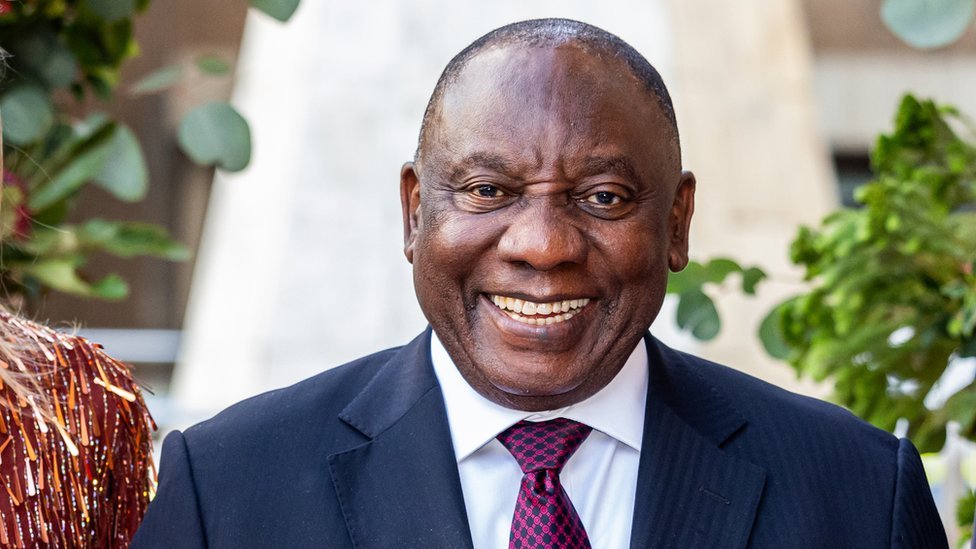
South African President Cyril Ramaphosa has secured a major legal victory after the Western Cape High Court overturned a parliamentary panel report that formed the basis of renewed impeachment proceedings against him over the controversial Phala Phala farm robbery.
The court, in a unanimous judgment delivered on Wednesday, November 25, 2026, declared the 2022 report of the independent Section 89 panel unlawful and set it aside in its entirety.
The three-judge panel, led by Judge President Nolwazi Mabindla-Boqwana, also ruled that all steps taken by the National Assembly pursuant to the report were unlawful and should be set aside.
The judges found that the independent panel, chaired by former Chief Justice Sandile Ngcobo, had exceeded its lawful mandate, asked the wrong questions and committed several significant errors of law in reaching its conclusions.
The ruling effectively removes the existing legal foundation for Parliament’s impeachment proceedings against Ramaphosa, although the judgment does not necessarily prevent any future process that is initiated on a lawful basis.
The case arose from the theft of approximately $580,000 in foreign currency from Ramaphosa’s Phala Phala game farm in Limpopo province in February 2020. The money was reportedly concealed inside furniture at the property.
The controversy became public in June 2022 after former State Security Agency director-general Arthur Fraser accused the president of concealing the burglary from law enforcement authorities and arranging an unofficial operation to investigate the theft.
Fraser also alleged that the president had failed to disclose the full circumstances surrounding the incident and that people suspected of involvement were unlawfully detained and questioned.
Ramaphosa denied wrongdoing, maintaining that the money represented proceeds from the sale of buffaloes and that he reported the incident to the head of his presidential protection unit.
The Section 89 independent panel was subsequently established by Parliament to examine whether sufficient evidence existed to justify an impeachment inquiry.
In its November 2022 report, the panel concluded that there was prima facie evidence that Ramaphosa may have committed serious violations of the Constitution and misconduct in connection with the incident.
Among the issues raised were whether he had properly reported the theft to the police, whether his involvement in a private farming business breached constitutional provisions and whether presidential security personnel were used inappropriately in investigating the robbery.
Ramaphosa survived an initial parliamentary vote in December 2022 when lawmakers rejected the report, preventing impeachment proceedings from advancing at the time.
However, the matter returned to the courts after the Constitutional Court ruled in May 2026 that Parliament’s decision-making process had violated constitutional requirements and referred the report to an impeachment committee.
Ramaphosa subsequently approached the Western Cape High Court to challenge the validity of the original panel report.
In Wednesday’s judgment, the court found that the panel had fundamentally misunderstood its functions and the nature of the preliminary inquiry it was required to conduct.
The judges held that the panel was required to determine whether sufficient evidence existed to support further action, rather than merely assessing whether the information before it suggested that the president had a case to answer.
The court also identified errors in the panel’s treatment of allegations concerning the president’s business interests and the handling of the investigation into the robbery.
It found that the panel had not established a sufficient factual basis for some of its conclusions and had misinterpreted aspects of the information presented to it.
The judgment further addressed allegations concerning the involvement of Ramaphosa’s security personnel, finding that the panel had not demonstrated that any departure from standard investigative procedures had occurred on the president’s instructions.
The court stressed that its decision should not be interpreted as meaning that a president is immune from impeachment proceedings.
Rather, it said any such process must be founded on a lawful and properly conducted procedure.
The ruling represents a significant development in a political controversy that has followed Ramaphosa for more than four years and threatened his position within the ruling African National Congress.
The African Transformation Movement, which supported efforts to pursue impeachment proceedings, criticised the judgment and indicated that it would consider its legal options, including a possible appeal.
National Assembly Speaker Thoko Didiza also said Parliament would study the judgment and assess its implications for the work of the impeachment committee.
The ruling does not erase the events surrounding the 2020 robbery or independently establish every detail of how the incident was handled. It sets aside the parliamentary panel’s report and the subsequent steps taken by the National Assembly on the basis of that report.
Ramaphosa, who has consistently denied wrongdoing, has yet to face the impeachment inquiry that was expected to examine the allegations in Parliament.
The possibility of further legal challenges means the broader political and constitutional dispute surrounding the Phala Phala affair may not be completely over.