


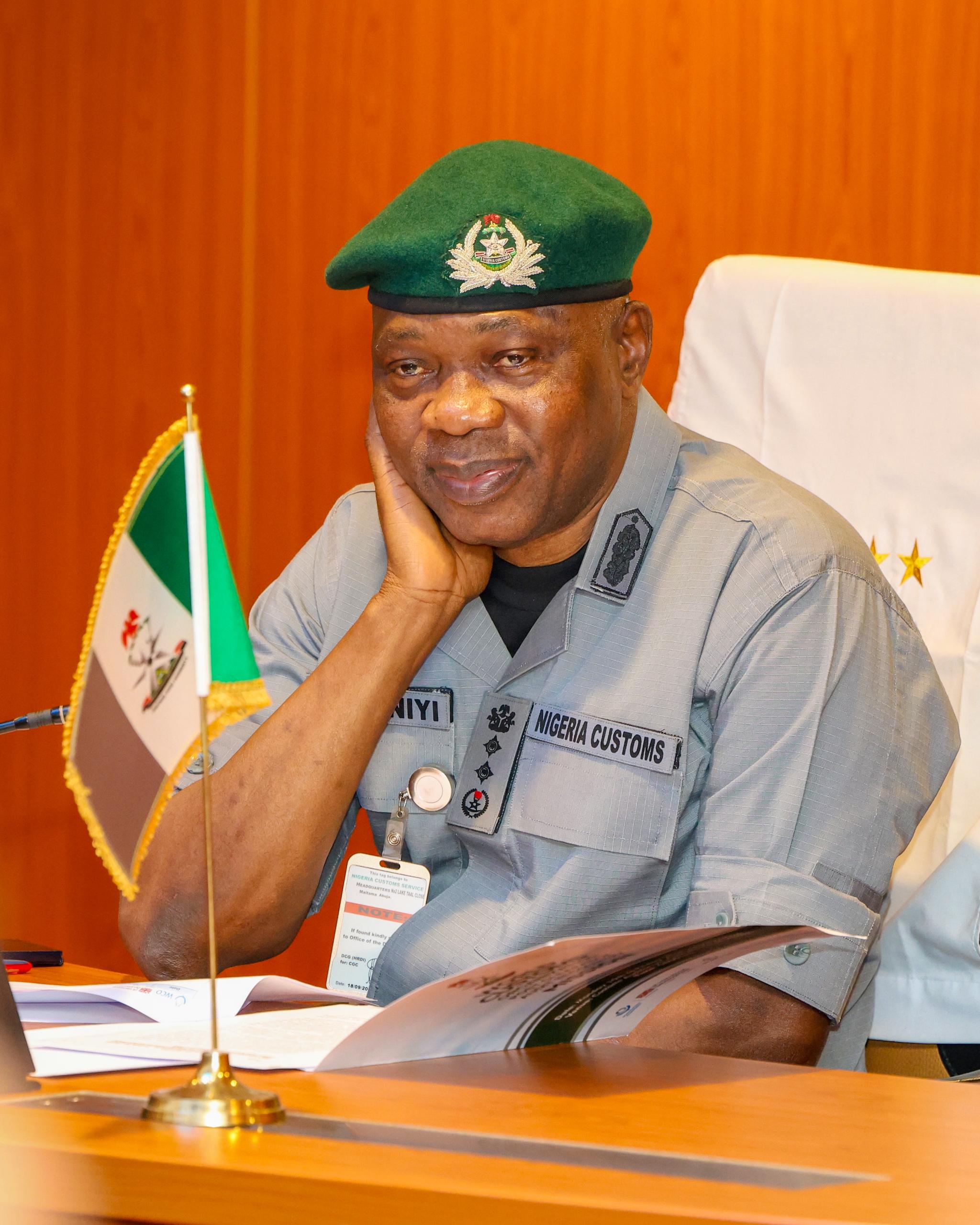
The Comptroller General of Customs, Adewale Adeniyi, has informed the senate Committee on Customs that the Nigeria Customs Service’s (NCS) record revenue performance is the product of deliberate institutional reforms and technology-driven modernisation, not just currency adjustments or economic headwinds.
Speaking on Tuesday, 4 August 2026 at the opening of a two-day retreat in Abuja themed “Legislative Oversight in the Context of Nigeria Customs Service Modernisation and Reforms,” Adeniyi urged lawmakers to provide enduring legislative backing to protect the gains of the ongoing transformation.
According to the CGC, the Service generated ₦7.277 trillion in 2025, surpassing its annual target by 10.24 per cent. Between January and May 2026, it has already collected ₦3.35 trillion.
The combined ₦10.627 trillion in 18 months, he said, reflects what happens when systems, not discretion, drive operations.
“Revenue growth during periods of currency adjustment can create the impression of success even where little has changed. What matters is whether the growth is driven by stronger systems, and I believe ours is,” Adeniyi stated.
Adeniyi said the Service has moved away from manual, discretionary processes to automated, rules-based systems anchored on technology, risk management and data analytics.
Key drivers, he noted, include:
. The Trade Modernisation Project – a comprehensive overhaul of Customs processes and infrastructure.
. B’Odogwu Customs Platform – the new digital clearance system that creates electronic records, making “every transaction traceable and every decision auditable.”
.National Single Window integration- to harmonise trade documentation and reduce duplication.
He added that the reforms are already yielding dividends in trade facilitation, anti-smuggling, and data integrity, beyond just revenue.
The CGC credited the Nigeria Customs Service Act 2023 for providing the legal teeth for reforms. The Act, he said, enables:
- Electronic cargo processing
- Advance rulings to give traders certainty
- Authorised Economic Operator (AEO) status for compliant traders
- Sustainable funding mechanism for the Service
He urged the Senate to use the retreat to review the Act’s implementation and identify areas that may require amendments to align with evolving global trade practices.
In what he described as validation of the reforms, Adeniyi announced that Nigeria has emerged as Chair of the World Customs Organization (WCO) Council- the highest decision-making body of global customs administrations.
“This is global recognition of Nigeria’s successful customs reforms and our commitment to international best practices,” he said.
Adeniyi challenged the Senate to move beyond routine checks and focus oversight on system performance indicators. cargo clearance timelines, risk management effectiveness, automation uptime, and trade policy impact.
He warned that customs modernisation often faces resistance because automation “reduces opportunities for human discretion and interference.”
To sustain the momentum, he called for:
1.Legislative protection for automated systems against undue influence
- Review of trade waivers and concession regimes to plug leakages
- Regular engagement with the Service beyond statutory sessions
- Accountability for measurable outcomes
While acknowledging the support of President Bola Tinubu and the Federal Government, Adeniyi admitted the process is still a work in progress. “Some ports are still adjusting to the new systems while officers and stakeholders continue to adapt.”
The CGC expressed confidence that the reforms, if protected, will leave Nigeria with “a modern customs administration built on transparent rules, technology and institutional integrity rather than personal discretion.”
Senate Committee members are expected to use the retreat to tour facilities, interact with officers, and interrogate data from the B’Odogwu platform.