


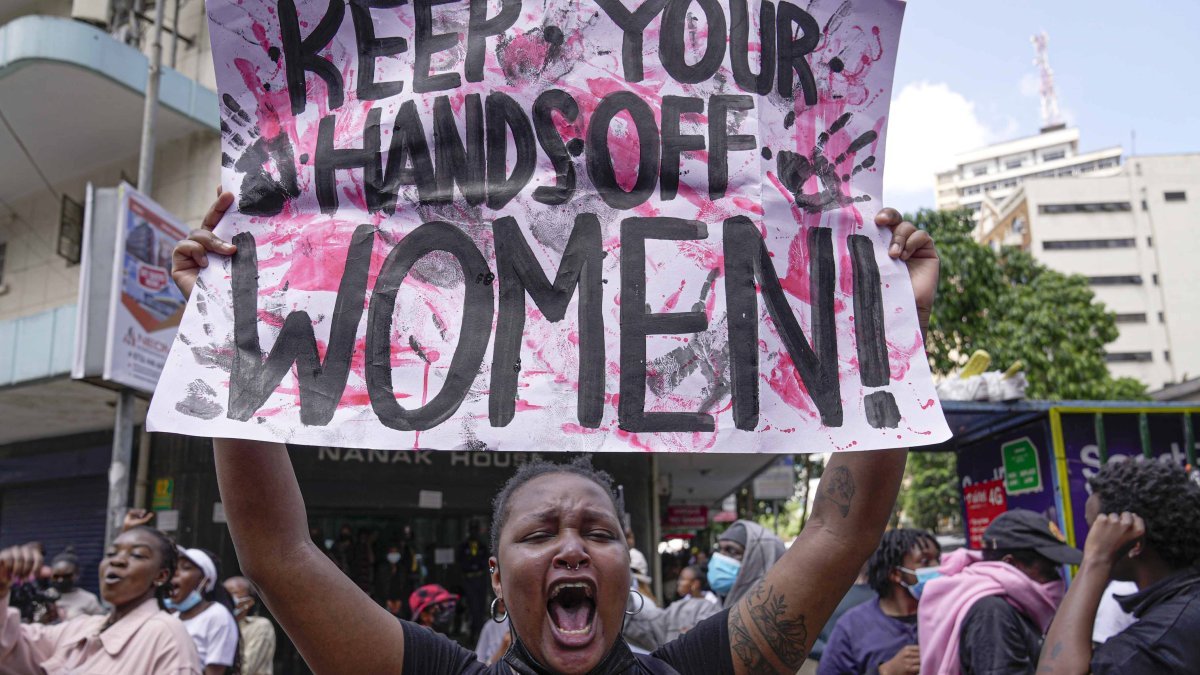
Africa has once again recorded the highest number of women and girls killed by intimate partners or family members, with an estimated 22,100 victims in 2025, according to a new report by the United Nations.
The 2026 Femicide Brief, published on Tuesday, November 24, by the United Nations Office on Drugs and Crime (UNODC) and UN Women, estimates that approximately 47,000 women and girls worldwide were intentionally killed by an intimate partner or another family member during the year.
The figure represents about 60 per cent of the 78,000 women and girls recorded as victims of intentional homicide globally in 2025. It means an average of 129 women and girls were killed every day, or approximately five every hour, by people within their intimate or family circles.
Africa accounted for the largest regional share, with 22,100 victims, followed by Asia with 15,100, the Americas with 7,400, Europe with 2,100 and Oceania with 300.
The continent also recorded the highest rate of intimate partner and family-related femicide, at 2.9 victims per 100,000 female population. The Americas followed with 1.4 per 100,000, Oceania with 1.1, Asia with 0.6 and Europe with 0.5.
The report, released ahead of the International Day for the Elimination of Violence Against Women on November 25, draws on statistics from 122 countries and territories to provide estimates of the scale of killings of women and girls by intimate partners and family members.
It highlights the continuing danger women face within their homes and family environments, despite broader declines in homicide rates in several parts of the world.
According to the UN agencies, women accounted for approximately 19 per cent of homicide victims worldwide in 2025. However, while about 60 per cent of female homicide victims were killed by intimate partners or family members, only 11 per cent of male homicide victims were killed in similar circumstances.
The findings underscore the different patterns of violence experienced by women and men, particularly within private and domestic settings.
The report noted that although global homicide rates have declined, femicide rates have fallen more slowly, particularly in the Americas and Europe. This disparity points to the persistent influence of harmful social norms, gender stereotypes and barriers that prevent women from accessing justice and protection.
The UN stressed the need for domestic violence prevention strategies to address not only violence within intimate relationships but also abuse and threats within wider family structures.
Femicide refers to the gender-related killing of women and girls. While killings by intimate partners and family members constitute a major category, the term also covers certain gender-related killings associated with organised crime, human trafficking and forced labour.
However, the report warned that available information on femicides committed outside intimate and family settings remains limited. This makes it difficult to establish the full scale of gender-related killings at regional and global levels.
The 47,000 figure therefore relates specifically to killings by intimate partners and family members and should not be interpreted as the complete global number of femicides.
The latest estimates also require careful interpretation when compared with previous years. The UN agencies noted that the number of women and girls killed by intimate partners or family members has fluctuated between approximately 45,000 and 51,000 annually in recent years. Differences in available national data mean that changes in the estimates do not necessarily represent a corresponding reduction in the actual number of killings.
The report calls attention to the need for stronger prevention measures, effective law enforcement, improved access to justice and better data collection to help governments understand the scale of violence and develop appropriate responses.
For Africa, which continues to record the highest regional estimates, the findings reinforce the importance of addressing domestic and gender-based violence through stronger protection systems, accountability and support for women and girls at risk.
The UN agencies maintain that preventing femicide requires coordinated action by governments, law enforcement institutions, justice systems, communities and organisations working to protect the rights of women and girls.