


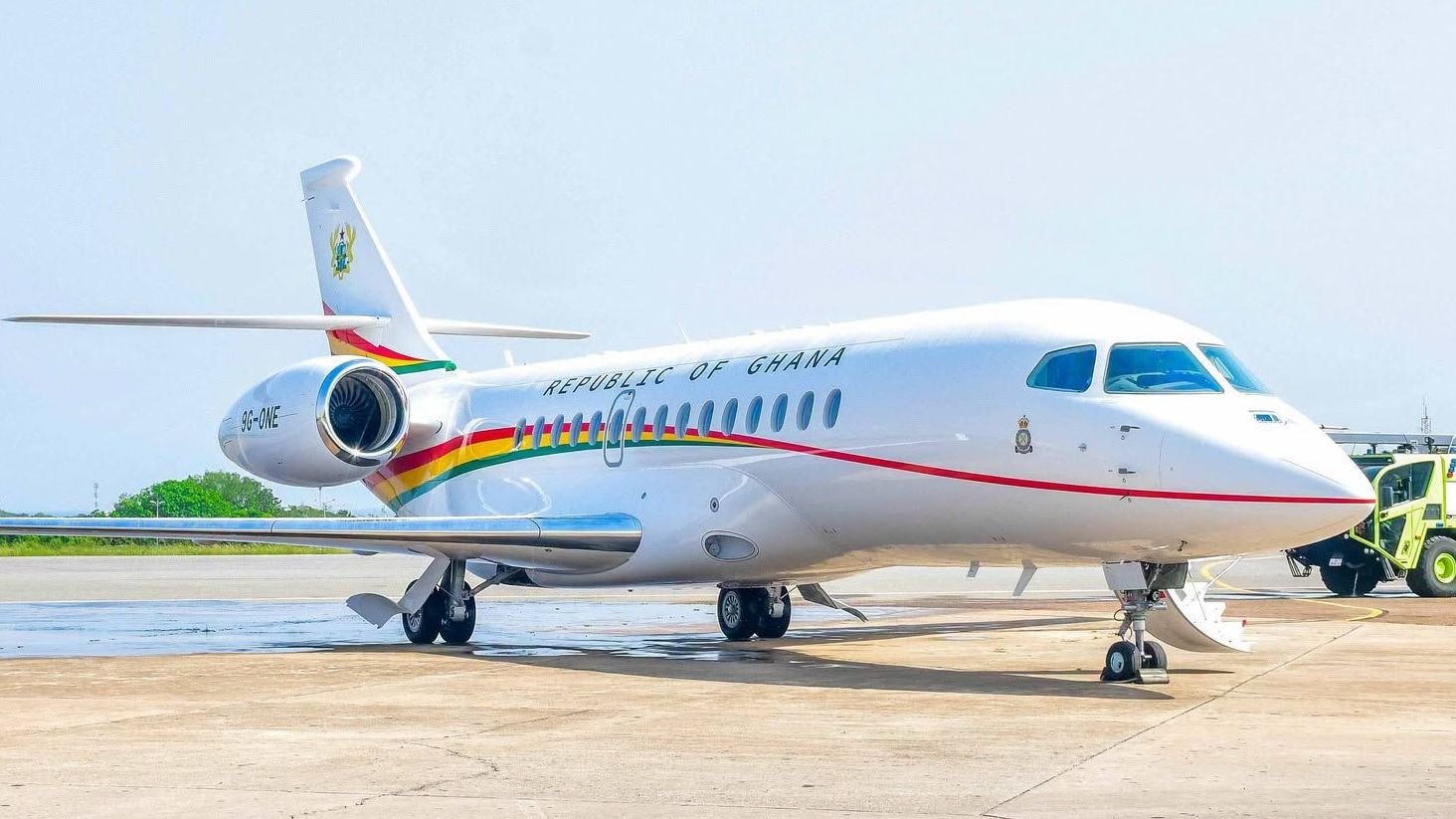
Ghana’s government has defended its purchase of a new presidential aircraft following criticism over its cost and timing, as many citizens continue to grapple with economic pressures and the high cost of living.
The French-made Dassault Falcon 6X, reportedly acquired for approximately $60.68 million, arrived in Ghana on Monday, November 16, triggering renewed political debate over the government’s spending priorities.
The aircraft was delivered to the Ghana Air Force as part of a broader programme to modernise the country’s military aviation fleet. Government officials say the purchase was necessary to replace an ageing presidential jet that had experienced recurring technical problems and costly maintenance requirements.
The acquisition has drawn criticism from opposition politicians, who argue that the expenditure is difficult to justify while many Ghanaians continue to face challenges involving living costs, unemployment and outstanding financial obligations.
Samuel Abu Jinapor, an opposition Member of Parliament, questioned the government’s decision, accusing the governing National Democratic Congress (NDC) of abandoning positions it held while in opposition.
Jinapor argued that the administration should provide greater transparency regarding the procurement process, the financing arrangements and the justification for the purchase.
He also questioned the apparent change in the party’s position on presidential aircraft acquisitions, recalling that senior NDC figures had previously criticised similar proposals when the party was in opposition.
The opposition has called for disclosure of the full procurement documentation and greater parliamentary scrutiny of the transaction.
Government officials, however, have defended the purchase, saying it was driven primarily by operational and financial concerns rather than a desire to acquire a luxury aircraft.
Felix Kwakye Ofosu, Minister of State in charge of Government Communications, said the existing Falcon 900EX had suffered frequent breakdowns, fuel-tank leakages and corrosion, making its continued maintenance increasingly expensive.
The aircraft was reportedly grounded in France for several months in 2025 while undergoing repairs. Officials said its unavailability also created additional costs when the President had to rely on chartered aircraft for official travel.
The government said the new Falcon 6X offers greater flying range and improved reliability, reducing the need for refuelling stops during international trips and providing a more dependable aircraft for presidential travel.
Officials also rejected claims that the purchase was justified solely by Ghana’s improving economic performance, insisting that the decision was based on the condition of the existing aircraft and the cost of maintaining it.
The acquisition was approved by Parliament in December 2025 as part of a wider aviation modernisation programme involving the purchase of military helicopters and executive aircraft.
The government says the programme is aimed at strengthening the Ghana Air Force’s operational capacity and addressing equipment shortages within the military.
Read Also
Ghana Unveils Smaller, More Secure Banknotes to Strengthen Fight Against Counterfeiting
The controversy has also revived criticism of President John Dramani Mahama’s position on presidential aircraft purchases while he was in opposition. Critics argue that the current decision contradicts earlier statements opposing such expenditure during periods of economic hardship.
Government supporters have countered that Ghana’s economic circumstances have changed and that the purchase was necessary to address the operational limitations of the existing aircraft.
The debate comes as Ghana continues efforts to demonstrate economic recovery following years of financial difficulties and an International Monetary Fund-supported programme.
While government officials point to improved economic conditions and the need to replace an unreliable aircraft, critics argue that the purchase raises questions about fiscal priorities at a time when citizens continue to face economic hardship.
The controversy is likely to intensify calls for transparency over public procurement, particularly regarding the cost, financing and expected benefits of the new aircraft.