


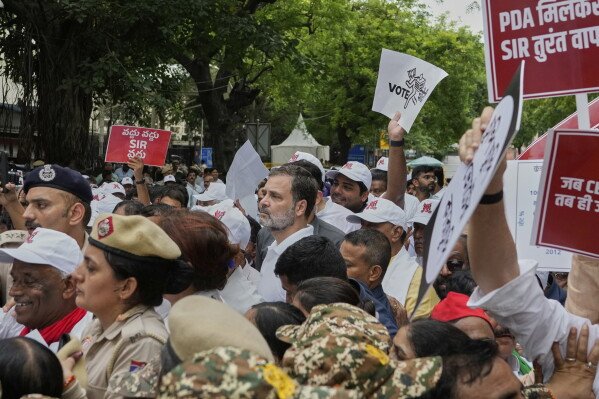
Tens of thousands of people gathered in New Delhi on Sunday, November 1, to protest against a nationwide revision of India’s voter register, demanding the resignation of Chief Election Commissioner Gyanesh Kumar over alleged irregularities in the process.
The demonstration, organised by the opposition INDIA bloc, was led by Congress leader Rahul Gandhi. Protesters marched through parts of the capital to Ramlila Maidan, chanting slogans accusing election authorities of undermining citizens’ voting rights.
The controversy centres on a nationwide overhaul of electoral rolls that has reportedly resulted in more than 133 million names being removed from voter lists. Opposition parties allege that the exercise disproportionately affects religious minorities, particularly Muslims, and could strengthen the electoral position of Prime Minister Narendra Modi’s ruling Bharatiya Janata Party (BJP).
The Election Commission has defended the revision, saying it is intended to remove duplicate, deceased and ineligible entries and improve the accuracy of voter registers. It maintains that eligible citizens whose names were wrongly removed can apply to be included again. The BJP and election authorities have rejected allegations of political manipulation.
Addressing supporters, Gandhi accused the authorities of taking away citizens’ voices and said the opposition would resist the removal of eligible voters. However, senior BJP leader and Health Minister Jagat Prakash Nadda dismissed the rally as a politically motivated attempt to create unrest.
The protest also received support from the youth-led Cockroach Janta Party, which has been involved in demonstrations against the voter-roll revision in recent weeks. Several of its leaders were temporarily detained during earlier protests, according to reports.
The latest rally comes amid growing political tensions over the conduct of elections and the independence of India’s electoral institutions. With the next general election scheduled for 2029, the dispute has intensified scrutiny of the voter-registration process and its implications for democratic participation.