


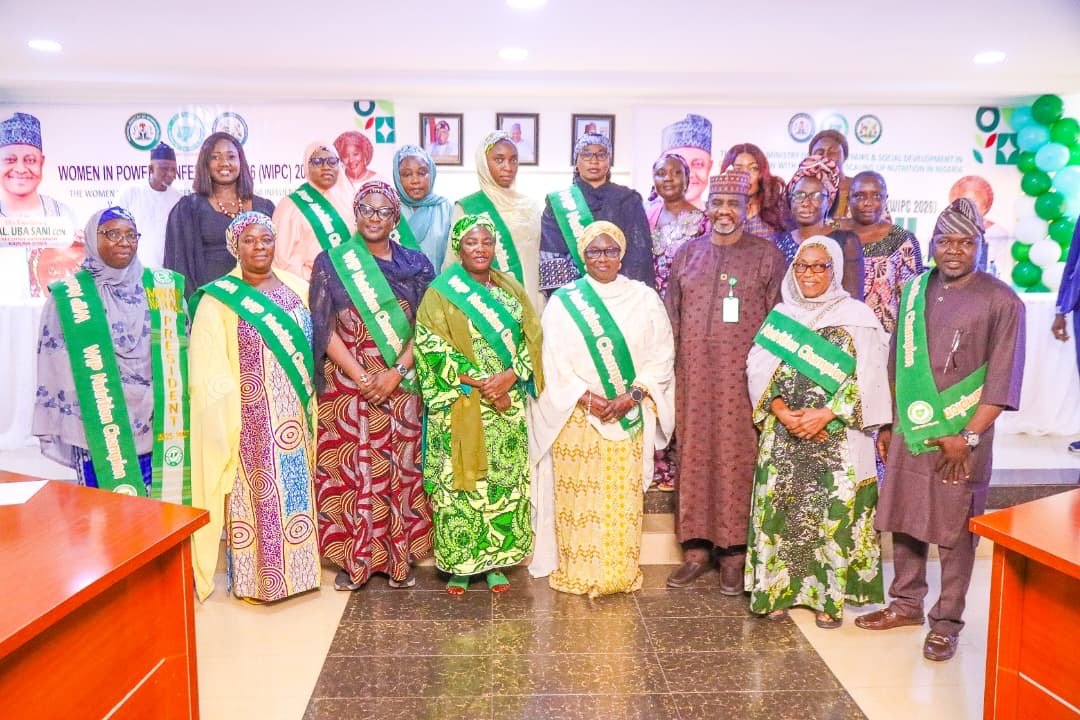
By: Femi Mustapha in Kaduna
The Kaduna State Government has reaffirmed its commitment to providing leadership in nutrition financing, multisectoral coordination, and sustainable health interventions as stakeholders gathered in Kaduna for the Women in Power Conference 2026.
The conference, convened by the Kaduna State Planning and Budget Commission in collaboration with Civil Society Scaling Up Nutrition in Nigeria (CS-SUNN), brought together women leaders, policymakers, development partners, civil society organizations, and community advocates to advance the nutrition agenda.
Declaring the event open, the Honorable Commissioner of the Kaduna State Planning and Budget Commission welcomed the deputy governor of Kaduna State, Dr. Hadiza Sabuwa Balarabe, as the special guest of honor, alongside distinguished guests, development partners, and participants.
The commissioner said the gathering was significant because it focused on an issue that directly affects the well-being, productivity, and future of the people, stressing that nutrition is not merely a health-sector concern but fundamentally an investment in human capital, education, and economic productivity.
According to him, the Planning and Budget Commission has an important responsibility to ensure that nutrition priorities are appropriately reflected in the state’s development planning and budgeting processes, noting that the nutritional well-being of women and children has far-reaching implications for the next generation.
He said the Nutrition Champions initiative provides an opportunity to bring together respected women leaders who can use their voices and platforms to advocate for improved outcomes, greater investment, and stronger commitment to addressing anemia and malnutrition. He also commended CS-SUNN for supporting the initiative and demonstrating the value of government-civil society partnerships.
Speaking as a Nutrition Champion and Special Guest of Honor, the Deputy Governor, Dr. Hadiza Sabuwa Balarabe, expressed profound humility and gratitude for the recognition bestowed upon her and other women leaders, describing it as a call to service rather than a personal trophy.
“We receive this recognition with gratitude, and do not receive it as a personal trophy. We receive it as a call to service, and as a reminder that leadership is not measured by the titles we carry, but by the lives we touch,” Dr. Balarabe said.
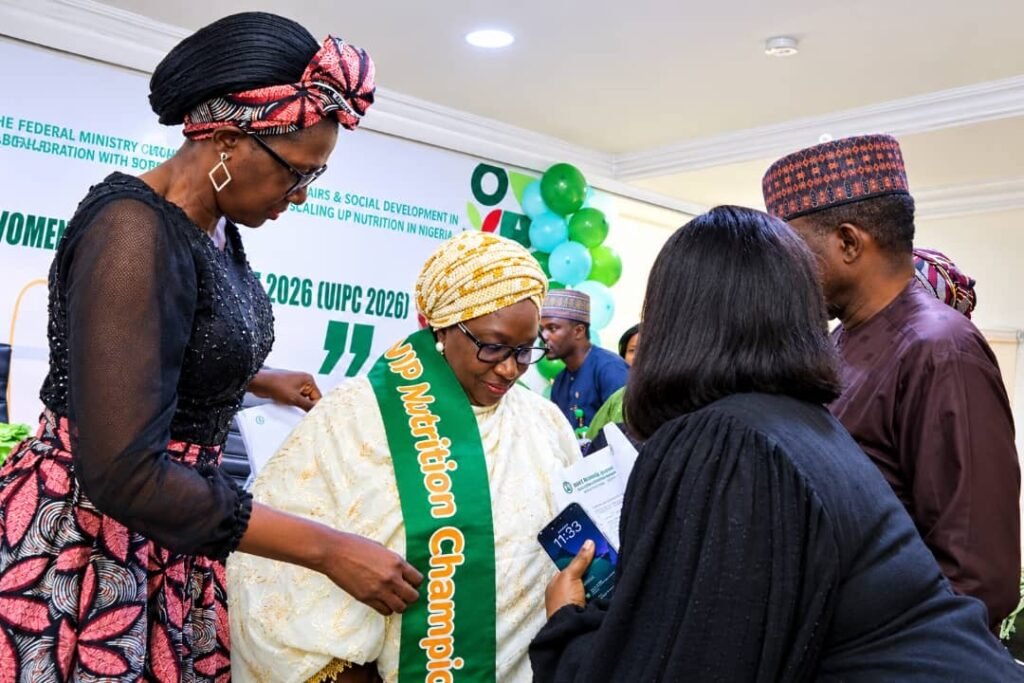
She conveyed the warm felicitations of the Governor of Kaduna State, Senator Uba Sani, CON, to all participants, assuring them that the administration would continue to provide leadership in nutrition, financing, and related health activities because nutrition is fundamental to human capital development.
The Deputy Governor noted that during the June 2026 Maternal, Newborn, and Child Health Week, Kaduna State recorded 82% vitamin A supplementation coverage and 79% coverage for mid-upper arm circumference screening. In 2025, 30, 30,089 children across the 23 local government areas were treated for severe acute malnutrition through the Integrated Management of Acute Malnutrition program.
She said these achievements demonstrate what is possible when government, communities, development partners, health workers, and civil society work together. Still, she cautioned that available data shows progress must not lead to complacency, as every malnourished child represents a life at risk.
Dr. Balarabe highlighted the new Kaduna State 2026–2030 Food and Nutrition Policy and Strategic Plan as an opportunity to consolidate gains and ensure that nutrition remains firmly integrated into planning, budgeting, and implementation. She stressed that good policies require predictable resources, accountability, and measurable outcomes—commitments to which Governor Uba Sani has pledged his support.
She added that placing women at the center of the conversation was crucial, as mothers, caregivers, women leaders, health workers, community advocates, and women in public office are powerful agents of change. She pledged to continue advocating for stronger political commitment, public awareness, sustainable financing, and effective coordination in areas such as anemia prevention, exclusive breastfeeding, complementary feeding, and maternal nutrition.
Also speaking, the National Chairperson of the CS-SUNN Steering Committee, Jessica Bartholomew, said the Women in Power Conference was organized to recognize women champions with influence who have shaped nutrition discussions in Kaduna State.
Bartholomew commended Governor Uba Sani for his contributions and drive in nutrition, disclosing that Kaduna State has reduced stunting by 7% to 8% over the past five years. She noted that stunting is one of the most difficult forms of malnutrition and that its reduction indicates a commitment that will also impact wasting and underweight.
“That is why today we are crowning our women champions—women who had ensured that those commitments were made, women who had driven policies, strategies, and ensured full implementation of nutrition interventions in Kaduna State. We are giving them a new mantle to ensure women have a voice in decision-making and are aware of the dangers of anemia,” she said.
On her part, the National President of the Medical Women Association of Nigeria, MWAN, Dr. Zainab Kwaru Muhammad Idris, who was among those honored as a champion, said the recognition was a surprise, an honor, and a privilege after more than a decade of work to ensure women and children are adequately nourished.
Dr. Idris thanked the Federal Ministry of Women Affairs, CS-SUNN, and the Kaduna State Government for the opportunity to contribute to a myriad of nutrition policy documents at the national and state levels, as well as to programs such as the Nurturing Care Framework under early child development, which aims to prepare every Nigerian child for schooling by age five.
Assessing Kaduna’s nutrition scorecard, she said the state is a place to be and to learn, given the government’s significant investments in interventions for children and women, supported by partners including the World Bank, UNICEF, Alive & Thrive, CS-SUNN, and Save the Children.
“We believe that Kaduna State has what it takes even to do more, so that the statistics that we currently have—which is an improvement over and above what we had in the 2018 statistics—we believe that when another survey is carried out, it will be even better,” Dr. Idris stated.
The event ended with a renewed collective commitment to action, as organizers expressed hope that the Nutrition Champions would become effective advocates for nutrition financing, anemia prevention, improved access to services, and stronger community engagement across Kaduna State.