



By Femi Mustapha in Kaduna
The Kaduna State Government has proposed introducing the Comprehensive Knowledge Archive Network (C-KAN) as a structured platform to strengthen data collection, preservation, and utilization across ministries, departments, and agencies (MDAs).
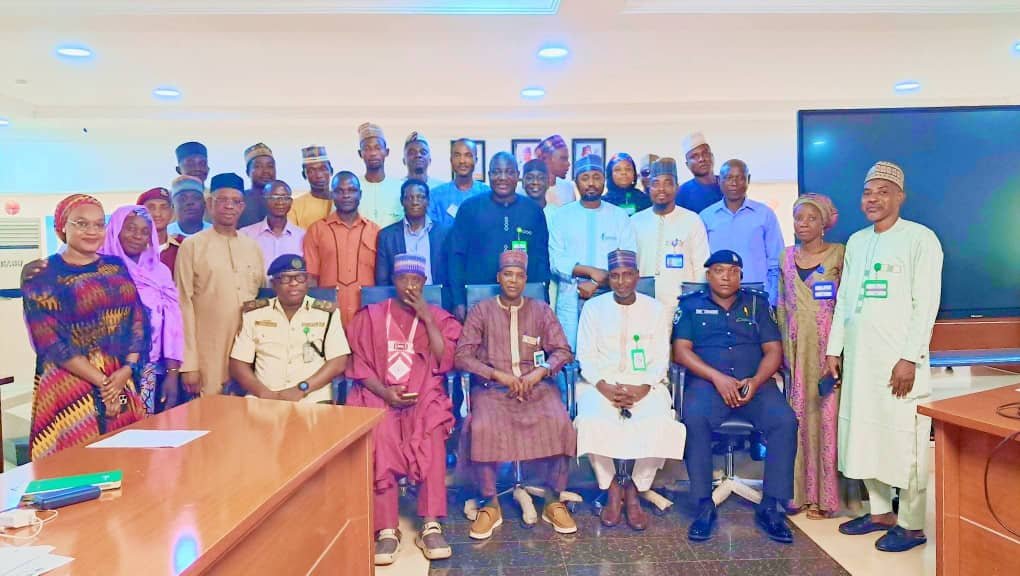
The proposal was the major highlight of the 2026 Bi-Annual Kaduna State Consultative Committee on Statistics (SCCS) meeting, held in Kaduna under the theme “Strengthening the System of Administrative Statistics for Good Governance.”
Addressing stakeholders, the Statistician General and Chief Executive Officer of the Kaduna State Bureau of Statistics (KDBS), Dr. Abubakar Baba Alhaji, said every MDA generates a wealth of information daily through routine activities in education, health, agriculture, employment, business registration, social protection, infrastructure, and public finance. However, the value of such data depends on its quality, completeness, timeliness, and accessibility.
He said that when administrative data systems are weak or fragmented, the government has difficulty obtaining timely and reliable information for decision-making. In contrast, a properly managed system provides a robust and cost-effective source of information for evidence-based governance.
Dr. Alhaji explained that the proposed C-KAN is envisioned as a structured knowledge and information platform that will support the systematic capture, organization, preservation, retrieval, and utilization of information generated by government institutions.
According to him, rather than relying heavily on fragmented records, paper-based documentation, and isolated spreadsheets kept within individual offices, C-KAN will provide a more coordinated approach to capturing and preserving institutional information for statistical purposes.
He said the platform will support MDAs in eight critical areas, including routine data capture; data documentation with appropriate metadata; data archiving to preserve historical records; easy data retrieval and accessibility; data quality improvement; institutional knowledge preservation to prevent loss when personnel are transferred or retire; regular statistical reporting; and the provision of timely evidence for decision-makers.
He, however, stressed that technology alone cannot solve administrative data challenges, noting the need for clear standards for data collection, validation, storage, security, confidentiality, and use, as well as the designation of statistical focal persons in each MDA and continuous investment in human capacity.
“Our ultimate objective is not simply to collect more data. The real objective is to ensure that quality statistics are converted into evidence that improves the lives of citizens,” Dr. Alhaji said.
In his welcome address, the Deputy Director of Research and ICT at KDBS, Mr. Yakubu Biryok Bulus, said the KDBS, established under Law No. 3 of 2014, is responsible for coordinating statistical activities and ensuring the production of quality, timely, and reliable statistics.
Mr. Bulus said the meeting had three objectives: to institutionalize the new data collection application as a statewide tool for the collection and management of administrative statistics; to discuss challenges affecting data collection across MDAs; and to discuss emerging issues affecting the State Statistical System.
For his part, the State Officer of the National Bureau of Statistics (NBS), Mr. Hassan James Bako, who represented the NBS Presidency, said that robust administrative data is the bedrock of transparent decision-making and sound policymaking.
Mr. Bako listed the meeting’s shared focus as data harmonization across MDAs, digital transformation through the institutionalization of the new application, and overcoming data collection bottlenecks. He assured attendees that NBS remains committed to collaborating with KDBS to align national and subnational operations.
Also delivering a goodwill message on behalf of the academic community, Special Adviser on Disruptive Technology Adoption Professor Peter Ayuba commended the Kaduna State Government for recognizing the strategic importance of statistics, stressing that governments cannot plan effectively or allocate resources judiciously without accurate, timely, and credible data.
Professor Ayuba called for stronger collaboration between government and universities, sustained investment in statistical education in data science and econometrics, and the adoption of digital technologies and artificial intelligence, with an emphasis on ethical data management.
The meeting ended with a call for all MDAs to take ownership of strengthening administrative statistics to build a credible, coordinated, timely, accessible, and fit-for-purpose Kaduna State statistical system.