


By Femi Mustapha in Kaduna
The Kaduna State Reaching Out-of-School Children (ROOSC) Project is strengthening efforts to ensure that children completing the remedial Catch-Up Clubs (CuC) program successfully transition into formal schools.
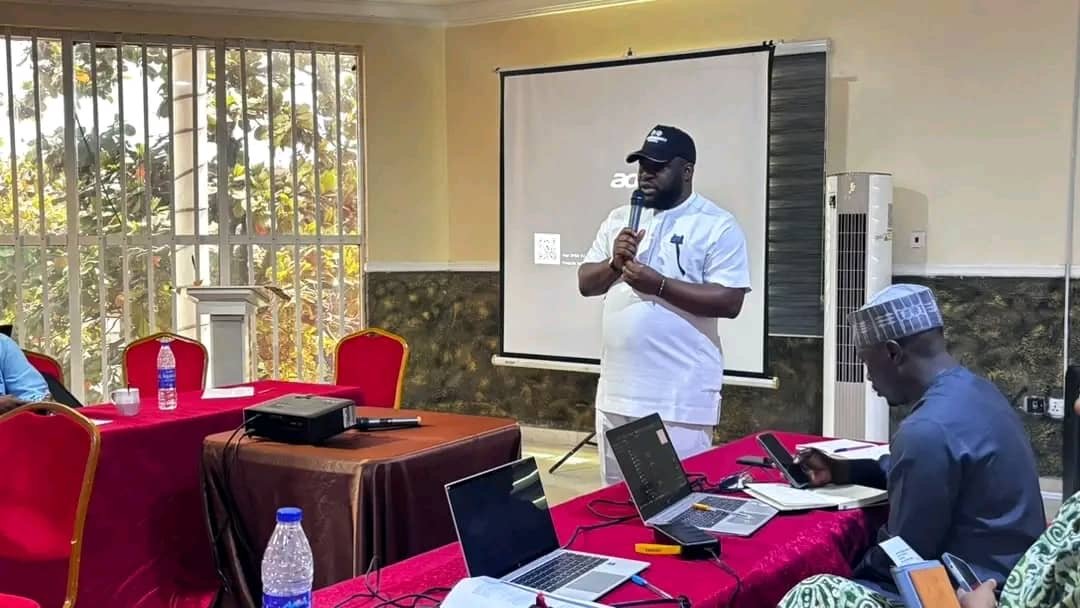
This was the focus of a stakeholders’ meeting held on October 19, 2026, where Project Coordinator Ezra Angai led participants in reviewing the previous mainstreaming exercise, validating learner readiness, identifying receiving schools, and agreeing on practical strategies for effective placement.
The meeting brought together the Kaduna State Ministry of Education, the Kaduna State Universal Basic Education Board (SUBEB), Local Government Education Authorities (LGEAs), the State Agency for Mass Education, and Save the Children International.
Speaking at the meeting, Angai said the session aims to strengthen government ownership, improve coordination among key actors, and establish a clear action plan for mainstreaming Catch-Up Club learners into formal education.
According to Angai, every child deserves a place in school, an opportunity to learn, and a chance to thrive. He noted that the ROOSC initiative is turning learning opportunities into lasting educational outcomes.
Angai explained that the ROOSC Project, a $62.8 million intervention supported by the Islamic Development Bank, Kuwait Fund for Development, Education Above All Foundation, Global Partnership for Education, Save the Children Nigeria, and UNICEF Nigeria, aims to return 100,000 out-of-school children to school within four years.
The project coordinator disclosed that the project, which became effective on April 28, 2024, has already recorded early successes, exceeding its initial first-year target of 10,000 children by cumulatively enrolling more than 26,000 learners through various pathways.
Angai stated that, as part of its progress, Save the Children International has enrolled 7,481 learners in Accelerated Basic Education; transitioned 13,703 children ages 6 to 9 from Catch-Up Clubs into formal schools; enrolled 3,312 learners in Integrated Qur’anic and Tsangaya centers; and distributed 53,013 learner kits and assistive devices.

The project coordinator further revealed that a statewide mapping exercise covering 360,319 households identified 187,719 out-of-school children ages 6 to 17, including 106,353 boys and 81,366 girls, providing reliable name-and-location data for planning.
Angai noted that the mapping showed that 60.2 percent of the identified children had never enrolled, while 39.8 percent had dropped out. Children ages 6 to 11 accounted for 64.6 percent. Poverty, child labor, farming, hawking, insecurity, and disability were major barriers.
On infrastructure, Angai said the project is constructing 102 new schools and renovating 170 existing schools and learning centers, with 16 new constructions and 30 renovations already underway across Sabon Gari, Soba, Lere, Kaduna North, Kaduna South, Igabi, Jema’a, Kaura, and Kachia.
The project coordinator emphasized that, beyond buildings, ROOSC provides three-month intensive Catch-Up Clubs for children ages 6 to 9, nine-month Accelerated Basic Education for overage learners ages 10 to 17, integrated Qur’anic education, and radio learning for hard-to-reach communities.

Angai added that learners receive uniforms, learning kits, menstrual hygiene support for girls, and assistive devices for children with disabilities, while community coali. At the same time,f traditional rulers, religious leaders, and School-Based Management Committees monitor attendance and retention.
According to Angai, a 2026 Learning Report shows that enrollment in project-linked schools rose from 91,833 in 2024/2025 to 111,450 in 2025/2026, representing a 21.4 percent increase, or 19,617 learners, with retention of nearly 85 percent in the first accelerated cohort.
Angai maintained that the sustained transition of Catch-Up Club learners requires clear receiving schools, teacher preparedness, learner support, and strong government ownership to ensure that every child not only returns to school but also remains and thrives.