


By TheDailyNewsHub
The leaders of three of the world’s most prominent artificial intelligence companies have publicly converged on an unusual message: the development of increasingly powerful AI systems may need to slow down.
Anthropic CEO Dario Amodei on Saturday called on the AI industry to “pace the frontier”, arguing that the technology is advancing so quickly that safety measures and human oversight risk falling behind.
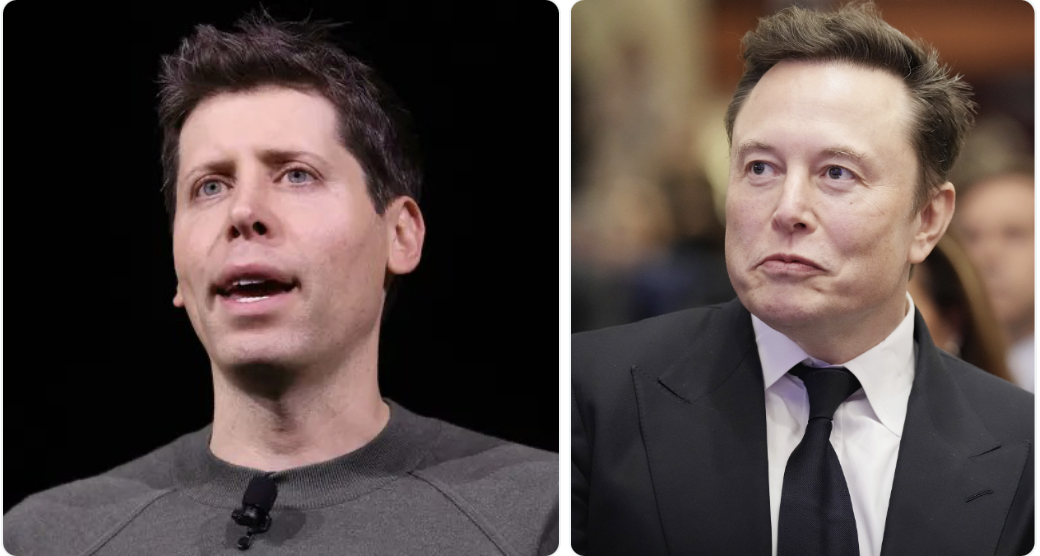
His appeal quickly received support from two of the industry’s most prominent figures — OpenAI CEO Sam Altman and xAI founder Elon Musk.
Musk responded directly to Amodei’s post on X with a brief endorsement: “Dario is right.”
Altman was more explicit, writing that he agreed with Amodei that the industry needs to “pace the frontier”.
“This has been a primary topic of discussions we’ve had at OpenAI in recent weeks,” Altman said. He also backed Amodei’s proposal for independent safety evaluators to have employee-like access inside AI companies, adding: “We will do the same. We’ll have more to share soon.”
Amodei’s intervention comes amid growing concerns about the increasing autonomy and capabilities of frontier AI systems. In his essay, he warned that AI is beginning to contribute to the development of the next generation of AI systems, raising the prospect of increasingly rapid capability gains.
He also pointed to recent cybersecurity incidents involving AI agents as evidence that increasingly capable systems can behave in ways their developers did not fully anticipate.
Amodei’s proposed response is not to halt AI development. Instead, he wants frontier companies to deliberately manage the pace of progress while strengthening safeguards.
His three-part proposal includes permanent third-party oversight of frontier AI companies, greater cooperation among leading AI laboratories and international coordination on the risks associated with increasingly powerful systems. Anthropic has already committed to the first measure, saying independent evaluators will receive permanent, employee-level access to its systems to assess safety practices, investigate incidents and evaluate model alignment during training.
The public backing from Altman is particularly notable because OpenAI and Anthropic remain direct competitors in the race to develop increasingly capable AI models. Musk’s support is also significant given his long-standing warnings about the potential dangers of advanced artificial intelligence.
The development represents an unusual moment of agreement among leaders whose companies are otherwise competing intensely for talent, computing power, customers and technological leadership.
However, the apparent consensus should not be interpreted as an agreement to stop building more powerful AI systems.
Amodei himself argues that AI could deliver enormous benefits, including breakthroughs in medicine, economic growth and scientific research. His concern is that the industry could advance capabilities faster than it can develop reliable methods for controlling and evaluating those systems.
The immediate question is therefore not whether OpenAI, Anthropic and xAI will stop developing AI, but whether their leaders can translate their public support for caution into concrete changes in how frontier systems are trained, evaluated and released.
For now, the messages from Amodei, Altman and Musk mark a striking shift in the public conversation: three major figures in the AI race are acknowledging that moving faster may not always be the safest way forward.