


By Femi Mustapha
The Commissioner for Planning and Budget in Kaduna State, Mukhtar Ahmed Monrovia, said the partnership between the state government and the Street2Scholar (S2S) Foundation reflects the administration’s commitment to inclusive development and the protection of vulnerable children.
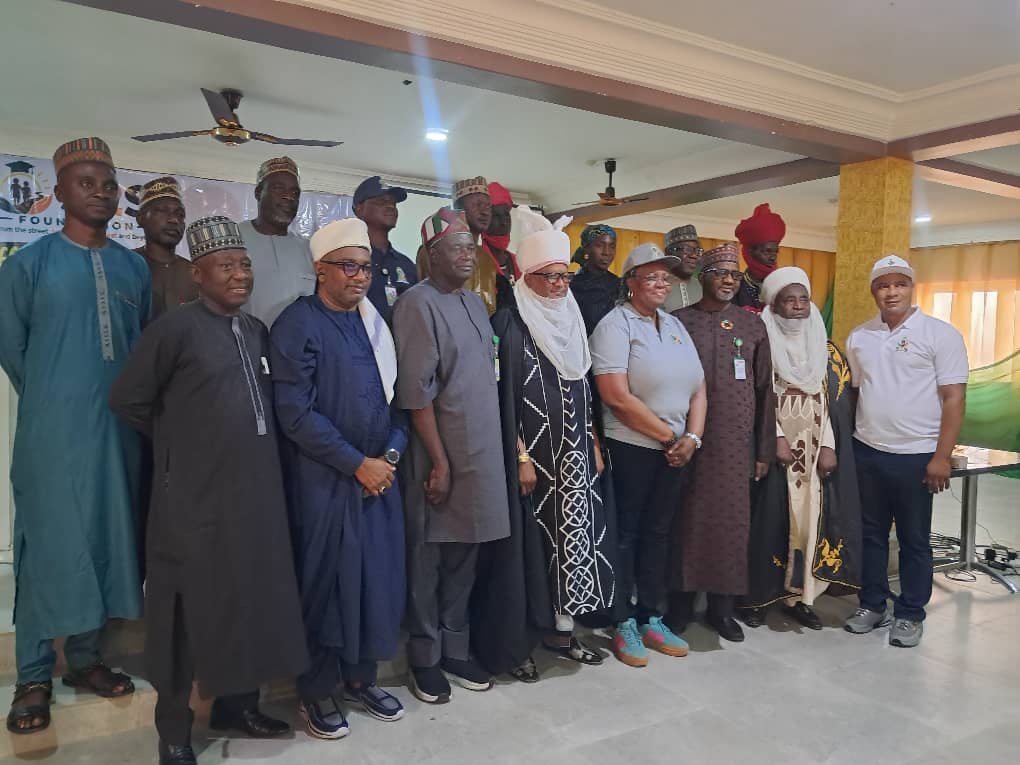
Monrovia made the statement at the official launch of the S2S Kaduna 2026 program and the flag-off of its pilot school in Kaduna on Monday.
He said the signing of a Memorandum of Understanding (MoU) between the state government and the foundation on September 8, 2026, provided a clear framework for collaboration to support street-connected and out-of-school children across the state.
According to him, poverty, inadequate support systems, and limited access to educational opportunities remain among the major barriers preventing vulnerable children from accessing education.
He called for effective coordination among government ministries, development partners, civil society organizations, traditional rulers, and communities to ensure that interventions reach those most in need.
Monrovia also stressed the need for proper needs assessments to ensure that available resources are directed to the children and schools requiring the greatest support.
Speaking at the same event, the Commissioner for Finance, Ibrahim Tanko Mohammed, disclosed that Kaduna State currently has 187,000 out-of-school children and is working to return them to the classroom within the next one year. The governor is doing everything possible to return them to the classroom as soon as possible,” Mohammed said.
“In the next one year, we want to see zero out-of-school children,” he added.

The program launch was formally welcomed by the Honorable Commissioner for Education, Professor Abubakar Sani Sambo, who described the initiative as more than the commencement of a new program; He called it a collective commitment to restoring hope, protecting childhood, and ensuring that every child has the opportunity to learn, grow, and realize their full potential.
On behalf of the Ministry of Education, he expressed appreciation to the Planning and Budget Commission for its visionary leadership and to the S2S Foundation for choosing Kaduna State as a partner.
He said the challenges of out-of-school children, street begging, and child vulnerability require urgent, coordinated action and cannot be addressed by the government alone; they demand strategic partnerships among development organizations, communities, families, and other relevant stakeholders.
She noted that the Street2Scholar initiative aligns with the priorities of Governor Uba Sani, whose administration recognizes education as a critical driver of human capital development and inclusive growth.
He said what particularly excites the ministry is the program’s holistic approach, which recognizes that taking a child from the street into the classroom is only the beginning.
He explained that sustainable impact requires four interconnected interventions: education and learning, child safeguarding, mentoring and skills development, and family and community support.
“This is the kind of child-centered advocate, one that goes beyond school enrolment to ensure that children are safe, supported, and making meaningful progress in their education,” He said.
The commissioner reaffirmed the Ministry’s commitment to working with the Planning and Budget Commission, the S2S Foundation, and other stakeholders to promote effective implementation. She encouraged partners to ensure that the pilot is closely monitored and that lessons are documented to guide future expansion across the state’s 23 Local Government Areas.
The Executive Chairman of Kajuru Local Government Council, Hon. Dauda Madaki, said the initiative was timely for rural local governments, where vulnerable children face greater barriers to education.
He noted that Kajuru Local Government would work with the state government and the S2S Foundation to identify street-connected children in the area and mobilize community support to ensure their enrollment, retention, and protection in school.
Speaking at the event, the founder of the Street to Scholars Foundation, Sara Adeniyi, said the initiative was inspired by her encounter with street-connected children in Kaduna in 2008.
Adeniyi, who is based in the United Kingdom, said the experience prompted her to establish the foundation to help vulnerable children return to school and acquire skills that would enable them to become self-reliant.
She said the foundation plans to support about 135 children in its first year, targeting beneficiaries ages 5 to 24 and covering primary and secondary education, further education, and skills acquisition.
“Once they enter into our database, they will not leave until they get a skill, and that will be at the age of 24,” she said.
She added that the foundation would also work to reconnect the children with their families where appropriate, stressing that government collaboration is essential to the initiative’s success and noting that the organization is registered in both the United Kingdom and Nigeria.