


At least 64 people have been killed and more than 100 injured after two high-speed trains collided in central Spain, triggering a major emergency response and renewed scrutiny of railway safety. Authorities warned that the death toll could rise as rescue teams continued searching the wreckage on Wednesday, October 28.
The collision occurred near Urda, in the province of Toledo, in the Castilla-La Mancha region, approximately 130 kilometres south of Madrid. The trains involved were operated by Spain’s state railway company, Renfe, and private operator Iryo.
Regional authorities said the number of fatalities had risen from an earlier figure of 31 to approximately 64. More than 100 people were reported injured, with dozens taken to hospital. At least 15 injured people were initially reported to be in critical condition, according to the regional government.
Emergency workers faced a difficult rescue operation amid overturned carriages, twisted metal and wreckage scattered along an embankment. Helicopters monitored the scene while ambulances and other emergency vehicles transported victims for treatment. Specialist teams were also deployed to assist with rescue operations and identify the deceased.
Photos from the scene of the collision below:
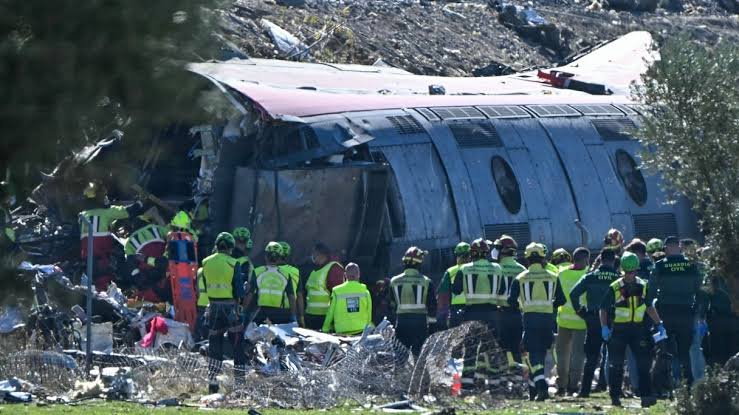
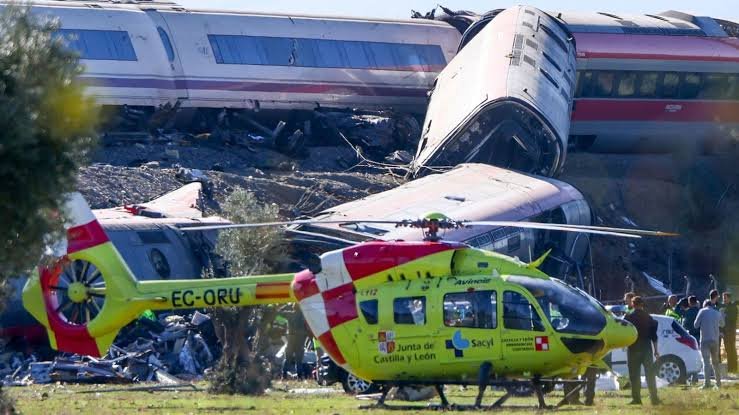
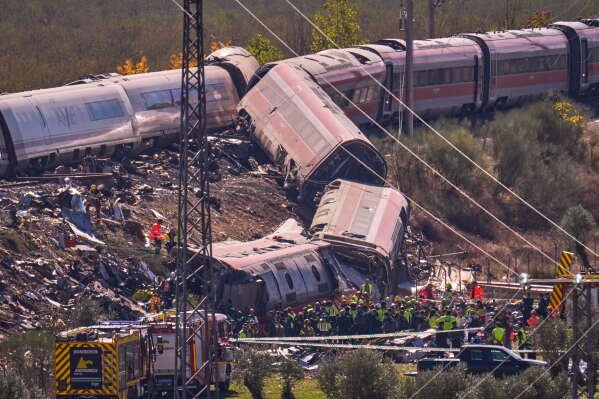
Iryo said its train was carrying 147 passengers and five staff members, including the driver, when it was struck from behind by a Renfe service. Passengers reportedly said the Iryo train had been stationary when the collision occurred. Investigators have yet to establish the full sequence of events that led to the crash.
Spanish Prime Minister Pedro Sánchez expressed shock over the disaster and said he was in contact with the transport minister and regional authorities. Messages of condolence also came from European leaders, while the European Commission said the bloc was ready to assist Spain if necessary. The Spanish football federation postponed 24 Copa del Rey matches as a mark of respect and solidarity with the victims.
The accident has renewed concerns about the safety of Spain’s high-speed rail network. In January 2026, a separate collision involving two high-speed trains near Adamuz in southern Spain killed 46 people. The earlier disaster prompted questions about railway safety and the systems used to manage train movements.
Spain has invested heavily in high-speed rail infrastructure and operates one of the world’s largest networks of its kind. The latest collision occurred on the Madrid-to-Seville route, one of the country’s busiest rail corridors. Investigators are examining the circumstances surrounding the crash, but authorities have not yet confirmed its cause.
As rescue and recovery operations continue, authorities are working to identify victims, support survivors and establish what happened before the trains collided. The casualty figures remain subject to official updates as emergency teams complete their work.