


By TheDailyNewsHub Reporter
US President Donald Trump has renewed his threat of military action against Iran, warning that Washington may eventually have to launch further attacks against Tehran despite ongoing diplomatic efforts to prevent another escalation in the Middle East.
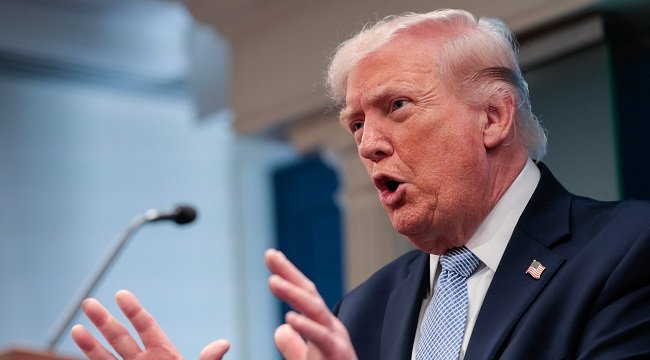
Trump made the remarks on Sunday, November 1, 2026, while addressing supporters at a campaign rally in Dubuque, Iowa, ahead of the United States midterm elections scheduled for November 3.
“The only reason why I’m not finished with Iran is I want to be nice. I want to try and save all those lives if I can. But at some point we’re going to have to give them the hammer,” Trump told the gathering.
The statement represents another warning from the US president that military operations against Iran could resume, although he did not specify when such action might take place or identify the targets of any potential strikes.
Trump has repeatedly suggested that the United States could return to military action after the midterm elections, while also indicating that his administration remains interested in resolving the conflict through negotiations.
Speaking to reporters on Saturday, October 31, Trump said discussions with Iran were progressing and indicated that Washington was not in a hurry to launch another offensive. However, he maintained that the United States still had one or two Iranian targets to address, specifically mentioning Pickaxe Mountain, a suspected underground nuclear facility.
Trump claimed that the US military could deal with the remaining targets within minutes, although he provided no independent evidence to support the assessment of the facility’s current operational status.
His latest comments came amid diplomatic discussions involving Qatar, Iran and the United States, as regional governments seek to prevent a resumption of large-scale hostilities.
Qatari mediators travelled to Tehran over the weekend for discussions with Iranian officials aimed at finding a way to revive negotiations with Washington. The diplomatic engagement followed earlier consultations between Iranian representatives and regional intermediaries.
The discussions have taken on greater urgency following reports of a telephone conversation between Trump and Israeli Prime Minister Benjamin Netanyahu on Saturday.
According to a report by Axios, citing American and Israeli sources familiar with the conversation, Netanyahu urged Trump to resume military strikes against Iran immediately after Tuesday’s US midterm elections.
The report said Trump preferred to allow diplomatic efforts to continue before making a decision on further military action. An Israeli source reportedly described the conversation as difficult, while an American source characterised it as direct.
Neither the White House nor Netanyahu’s office publicly confirmed the details of the reported discussion.
US Secretary of State Marco Rubio also indicated that a fresh military offensive had not been decided upon, stressing that Washington remained open to a diplomatic settlement.
Rubio said the administration would not take a military decision lightly and maintained that the United States would prefer to resolve the dispute through negotiations if a workable agreement could be reached.
Iran, however, has warned that any renewed confrontation could be more prolonged and difficult than the previous round of fighting.
Iranian army spokesman Mohammad Akraminia, speaking to Iranian state television, said a potential future war could last longer than the previous conflict and warned that Washington would not determine the timing or conditions under which it would end.
The warning reflects Tehran’s position that it would respond to any renewed military action rather than accept the terms imposed by Washington.
The conflict, which began on February 28 with US-Israeli military strikes against Iran, has significantly heightened tensions across the Middle East, with the Strait of Hormuz and regional energy infrastructure remaining major concerns.
The strategic waterway is particularly important to international trade because of its role in transporting oil and other energy supplies from the Gulf to global markets. Any prolonged military confrontation could further disrupt shipping and increase uncertainty in international energy markets.
Meanwhile, diplomatic efforts continue as regional governments attempt to prevent another escalation. Qatar has played a mediating role, while discussions involving Iranian and American representatives have raised the possibility of renewed negotiations. For now, Trump’s latest warning has not been accompanied by an official announcement of a new military operation. Whether Washington will pursue further strikes after the November 3 elections or give diplomacy more time remains uncertain.