


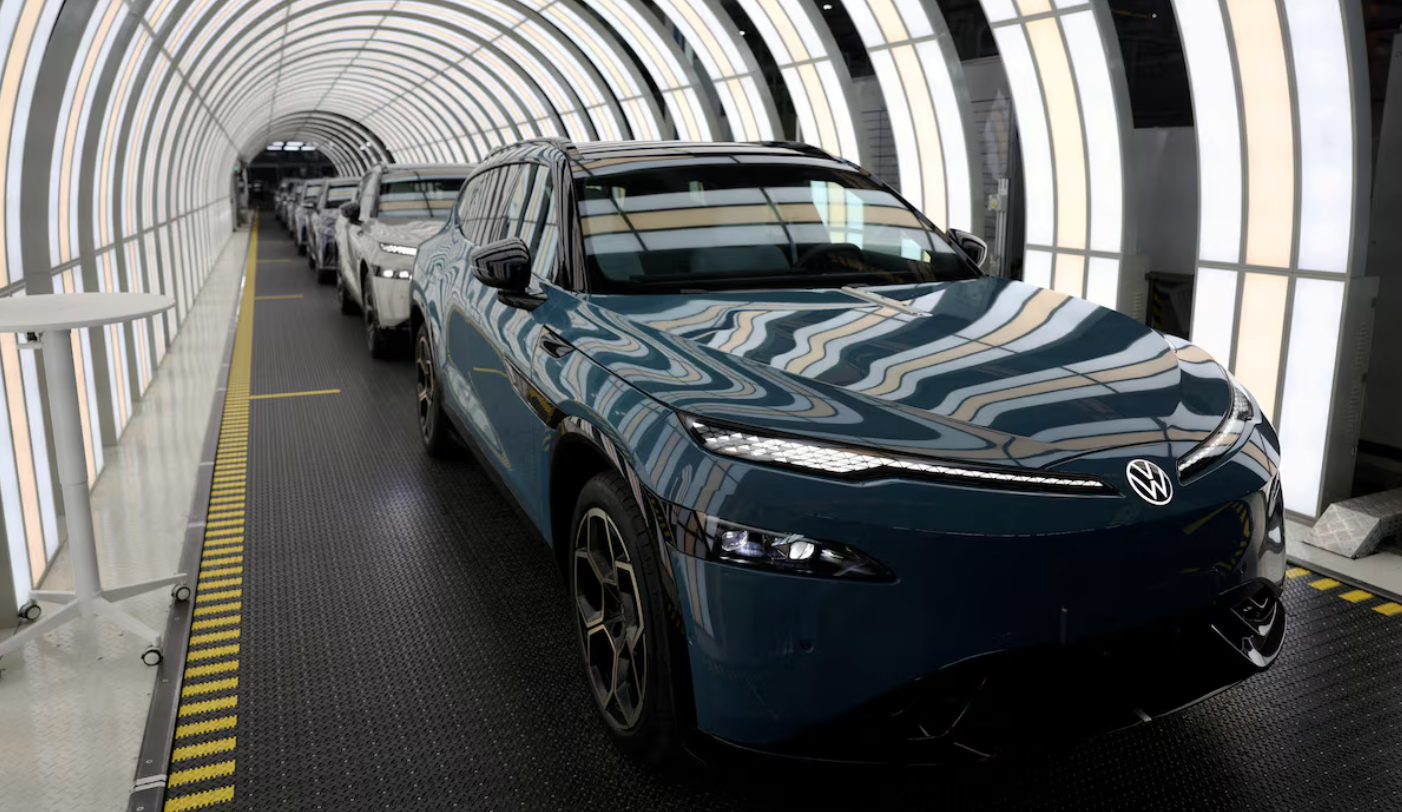
German automaker Volkswagen plans to export at least 300,000 vehicles manufactured in China annually by 2030, as the company seeks to strengthen its competitiveness in international markets and respond to intensifying pressure from Chinese carmakers.
Volkswagen Group’s China chief, Ralf Brandstätter, announced the target on Wednesday, October 28, during a visit to the company’s research and development centre in Hefei, eastern China. He said the company’s ambition extended beyond exporting vehicles to sharing technologies developed in China with other overseas markets.
The export strategy will focus on markets in South America, Asia, the Middle East and Africa. Volkswagen plans to use China as both a manufacturing base and a centre for developing vehicles and technologies that can be deployed internationally. Europe and North America are not currently included in the company’s initial plans for exporting the China-developed technology.
The company also intends to export technologies developed with Chinese partners, including an electronic architecture created with electric vehicle manufacturer Xpeng and driver-assistance systems developed with Horizon Robotics. These technologies are expected to support future Volkswagen models targeting markets where affordability, digital features and production costs are important competitive factors.
The move represents a shift from Volkswagen’s earlier “In China, for China” strategy towards using its Chinese operations to serve customers beyond the domestic market. Chief Executive Oliver Blume has described China as an increasingly important innovation and technology hub for the wider Volkswagen Group.
The strategy comes as Volkswagen faces growing competition from Chinese manufacturers, particularly in electric vehicles, software and pricing. Demand has weakened in key markets, while the transition to electric mobility has increased pressure on established automakers to develop products more quickly and reduce costs.
Volkswagen is also restructuring its operations. In September, the company reached an agreement with unions to cut an additional 50,000 jobs in Germany by 2030, bringing its planned workforce reduction to around 100,000 positions. The measures reflect efforts to reduce costs and adjust production capacity amid difficult market conditions.
For Volkswagen, expanding exports from China could help offset slower growth in its domestic Chinese business and create additional opportunities in emerging markets. However, the success of the plan will depend on whether its vehicles can compete on price, technology, reliability and after-sales support against both established international brands and rapidly expanding Chinese manufacturers.
The company has not disclosed a country-by-country breakdown of its 300,000-vehicle export target. Its latest plans nevertheless signal a broader change in how Volkswagen intends to use its Chinese manufacturing and research operations to support growth outside China.