


By TheDailyNewsHub
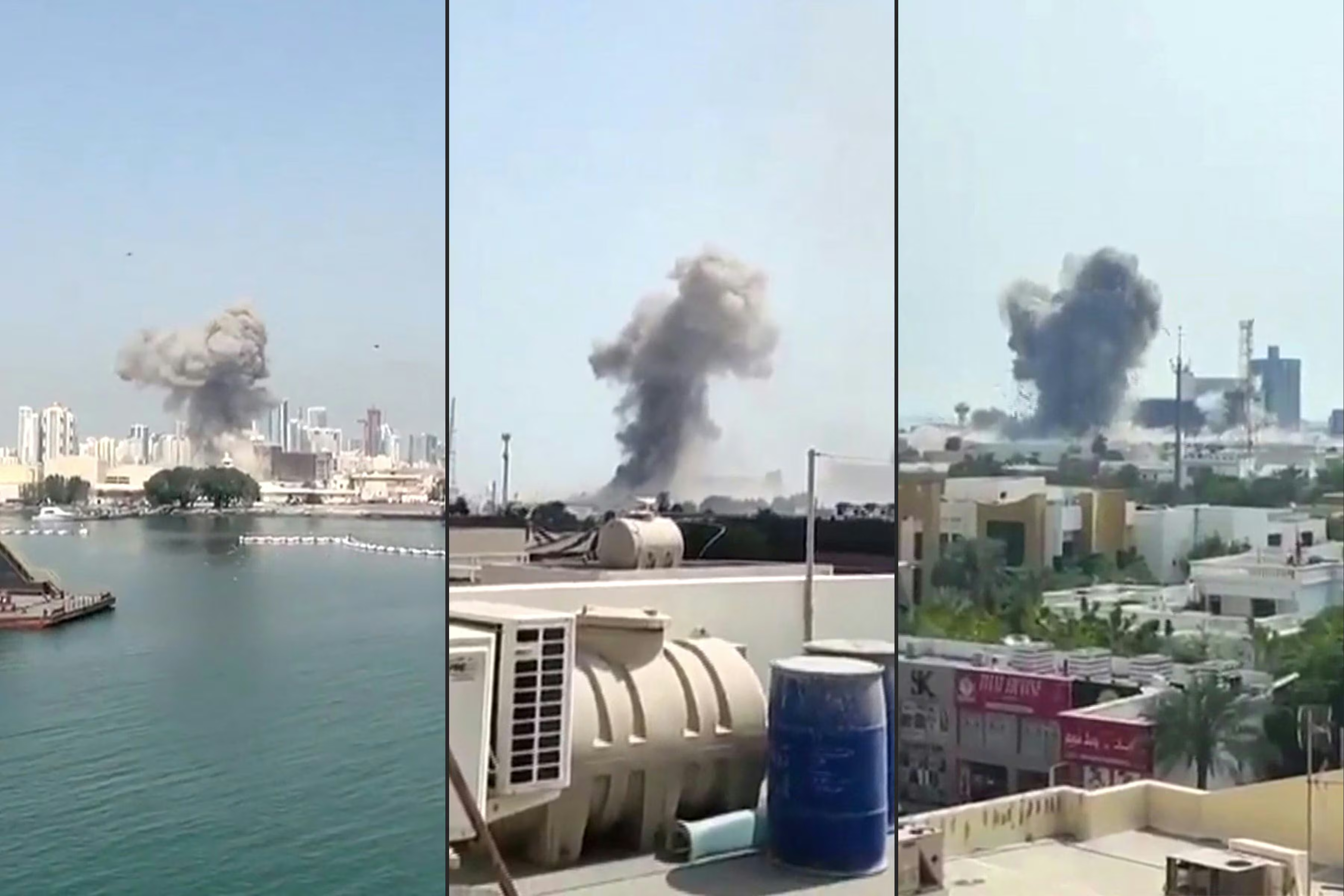
Iran has targeted U.S. military positions in the United Arab Emirates as the confrontation between Tehran and Washington continues to escalate across the Gulf.
The latest developments come amid a renewed exchange of attacks between Iran and the United States, with Iranian forces targeting U.S. military facilities in the region following American strikes on Iranian military and maritime assets.
The Institute for the Study of War reported that Iran’s Artesh carried out missile and drone attacks targeting U.S. bases in Kuwait and the United Arab Emirates on September 3. The attacks were part of a broader Iranian retaliation against American military operations.
The escalation has placed the UAE and other Gulf states under increasing security pressure. Reuters reported on Monday that Iranian missile strikes and attacks on oil tankers have affected the UAE, prompting the country to develop alternative routes for energy exports and trade to reduce its dependence on the Strait of Hormuz.
The UAE has been seeking to protect its energy and economic infrastructure as the conflict threatens one of the world’s most important energy corridors. UAE presidential adviser Anwar Gargash said the country’s energy exports and economic activity would not be “held hostage” by the conflict.
Growing U.S.-Iran confrontation
The attacks form part of a wider escalation that has seen Washington and Tehran exchange strikes after a period of relative calm.
Reuters reported earlier this month that the United States and Iran had exchanged significant attacks, with Washington striking Iranian targets while Tehran launched attacks against U.S. bases across the region.
Iran has also warned that U.S. attacks could trigger further retaliation, while tensions around the Strait of Hormuz continue to disrupt maritime traffic.
The strategic waterway is crucial to global energy supplies, and the reduction in shipping through the strait has already contributed to higher oil prices. Reuters reported Monday that Brent crude had climbed to $97.31 a barrel, its highest level since late July, amid concerns over further disruption to energy supplies.
UAE caught between security and economic interests
The UAE has sought to maintain its economic activity while dealing with the security consequences of the conflict.
Gulf states have increasingly faced the challenge of protecting their territory and energy infrastructure while avoiding being drawn deeper into the direct confrontation between Washington and Tehran.
The UAE is expanding alternative ports, pipelines and trade routes to reduce its vulnerability to disruptions in the Strait of Hormuz.
The latest attacks therefore raise concerns not only about military escalation but also about the potential impact on global energy markets, shipping and regional stability.
With U.S. and Iranian forces continuing to exchange attacks, fears are growing that further strikes could widen the conflict and place additional pressure on Gulf countries hosting American military personnel and facilities.
For the UAE, the immediate challenge is to protect its territory and critical infrastructure while keeping trade and energy exports moving amid an increasingly volatile regional security environment.